

Last night La and I presented to a lovely group of people at the Free Library of Philadelphia’s Culinary Literacy Center. For those of you who don’t know, the FLP has a teaching kitchen up on the 4th floor of the Parkway Branch that conducts amazing cooking and food education programs. The event was part of a monthly series called “Discover Food Sources in Philly!” and we focused our presentation on mainland Southeast Asian ingredients from one of our favorite and most-visited markets, Seng Hong Oriental Market (4901 Old York Road). Regular readers of this blog will have seen MANY posts and featured food items over the years that were purchased from that market. Last night Seng Hong supplied the bulk of our ingredients as we steamed sticky rice, roasted chicken and Isaan sausage (sai grok Isaan ไส้กรอกอีสาน) and pounded Isaan-style papaya salads (tam bak-hoong ตำบักหุ่ง/ຕຳໝາກຫຸ່ງ in Isaan/Lao language and som tam ส้มตำ in Thai). It was a fun event–thank you to all who came out!
I realized that while I’ve posted about papaya salads before (here with a post on a more Central Thai-inspired salad), I haven’t yet posted about Isaan (Northwestern Thai) or Lao-style papaya salads on this blog. That’s a little weird because it is a very common meal at our house, and it is an essential part of the Isaan table.
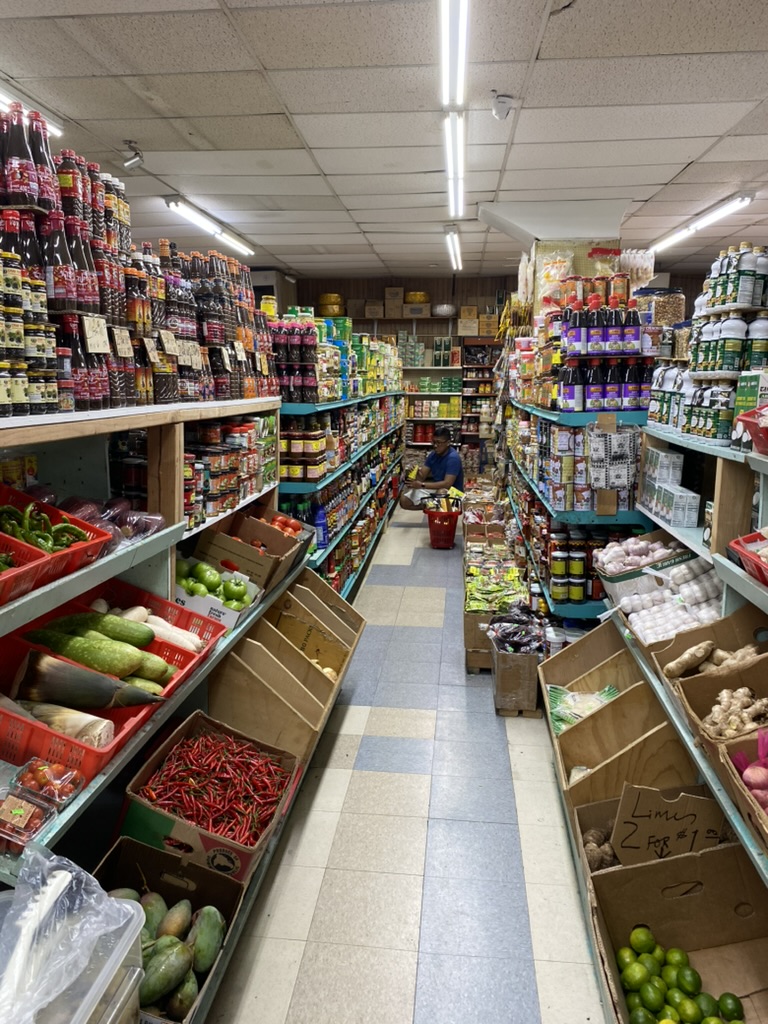
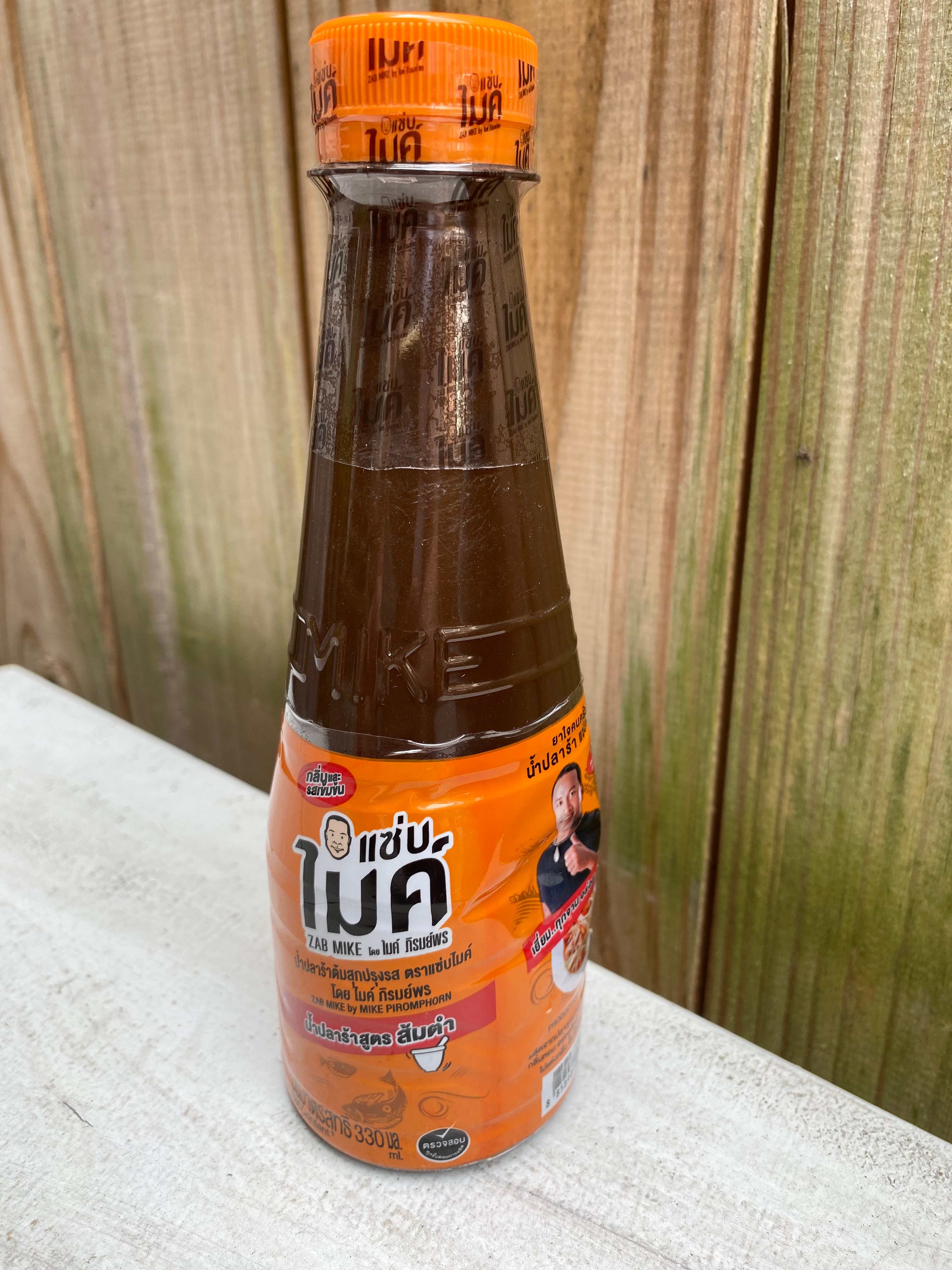
Reflecting on my 2014 post about papaya salads I was a little puzzled as to why I didn’t include fermented fish sauce in the recipe. I then remembered that we used to rely on Lao and Thai friends in Wisconsin to supply us with that unique ingredient, which was made from long fermenting freshwater fish in salt and rice bran and then blending and cooking down the fish and juices with additional seasonings and some sort of acid (often pineapple). Back then we weren’t really buying manufactured fermented fish for our tam salads, honestly because the store bought options weren’t very good. But around 2015 there was an explosion of new startups in Thailand producing small bottles of ready to use fermented fish sauce plaraa ปลาร้า (badaek in Isaan/Lao ปาแดก/ປາແດກ) for export, and Philly markets started stocking them. I can say that Seng Hong has by far the largest selection of fermented fish products I’ve seen in Philadelphia (Thai, Lao, and Cambodian variants).
We tried several brands before settling on one that we now primarily use, called “Zab Mike” แซ่บไมค์ (see image). Zab, or how I prefer to transliterate it, saep, translates to “delicious” in Isaan Thai and Lao, and this is Mike Piromphorn (ไมค์ ภิรมย์พน, who is a well-known singer in Thailand)’s recipe, hence the product name. This one is made with pickled garlic juice–it is pretty good. It is from Kalasin Thailand, right from the heart of the Isaan region.
Selecting green papayas for salads
Green papayas come in a few different varieties at Philadelphia markets that cater to mainland Southeast Asian tastes (see green markers on my map of Asian markets). Sometimes you get the long, smooth-skinned papayas that are often a product of Mexico. Those are good, but after shredding be sure to soak the shreds in iced water before straining to pound in the salad.
We’ve found that some of the best papayas are the smaller ones produced in Florida with bumpier skin. Honestly they are a little uglier than the large smooth papayas from Mexico. But the smaller, uglier ones have a very crisp texture and are really the best for papaya salad. This smaller, bumpier variety can often be found at Seng Hong in North Philadelphia.
Whichever variety you end up using, be sure to pick your papayas very green and very firm. If they are even a little soft they might already be ripening. Once peeled you may find the flesh starting to change color from light green to orange. If the fruit is still not fully orange, a decent salad can still be made with it, if you soak the shreds in iced water.
Recipe: Isaan-style papaya salad Tam Bak-hoong ตำบักหุ่ง
The following is a basic recipe that we do most frequently at home. After you get the hang of it, feel free to explore other optional ingredients: fermented crab, tamarind juice, etc.
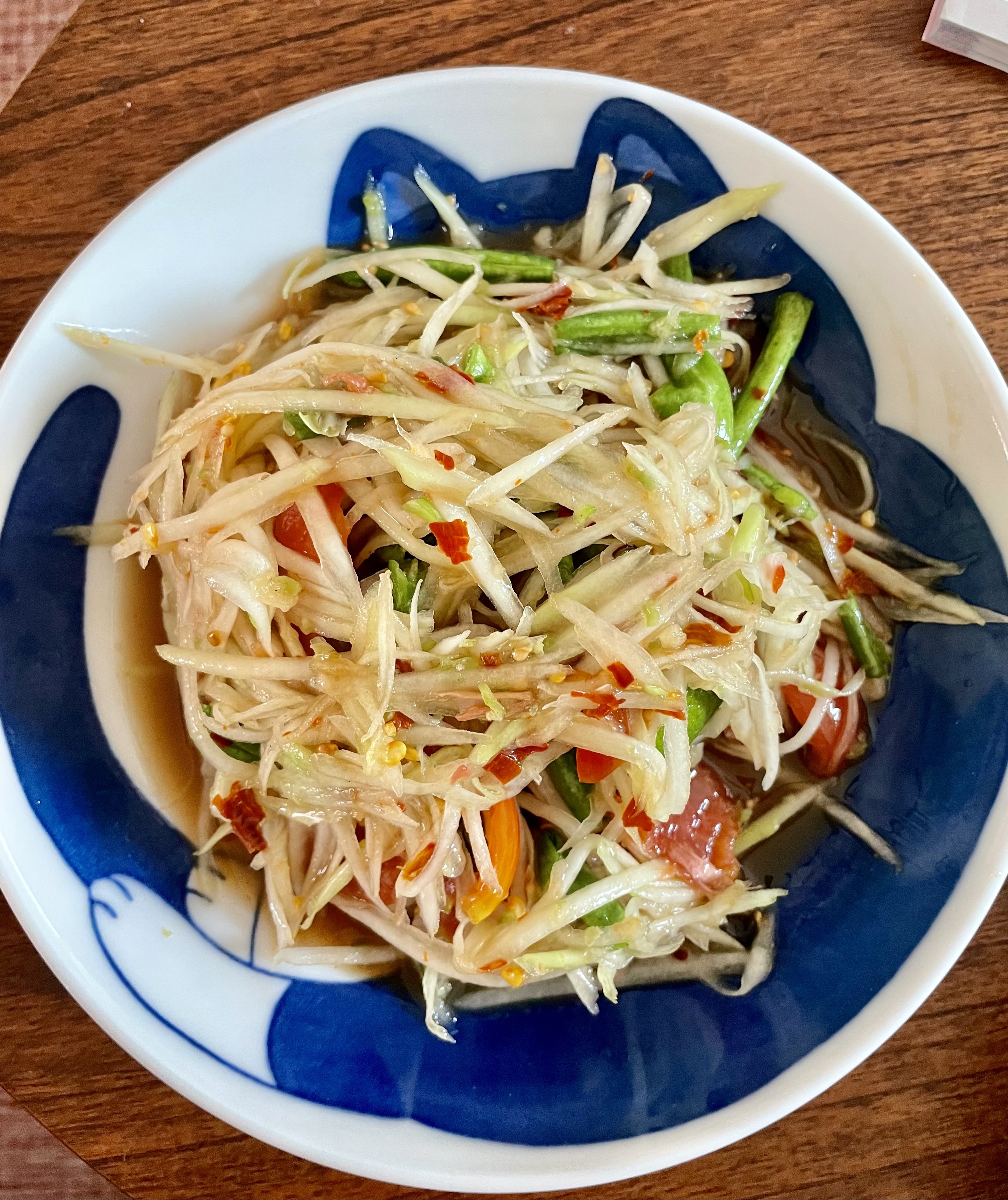
Ingredients:
- 2 cups shredded green papaya. If using large smooth-skinned Mexican variety or a slightly softer fruit be sure to soak shreds in an ice bath before using
- 1-2 cloves garlic, shed of their skins
- 6-7 halved round cherry tomatoes (or equal volume sliced tomato)
- Fresh Thai bird’s eye chile, to spice level preference (1 for minimally spicy, 2 for medium, 3 or more for spicy)
- Dried Thai chile (fry briefly in a little oil to make for a spicier kick and to make the chile more crushable in the krok, optional), 1 for minimally spicy, more like above according to preferences
- 1/2 to 1 Tablespoon Palm sugar (we like the scoopable “wet” kind that comes in a tub. You can also substitute other types of sugar here), to taste
- 1-2 Tbsp Fermented fish sauce (we use Zap Mike, see above), to taste
- 1 Tbsp Fish sauce (we like Tiparos ทิพรส brand), to taste
- 1-2 raw long beans, sliced into 1.5 inch lengths (adds a grassy fresh flavor, optional)
- 1 raw round Thai eggplant, sliced (adds a slightly bitter fresh flavor, optional)
- 1 Tbsp lime juice, to taste
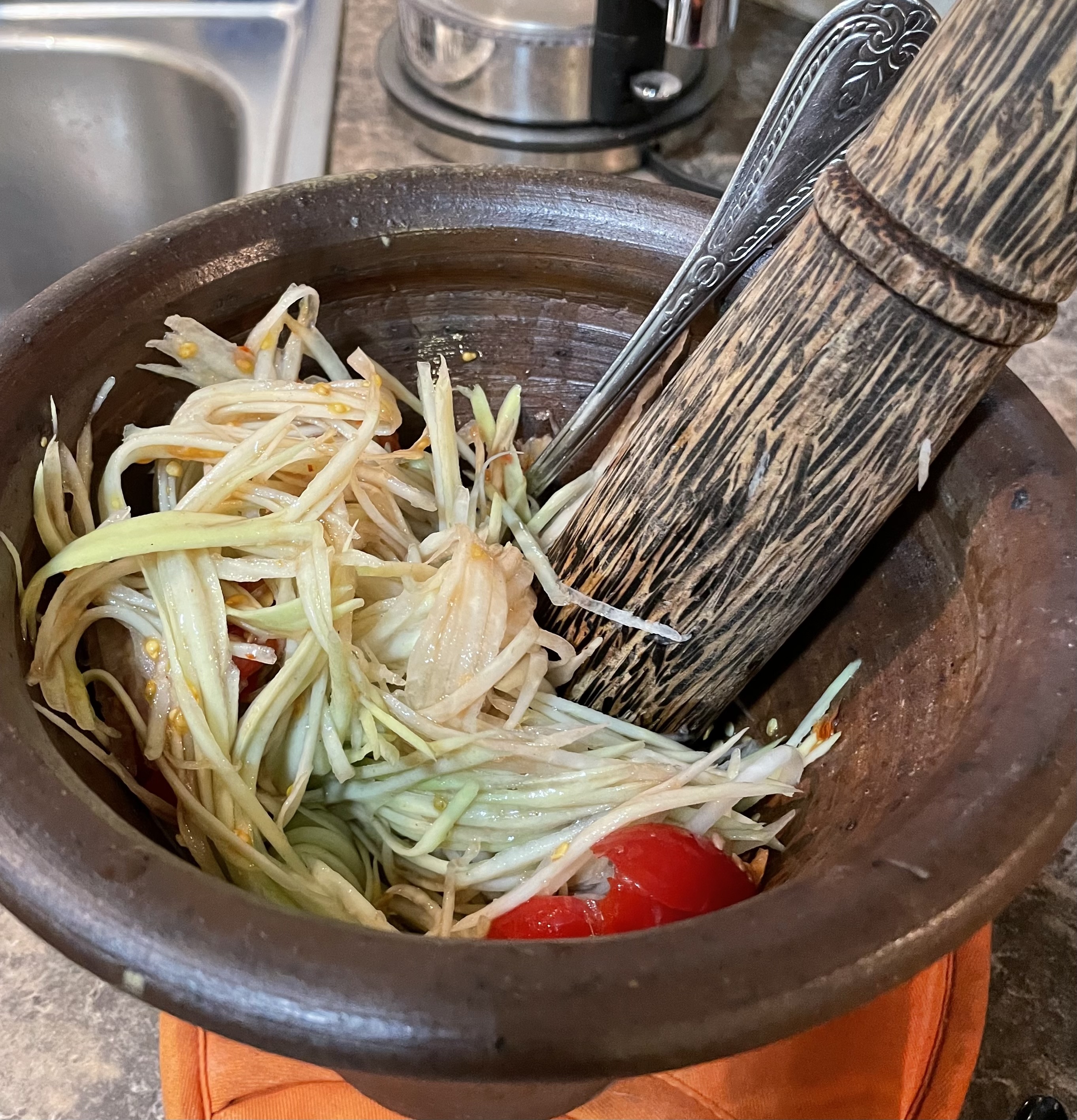
Steps:
- Peel and shred papaya and soak shreds in ice bath. We use a wavy-bladed peeler (see 2014 post for process). Old school makers in Isaan would simply chip indentations into the side of the fruit with a big knife and slice those off the fruit–that works too, but is a different skill set! See here for an image in Wikicommons that illustrates that technique.
- Decide on your spice level, and add chiles accordingly, and peeled garlic cloves to the krok. Pound them up.
- Add raw long beans and eggplant slices, if using.
- Add tomatoes, pound until they’ve released much of their water. Aim for about a cup of juice for the salad.
- Add seasonings: Palm sugar, fermented fish, fish sauce and lime juice and mix well. Taste the juice. It should be very full flavored, balanced flavors with just enough sugar, salt, with an emphasis on sour and funk.
- Add strained (or better yet, spin-dried in a salad spinner) papaya shreds to the krok and bash them through the sauce to bruise the fruit sheds, imparting them with the juice. The object is not to pound the sheds apart, but just to beat them up a bit so that they absorb seasoning. Most people do this with a pestle in one hand and a big spoon in the other, lifting papaya around to distribute the sauce while pounding well. Taste it again to be sure the flavors are bold and balanced. Add more lime or fish sauce if there needs to be more sour or salt.
- Plate and serve. This is commonly served with leafy salad greens, steamed sticky rice, roasted meats and funky dips.

 Asian Markets of Philadelphia

Thank you so much for sharing your experience and knowledge with us at the library. So glad you came because now I feel more confident about shopping at the Asian market. Thank you. And you have any info, suggestions for traveling and visiting Thailand I should would appreciate it. I would like to try and visit near the end of October this year. I have a two vacation. Thanks so much. If it doesn’t work out this year I’ll plan for next. Thank you again.
LikeLike