Unusual food finds at Cousin’s Supermarket in North Philly

Cousins

Cousin’s Supermarket at 5th and Berks

Cousin’s, a Philadelphia institution since 1976, is a very unique supermarket. It has a commendable selection of attractive produce, and aisle upon aisle of fascinating non-perishables from all around the globe. Just to be clear, Cousin’s is not an Asia-focused market like the others generally discussed on this blog–if there was key region for the store I’d say it would be Mexico, but with considerable Caribbean, Central American, and Middle Eastern undertones.

Think about that for a moment to imagine what kind of magic you might find in the vast produce section, and in the many aisles of global non-perishables.

Exhibit A: quince.

Exhibit A: quince.

Today I took some time to browse for a while at the Berks St. location near Temple University (There are 3 locations, two in North Philly and one in Camden, NJ, but I like the Berks St location best). I always find surprises in the produce section. Today I found boxes of fresh, green-shell pistachios (I have only ever seen roasted, cracked and salted pistachios), ridiculously perfumed ripe small Thai guavas, and ripe quinces. I also found some Caribbean flat bread made from cassava root. And a decent variety of dates (and date products) from the Middle East.

Near the produce section by the deli counter there is a section of Turkish and Middle Eastern yogurt (labneh) and yogurt drinks. There you can find several cheeses including beyaz peynir (key part of Turkish meze culture), as well as a selection of Turkish sucuk sausages (these are very garlicky and sometimes spicy beef sausages).

If you are shopping for South or Southeast Asian food items, there is a pretty good chance the produce will be covered here, especially with shared food culture between Mexico and Asia. Of particular note, you will find Sawtooth Coriander (aka recao, culantro), fresh tamarind, fresh ripe and unripe guavas, papayas, mangoes, small purple eggplants, and okra. Key punchy flavorings of cilantro, lime, chile (important for Mexican and Thai) will also be abundant. Today I also found long yellow “wild cucumbers”.

Cousin’s (at least the Berks St location anyway) is unique in the way that that it takes halal seriously. The meat section is substantial, and most (if not all?) of the beef, veal, and chicken is halal. I haven’t seen other stores separate meat to the extent that Cousin’s does–pork is sold here, but only from a separate room off to the side of the store. Purchases are made separately there, where most any cut of pork can be found, including neck, ears, snouts, ribs, as well as a selection of Mexican and Central American specialty sausages.

Items from Turkey are not very common in US supermarkets, or even in Middle Eastern-focused markets in Philadelphia… that is one thing that really surprised me with Cousin’s. They carry several imported brands from Turkey (Sera, Mevsim, Ülker, etc) with staple items such as preserved olives, red pepper paste, Turkish pickles, cracked wheat, sucuk sausages, white cheeses, Mehmet Efendi brand Turkish Coffee, just to name a few. They even have a small selection of Turkish Paşabahçe tea and coffee cups.

Table olives, product of Turkey

Table olives, product of Turkey

Items from other places in the Middle East can also be found here. They sell all sorts of beans, peas, tahini, Egyptian ghee (smen), a wide variety of spices and instant soup and seasoning mixes, teas, and some frozen items like kibbeh meat balls and bags of frozen jute (molokheya) leaves. There are also Lebanese flat breads (larger and thinner than supermarket pita). Today I left with some Lebanese cardamom flavored coffee. IMG_3748
IMG_3750


All in all, if you are interested in unusual food finds, you owe it to yourself to wander around Cousin’s.
Posted in - Featured Food Discoveries, - Featured Markets | Leave a comment

Sweet preserved daikon and Pad Thai

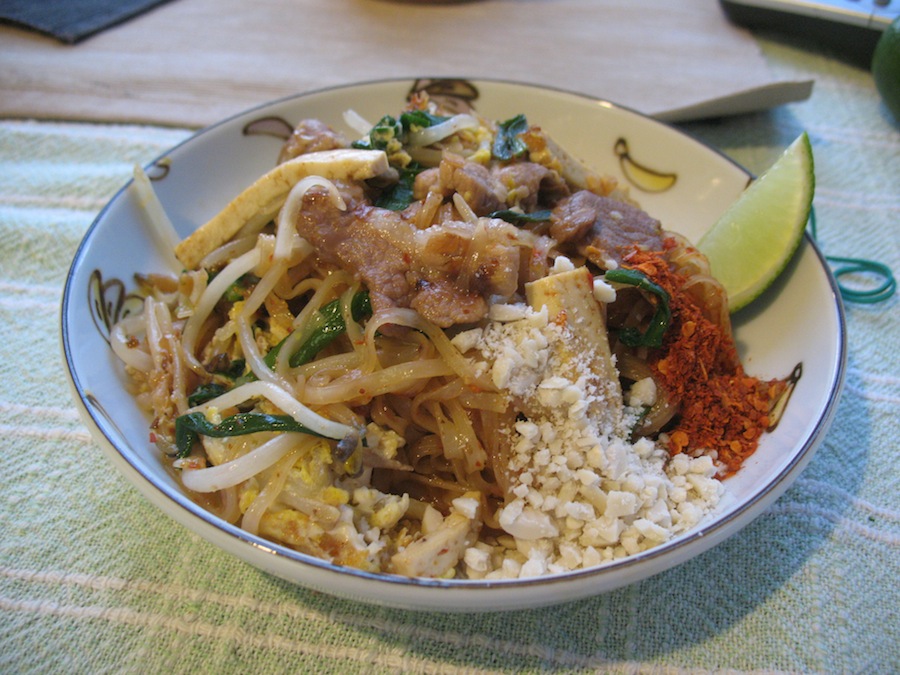
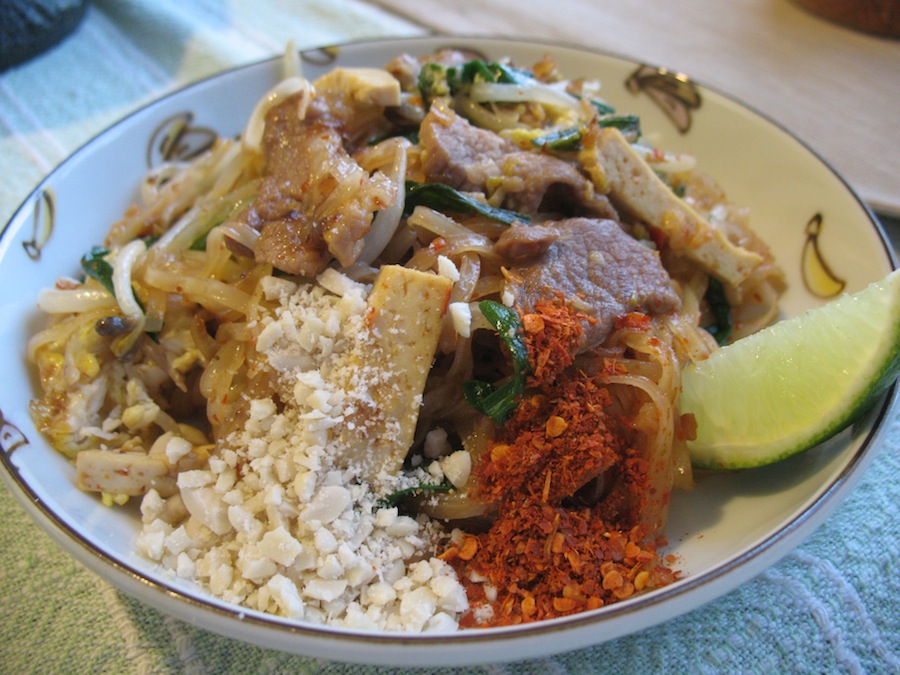
IMG_3325Pad Thai (ผัดไทย literally “Thai-style fry”) is one of the most popular and best known dishes in the genre of Thai cooking, both in Thailand and abroad. The name of this dish comes from a time of nation-building for Thailand, as an ethnic identity of “Thai” was heavily promoted in comparison with other peoples of the region (i.e. Thailand’s, or then Siam’s, large overseas Chinese community). To be sure, pad thai–as well as any other noodle dish–is built from a Southern Chinese foundation with its rice noodles, preserved daikon, garlic chives, and tofu. That said, it finally became the hybrid that we know and love, when that Chinese base collided with locally preferred local Southeast Asian flavors of tamarind, palm sugar, fish sauce, and hot chile.

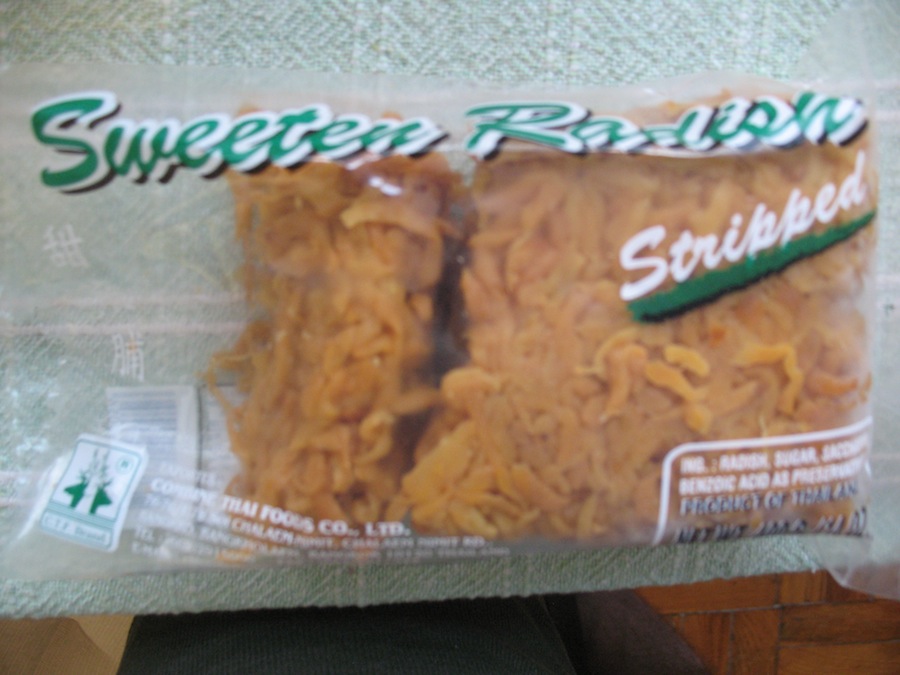
One of the aforementioned Chinese influences on this dish is shredded sweet preserved daikon, in Thai known as chaipho waan ไชโป๊หวาน. This is relatively easy to find in Philadelphia’s Southeast and East Asian-focused markets (South Philly, Washington Ave, Chinatown, and H-marts). Look for varieties that are product of Thailand. Here is the one that we use:

IMG_3284

“Sweeten Radish, stripped” [sic]

IMG_3282

If it is a product of Thailand, it is likely the right kind for pad thai

IMG_3287

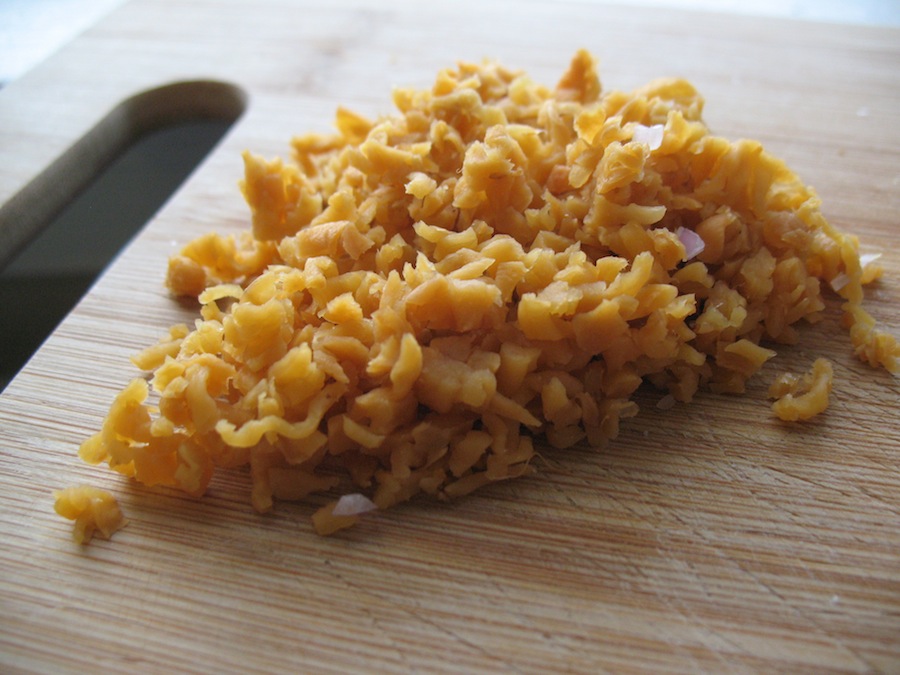
Preserved daikon, chopped and ready for Pad Thai


This is a variety of preserved daikon, based on traditions of Southeast China (Guangdong, Hong Kong, Fujian, and Taiwan). There it is known as 菜脯 (sometimes written 菜甫, with a pronunciation that varies slightly in the region’s dialects, but approximately as the Thais call it: “chaipo”). This sweet radish is used in Southeast Chinese cooking often for noodle dishes, and also to make a savory omelette (which is also popular in Thailand).

Preserving daikon radishes by salting and candying is common all throughout East Asia, where the food item is more broadly known as “dried daikon” 蘿蔔乾.

Pad Thai – ผัดไทย

Pad thai isn’t very difficult to make, but there are some steps involved.

Ingredients:

Rice noodles (see below)
sweet preserved daikon radish, 3 Tbsp
mung bean sprouts (usually labeled simply “bean sprouts”), good handfulmeat or shrimp, maybe 1/3 lb
2 eggs
extra firm tofu, see below
garlic chive leaves, good handful
red Asian shallots, 4
palm sugar, about 3 Tbsp
fish sauce, 2-3 Tbsp
tamarind juice, 2-3 Tbsp
Crushed peanuts, chile flakes, lime for garnish and a final balance to flavors

IMG_3290

Bunches of dried flat rice noodles (hefen 河粉). Use the kind that are not very wide. Soak them in cold water until soft. Drain. We used 4 bundles like as above.

IMG_3286

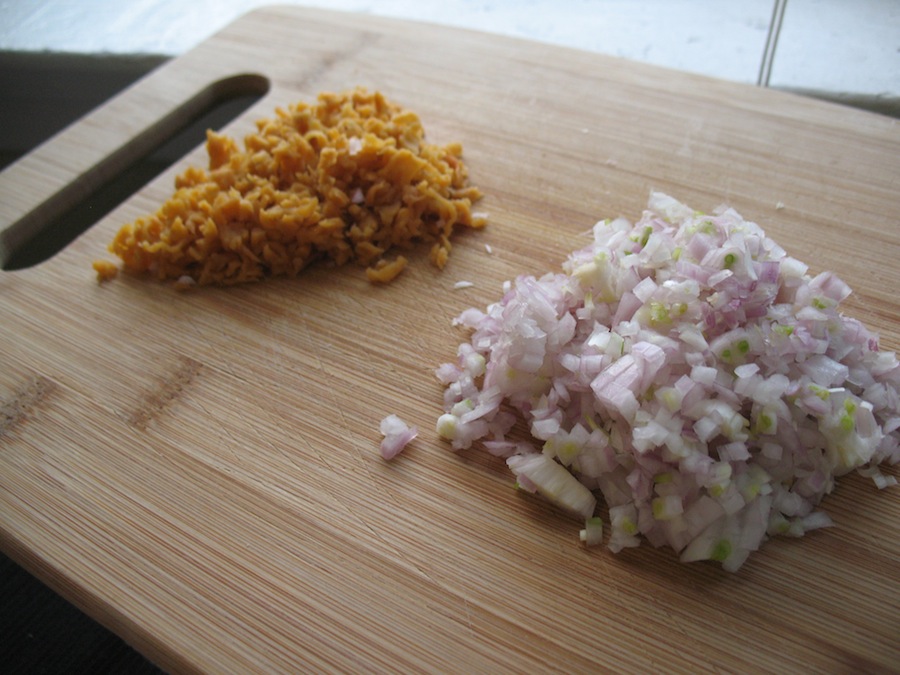
chop your preserved daikon and shallots.
IMG_3294

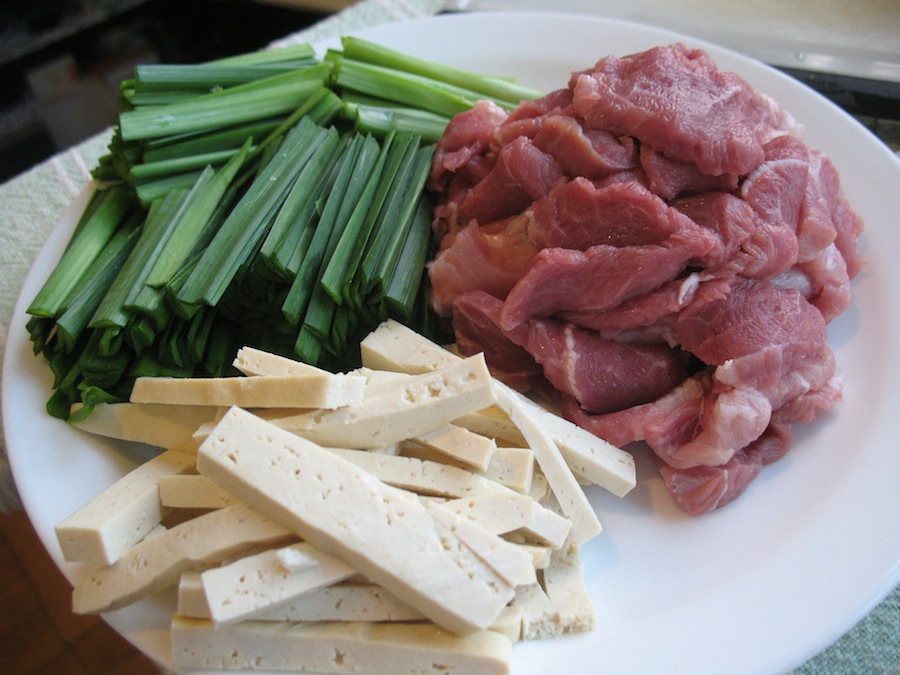
make large matchsticks of other stir fry ingredients: garlic chive leaves (jiucai 韭菜), firm tofu, meat. Shrimp is also a popular star of this dish, but today it is sliced pork for us.

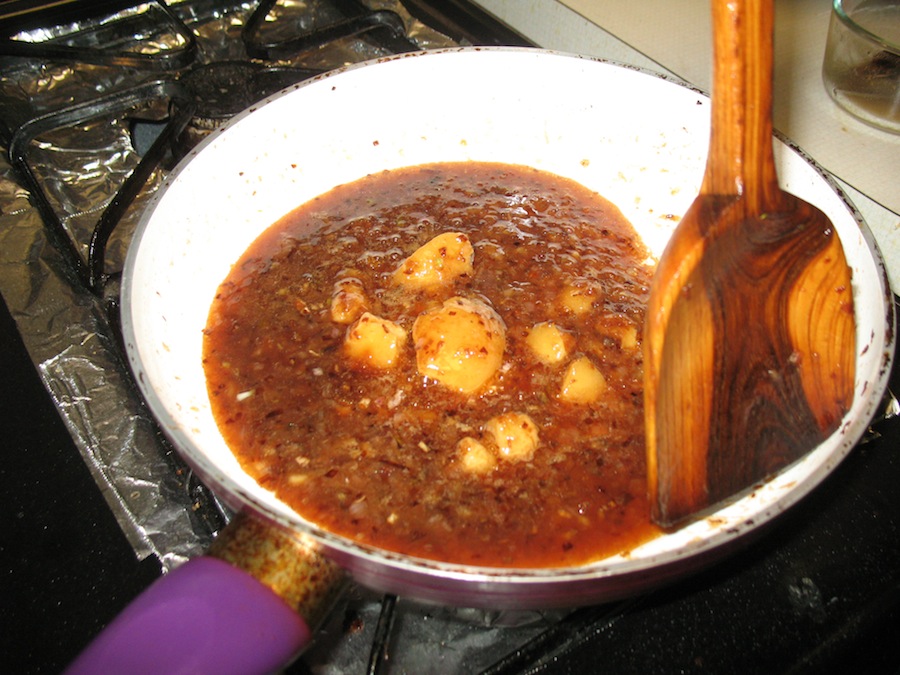
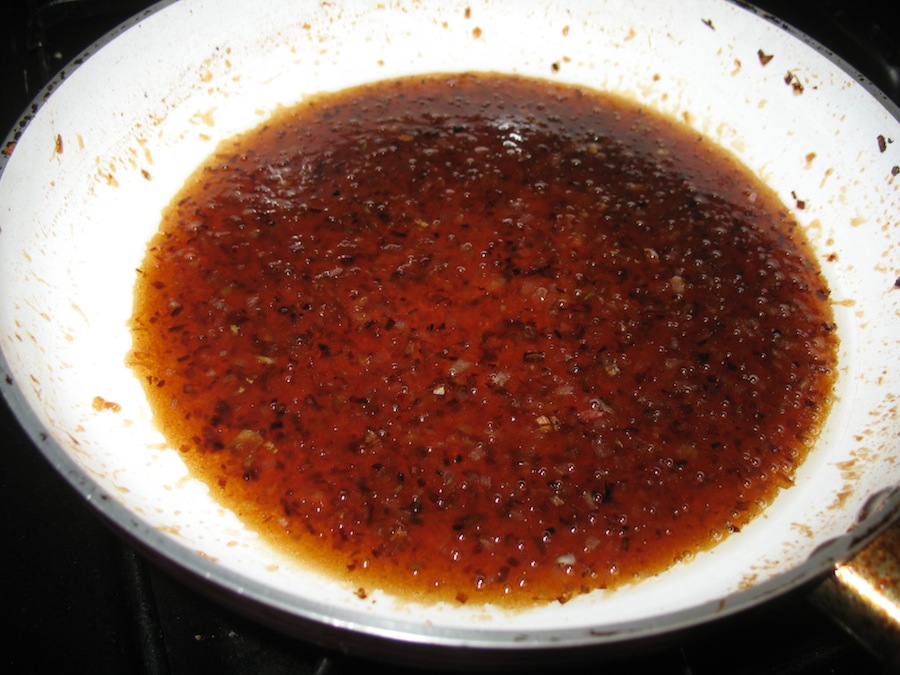
Make the sweet and sour sauce separately. This is shown below. 1. Start with frying your shallots in some oil, 2. then approximate equal amounts of extracted sour tamarind juice, palm sugar, and fish sauce. We also added a spoon of dried chile flakes. Stir until sugar is dissolved.


IMG_3304IMG_3307IMG_3310


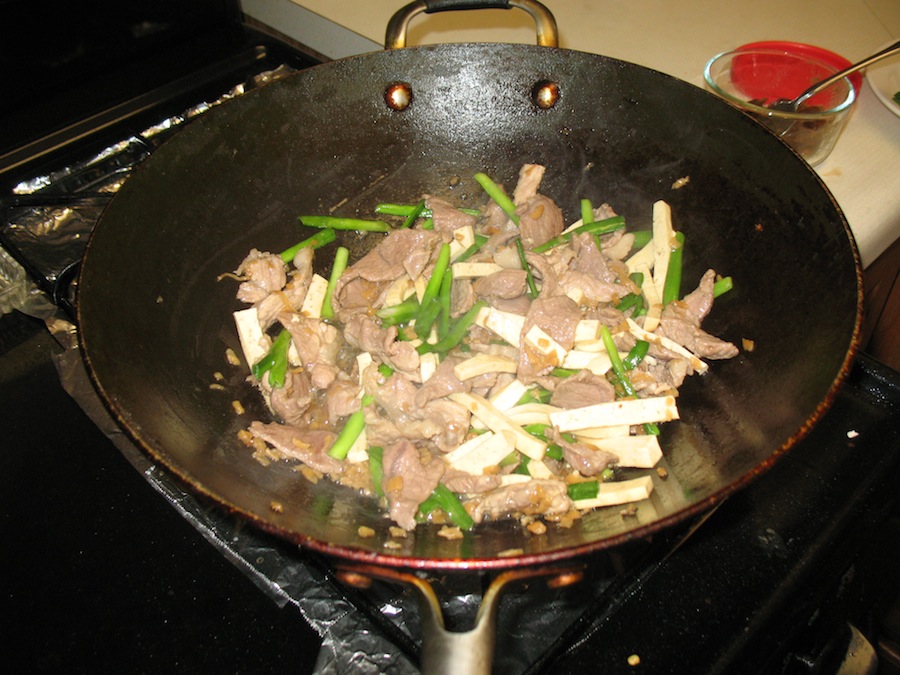
In a large wok (big enough to hold all the ingredients), start by frying the preserved daikon in oil:

IMG_3309Add in the pork, tofu, and garlic chives. Fry until meat is just about cooked:

IMG_3312Add in the soaked an drained noodles, and a handful of mung bean sprouts:

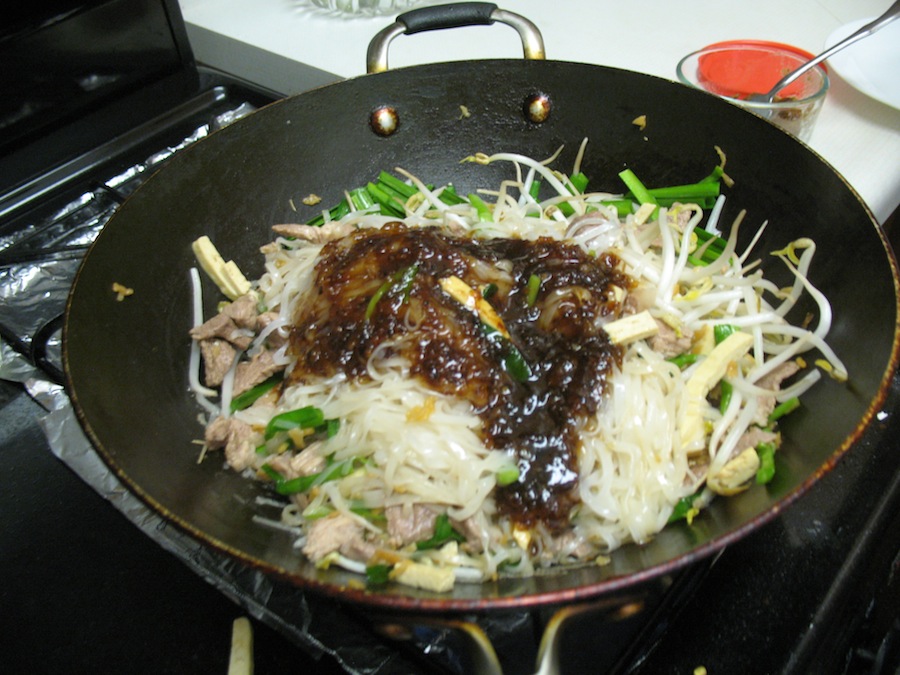
IMG_3316Add in the sweet and sour sauce. Stir with one or two implements (the mass of noodles gets a little hard to manage with a flimsy spatula:

IMG_3318Shove the mass to once side and crack some eggs in there. Scramble them on their own for a bit before mixing them in with the rest of the wok’s contents:

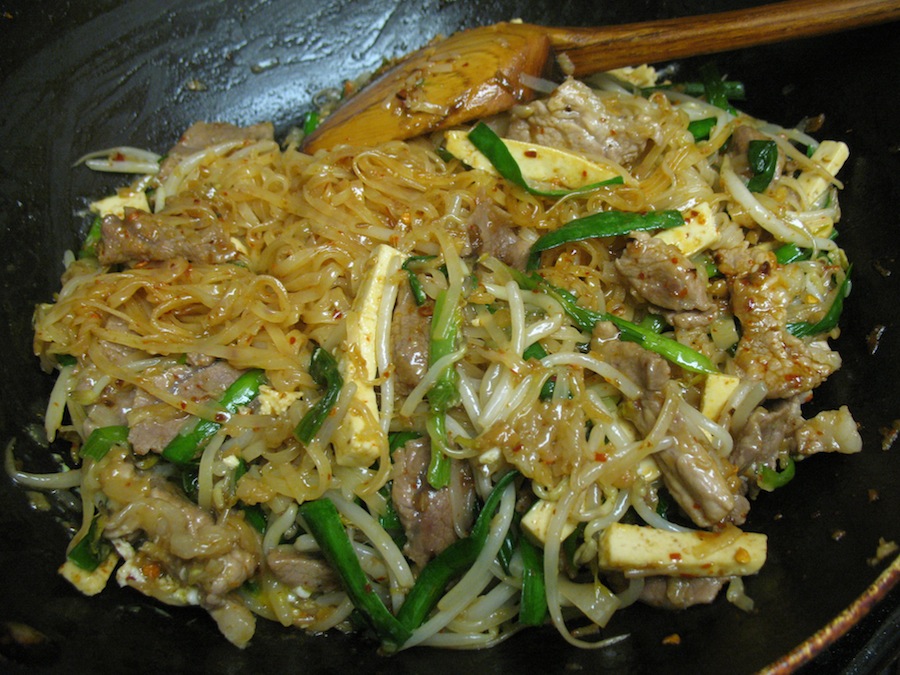
IMG_3320Mix well, taste for seasonings:

IMG_3322Finally, serve with dried chile flakes, ground peanuts and a wedge of lime:

IMG_3331

Posted in - Featured Food Discoveries, - Recipes, Chinese food, Thai/Lao food | Tagged , , , , , , | 1 Comment

New Maido! now open in Ardmore

IMG_3676

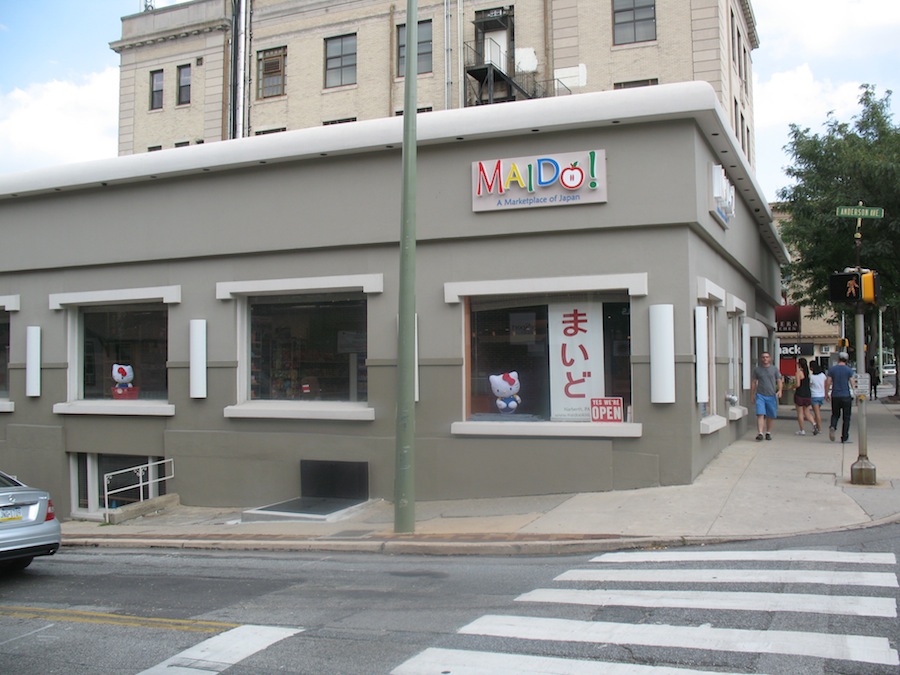
New Maido! location in Ardmore

Maido! A Marketplace of Japan is again open, at their new location in Ardmore off the main line (5 E Lancaster Ave).

I never got a chance to catch this notable Japanese grocery store/lunch option before it closed up and began its slow transition from its old location in Narberth, PA, but I was impressed with the reviews of the old location and apparent fan club-like following. The store had done much to promote Japanese food and culture, and even had (or has?) a shuttle bus to bring people in from Center City/University City.

The new location is beautiful. The interior is clean and stylish. Quite different from other markets highlighted in this blog. The grocery inventory at this point is fairly basic, with noticeable strengths in specialty rice and refrigerator section items. The fresh produce has a lot of room to grow. I was particularly impressed with the selection of pickles.

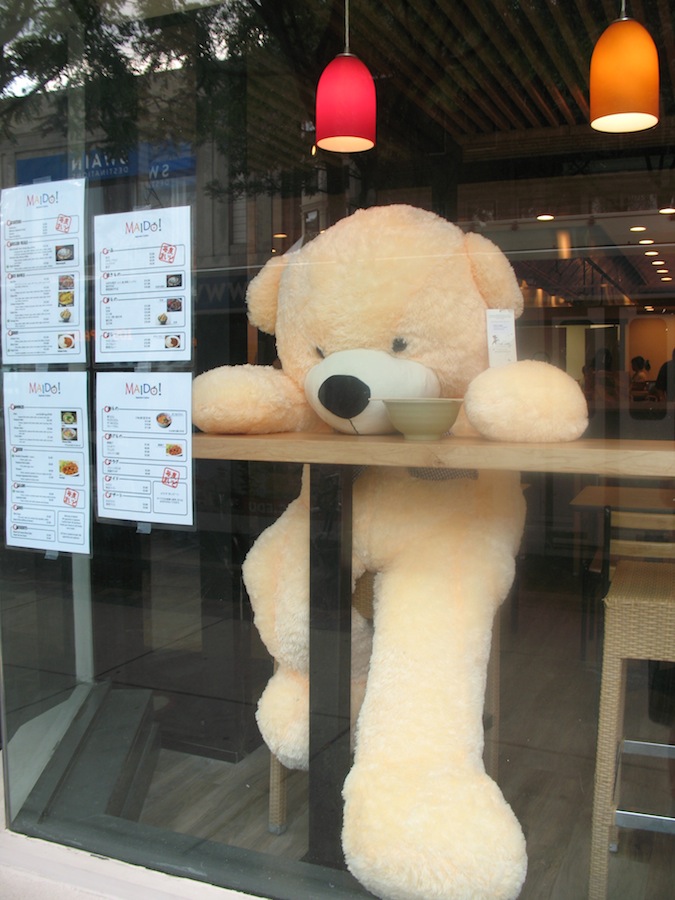
IMG_3677At this stage, the most striking feature of Maido! is its expanded eatery area. There are three stations: a bento station (which wasn’t operational today), a sushi/onigiri station, and a cooking island centerpiece for frying okonomiyaki and tempura, and for staging udon noodles and rice bowls.

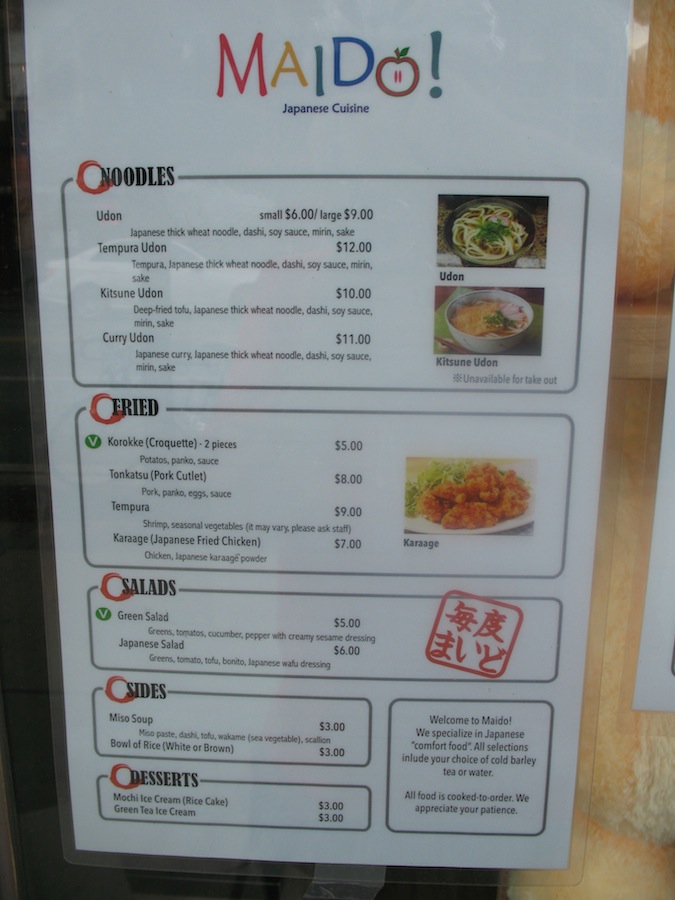
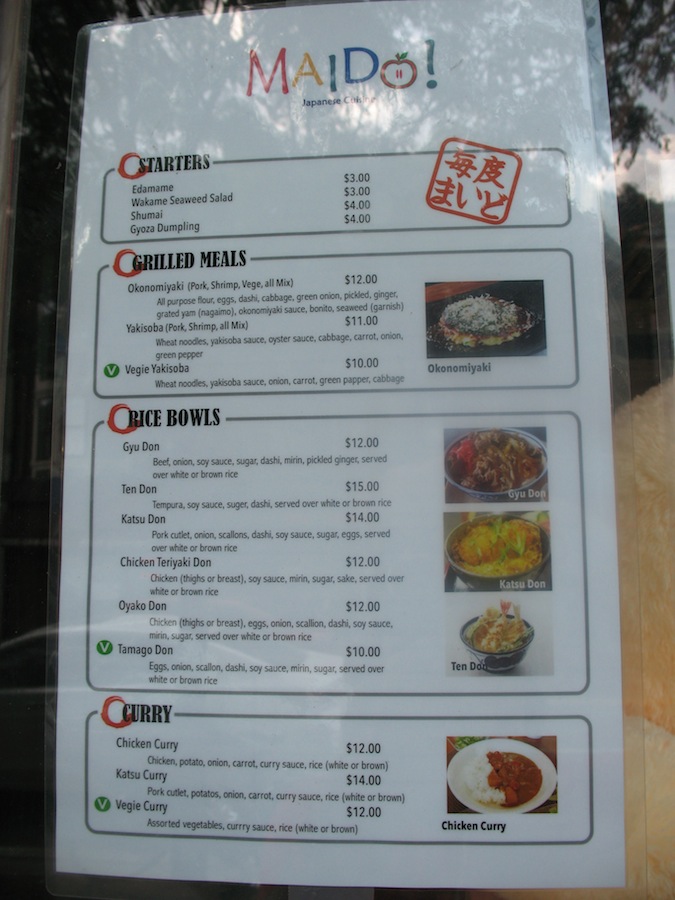
A bar counter surrounds that central cook station, with additional tables for groups off to the side. The menu hosts several items that would not be common finds at other Japanese restaurants: okonomiyaki, rice bowls topped with meats, curry katsu, and udon noodles.

From the images below, you can see the menu items for yourself:

IMG_3679 IMG_3678


CAM00261I got the okonomiyaki. It was quite pleasant. There was a bit of a wait for the order and for the food to cook though, but hey, they have only been open for a day.

It’s a fun location, and there is a lot of potential here with the great food options and beautiful location. People seemed to be trickling as a fairly steady stream, though the opening hasn’t even been advertised online–beyond the fan posts on Facebook.

Posted in - Featured Markets, Japanese food | Tagged , , | Leave a comment

A Mongolian favorite: stew-fried noodles with mutton

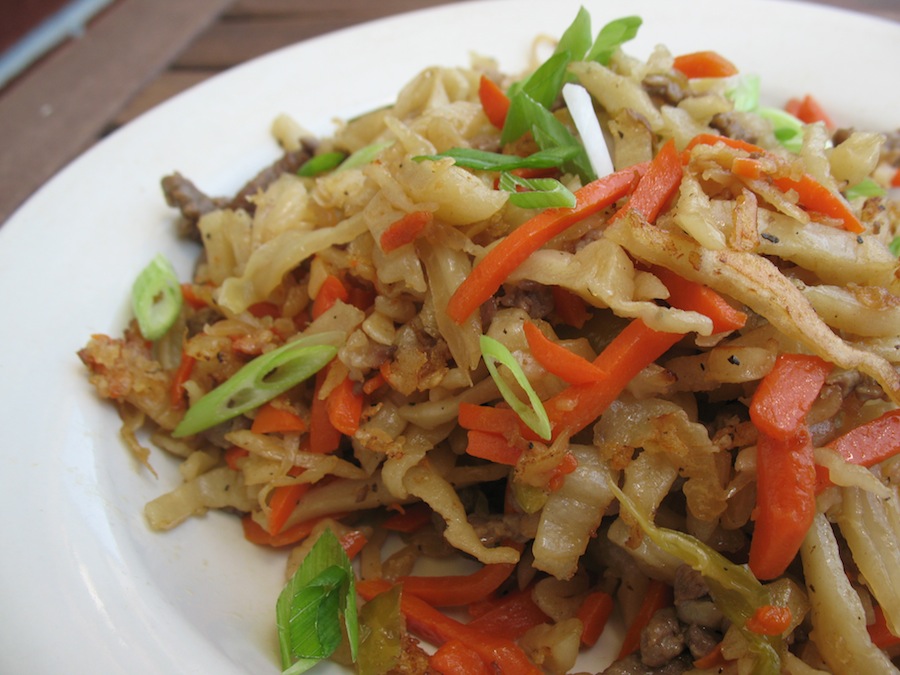
IMG_3641Tsuivan цуйван (“tswee-wen”), or what I am calling “Mongolian stew-fried noodles”, is a national favorite in Mongolia. It isn’t a primary celebratory food, or a fancy thing that you would take your date out to a restaurant for. It is a greasy-spoon favorite at tea houses or low-brow diners–establishments that I highlighted a few days ago in a separate post. It is a comfort food that is often made at home, as a one-pot dish, possible to cook in an apartment kitchen or even in a ger.

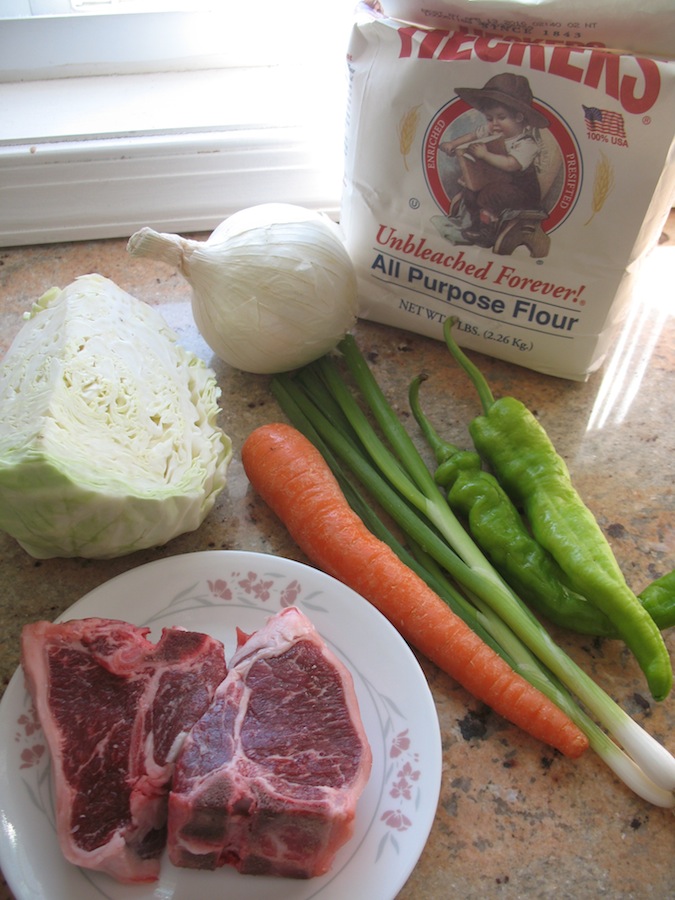
Ingredients, minus garlic, soy sauce, and vinegar.

Ingredients, minus garlic, soy sauce, and vinegar

Ingredients for tsuivan vary depending on the cook and what’s on hand. Cooking methods also vary, hinting at my coinage of “stew-fried” in the title of this post. Sometimes the hand-made noodle is boiled in the stewing broth before the sauce is boiled off, and sometimes the noodle is precooked either by steaming a whole rolled noodle (some cooks use a steamer basket right above the boiling meat mixture), and even sometimes by baking flat noodles like a lavash flat bread on a cooktop (here is a link to a Japanese tourist youtube video of tsuivan with a homestay with a Kazakh family).

In researching varied recipes for this dish, I even found one that suggests buying flour tortillas and shredding them finely to use as noodles. After you watch that Japanese video above, you’ll understand why that might even work. Other helpful sites and resources I found include a Russian language video step-by-step, and a helpful blog post “Cooking with Oyuka“.

I really enjoy this dish. Perhaps it is the muttony oiliness, perhaps it is the stewed carrots, but it kind of reminds me of a noodle version of the Central Asian rice pilaf (plov or polo).

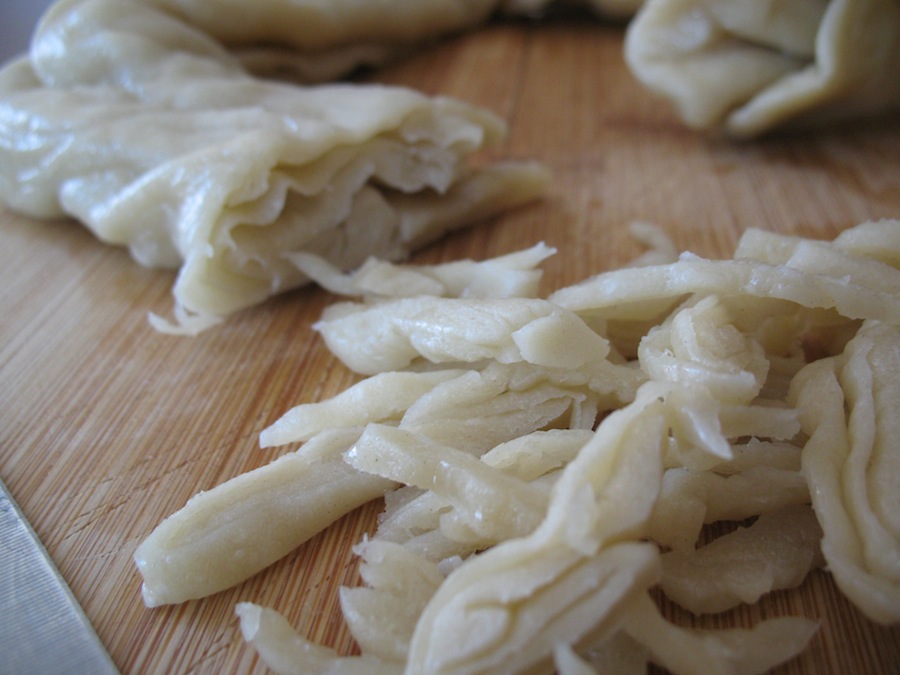
I’ve tried cooking this a few different ways now, and the flavor and texture results were similar. The noodles were a little bit gummy, but with some fond from the bottom of the pot. Today, as per suggested in the Russian language video and Oyuka’s blog post, I steamed the big noodle separately, and that seemed to make the noodle easier to shred more finely (with a sharp knife).

Recipe: Stew-fried Mongolian noodles – Цуйван

The basic idea for this dish is very simple:

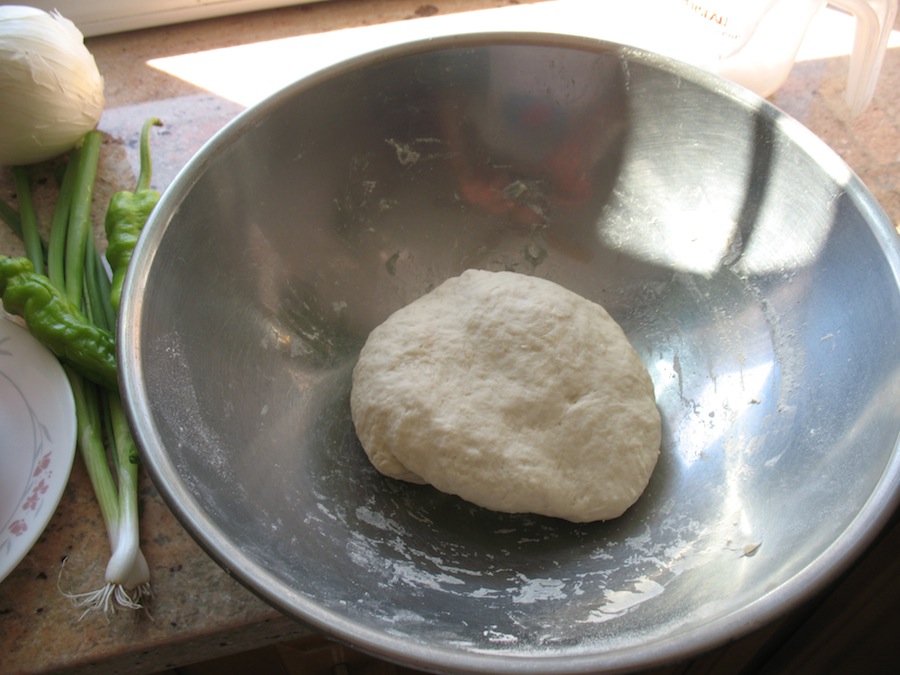
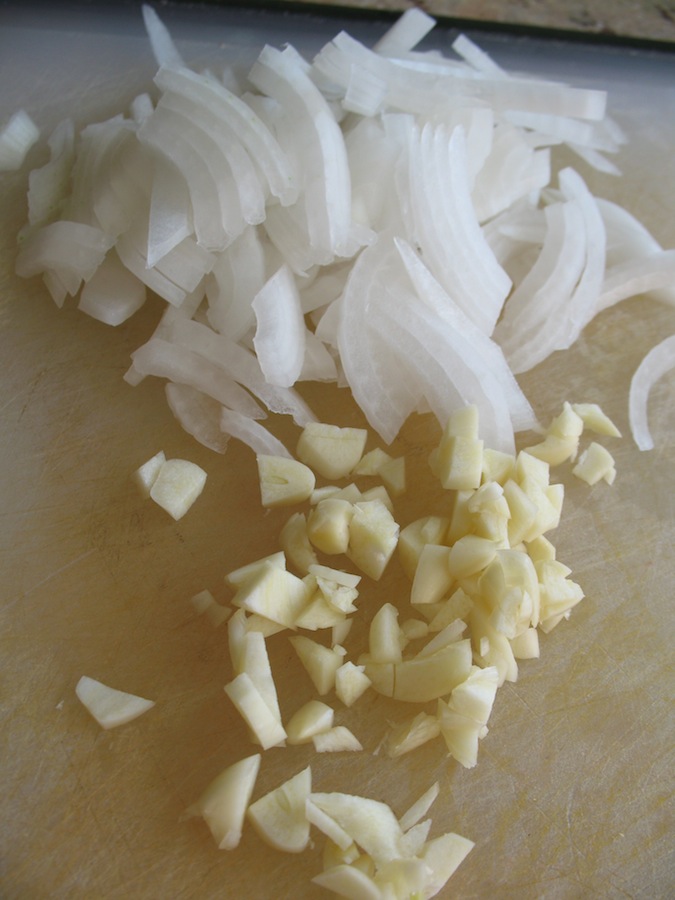
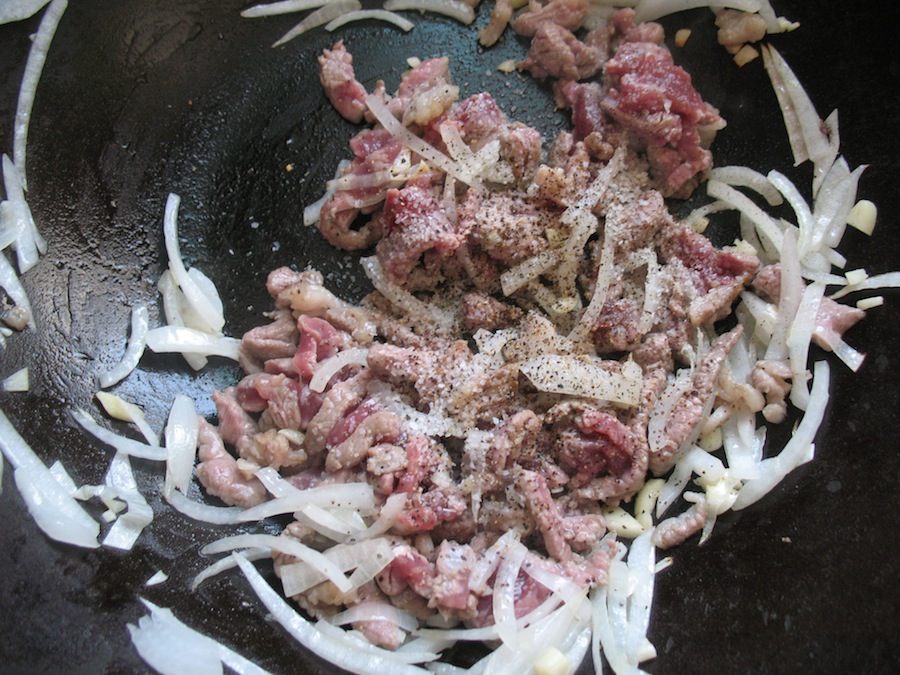
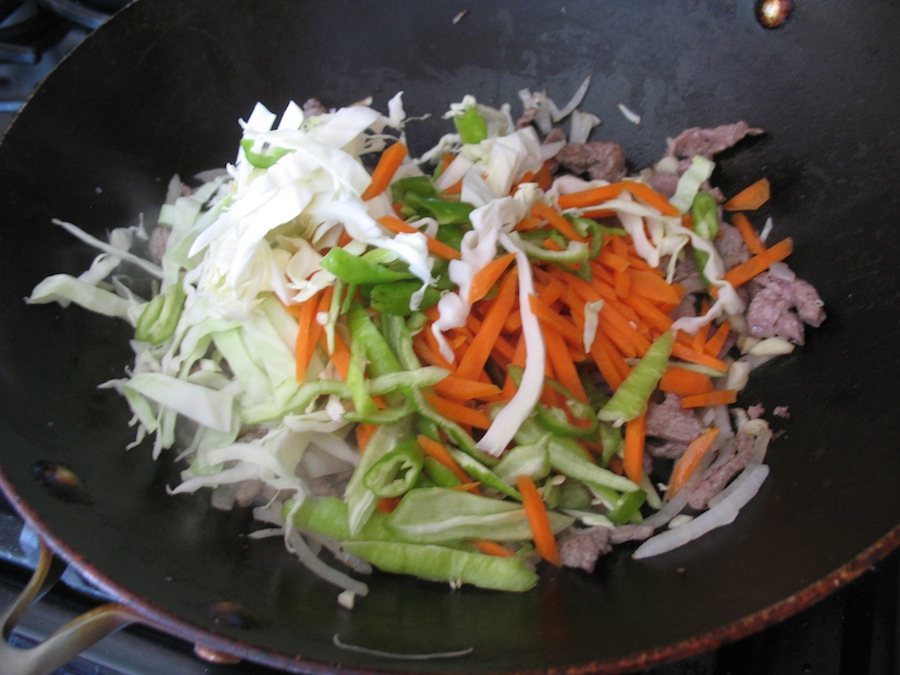
1. Mix up a simple noodle dough. I used 2 cups of flour to about two-thirds of a cup of water. Cover and let sit while you do other things.IMG_35862. Coarsely shred or julienne vegetables of choice: carrot, cabbage, [bell] pepper (I used a slightly hotter pepper today), onion, garlic. Some use potato too.

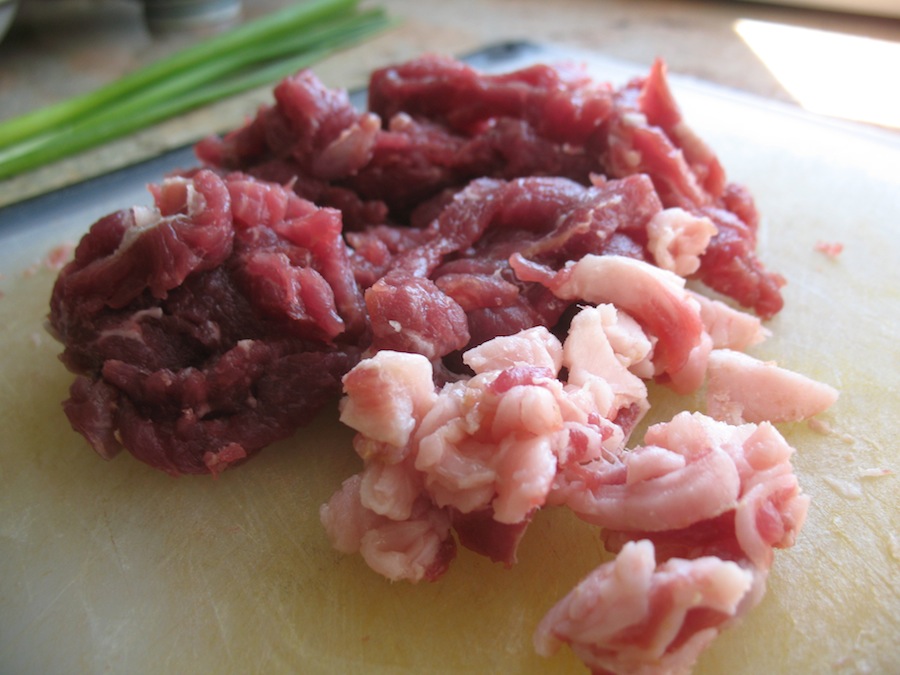
3. Cut up fatty mutton in short thin strips across the grain. I had about 1/2 pound mutton.

IMG_3593 IMG_3597IMG_3603


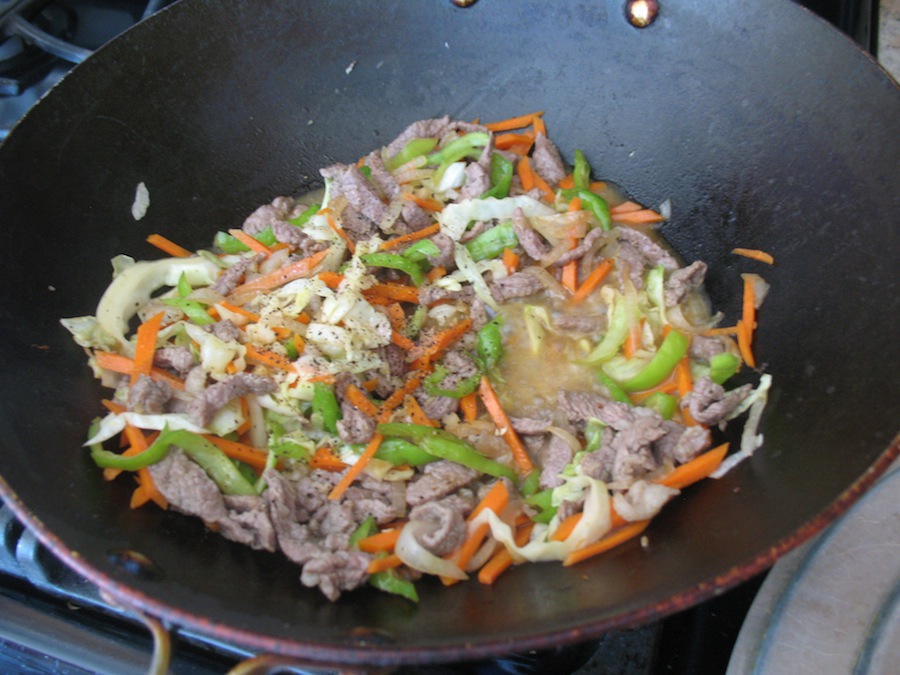
4. All of the above gets fried and stewed by adding a little stock or water. Season with salt and pepper. Some use soy sauce and/or vinegar too. I used all of those in my version today. Keep in mind that the noodle is not salted, so the stew should be kind of salty. After the noodle gets added, the flavors will balance.

IMG_3606IMG_3611IMG_3614


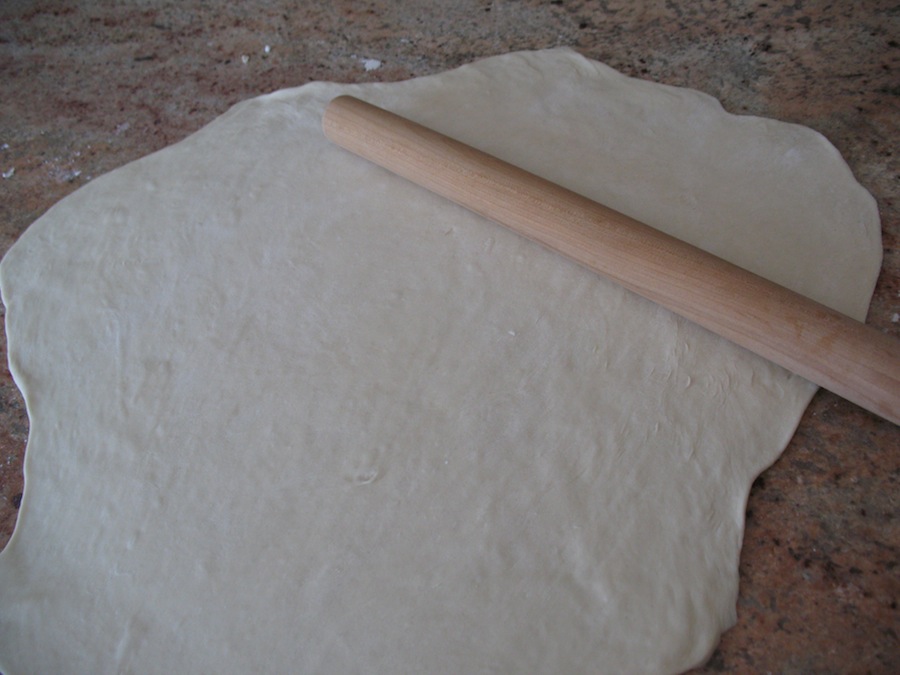
5. The noodle is rolled out, covered with oil or butter, rolled up (or more often folded up), and then either cut to go into the cooking liquid of the stew, or steamed as a roll before being finely shredded. I steamed the noodle in a separate pot for about 5 minutes. The resulting coil was kind of ugly, but it shredded nicely.

IMG_3605IMG_3620IMG_3623


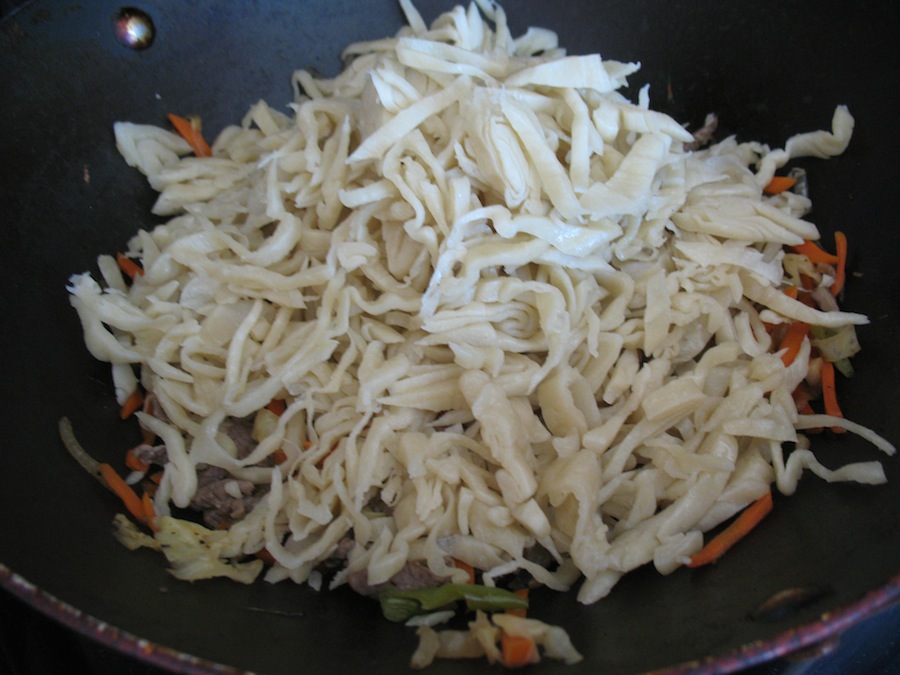
IMG_36266. The challenge is getting the noodle to crisp a bit on the bottom of the pan when finalizing the dish. This means you have to boil the stock dry with the noodles OR be sure the stock is mostly cooked off before adding the precooked noodles. If there is too much stock, the noodles will want to fuze to the pan. If you are using precooked noodles, keep in mind they don’t need further cooking, you are just looking for little bit of a crust on the bottom.

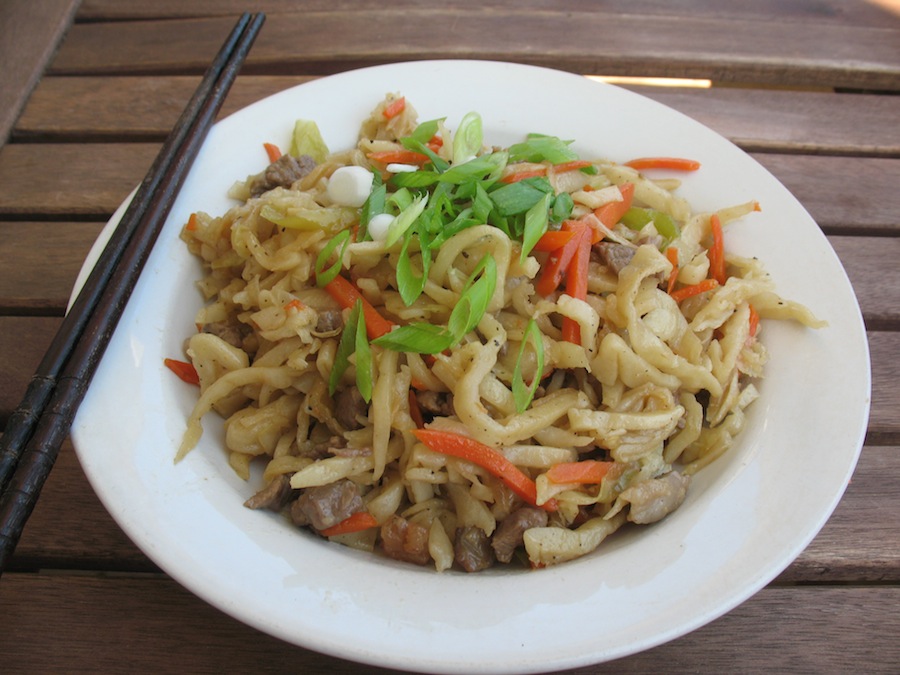
IMG_36287. Finally, to serve the noodles, many Mongols like to eat this with a side of ketchup. It is actually a very nice accompaniment. Eat with chopsticks or a fork/spoon. It goes extra nice with beer.IMG_3636

Posted in - Featured Food Discoveries, Mongolian food | Tagged , , | 1 Comment

Ulaanbaatar post #3: A tribute to Mongolian “greasy-spoon” eateries

IMG_2290

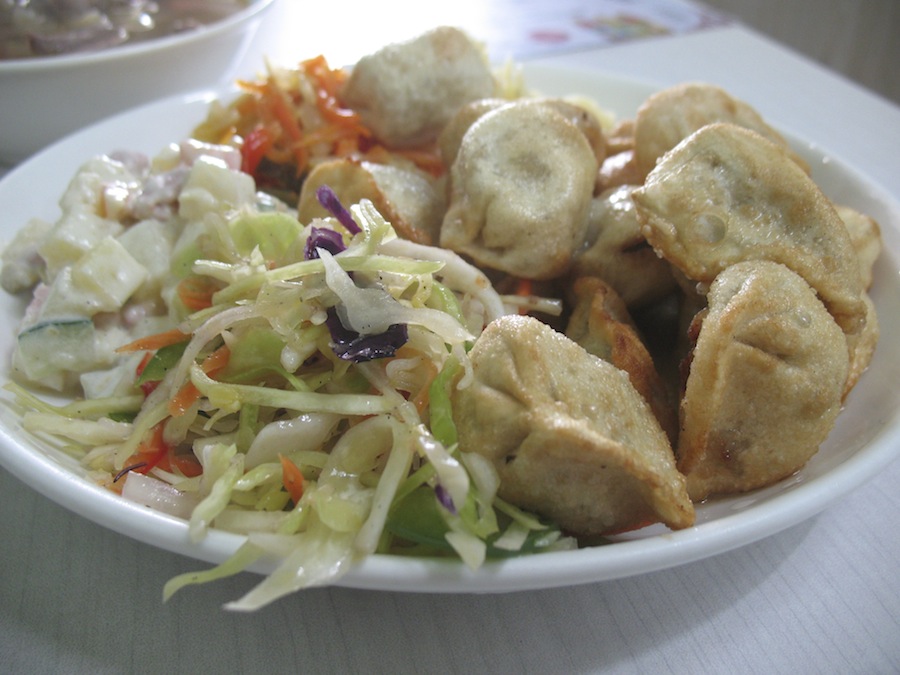
fried mutton bansh (банш) with three side salads, and a soup just off camera… nice lunch

Chances are, traditional Mongolian foods are totally unlike what you imagine them to be. Taiwanese, Chinese, and American Mongolian Barbecue and Mongolian hot pot chain restaurants have done plenty to influence the global popular imagination of what Mongolian food is all about. Let me tell you, the reality of Mongolian food culture is quite different that what you can find at your local hibachi buffet.

Visitors to Mongolia actually often have trouble with traditional Mongolian cuisine upon arrival. Meat, when it is used (which is always), is fattier and more gamey than what many in the States and Western Europe are used to. And the other half of the Mongolian food pyramid, dairy, consists of cheeses, milks, and even occasional alcoholic fermented milks that are generally a bit more gamey and sour than many can appreciate.

IMG_2247

A cheese counter (including bags of sweet and sour dried cheeses) at Mercury Market in Ulaanbaatar

This often leads to flat-out disdain toward Mongolian foods.

That said, Mongols take great pride in their foods, and honestly, once you get over “a bit gamey” and “a tad sour”, traditional foods in Mongolia can be very tasty, and dare I say it, even outstanding. But, like greasy diner-type restaurants (i.e. “dives”) elsewhere in the world, you might very well get an off night with something truly bad. Fortunately, more and more, dinner option meals (at least in Ulaanbaatar) are getting more regularly flavorful and satisfying.

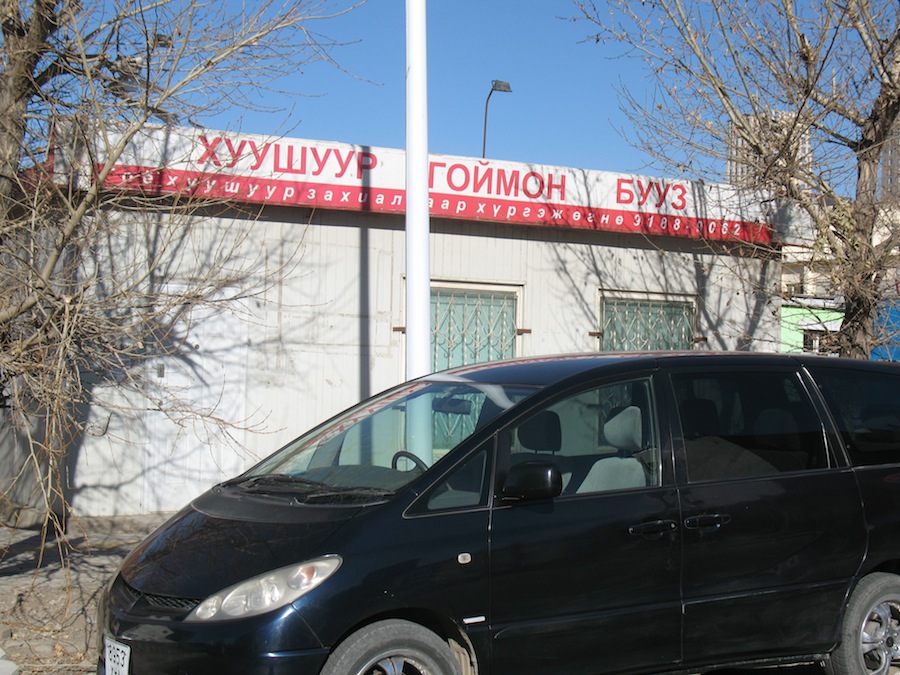
New Mongol chain operations have been forming empires in Mongolia since private enterprise was a possibility. If you visit Ulaanbaatar nowadays, you will see [Modern] Nomads and their subsidiary Grab & Go all around the city, offering elevated forms of traditional Mongolian dishes, as well a quick fixes when you are on-the-go (the Nomads’ symbol is an artist’s rendition of the cap of a traditional Mongolian dwelling, the ger). There is also the 24-hour Khaan buuz  chain, that can satisfy your dumpling fix. Other chains are also rising to fill particular niche markets, including traditional greasy foods with beer, like the Zochin Mongol group (where I took my “fried noodle” pic below, as well as many other new chains.

Very generally speaking, Mongolian food is very heavy on the meat-and-starch. Meals tend to be boiled, steamed, and more occasionally fried and roasted. Vegetables are used, but mostly as ornaments. Aside from salt and onion, spices and other aromatics are not commonly used. These observations lead to typical criticisms of Mongolian food by visitors. Strangely though, those flavors are quite similar to many diets around the world, including where I grew up, in rural Wisconsin. For example, potatoes, carrots, and cabbage were the primary “vegetables” alongside main courses of non-spiced steak, roasts, or stews. How can we criticize? I am reminded that in our country, regulatory agencies even count ketchup as a vegetable, in order to keep meat and starch as nutritionally “balanced” meals for schoolchildren in many parts of the US. Mongolia has some similar issues with that.

Nowadays in Mongolia there are actually public health campaigns encouraging people to eat green vegetables. Unlike Wisconsin, Mongolia’s landscape is quite inhospitable to most vegetables. But greens are grown successfully in a network of greenhouses, and literally tons of vegetables are imported from China and elsewhere on a daily basis. While most Mongols seem to appreciate meat-and-starch over other foods, every time I go to Mongolia I am pleasantly surprised at the new food trends. The bar keeps getting kicked ever higher, with surprising imports from around the world and with supercharged entrepreneurial domestic produce in that landlocked country. More and more, cabbage and lettuce varieties are included in meals, spinach and Chinese long leaf veggies are also becoming staples. Kimchi is practically a staple (as is hinted at my post on Korean UB), and you can even get fresh herbs at many of the major markets: basil, cilantro, and mint.

Back to classic Mongolian diner food… Below are some images of typical Mongolian “greasy spoon” restaurants (i.e. places that might be likened to American “dives” and “diners”). These are places that sling out greasy home-style meat-and-starch meals, the likes of which mom, or possibly grandma, used to make.

IMG_2240

“steamed dumpling gwanz”

I have to say… I really enjoy these places, largely the same way I enjoy down-home American diners. It’s just regular people (with the occasional inclusion of those from higher and lower echelons of society), getting a quick fix on some basic comfort foods. Think mac ‘n cheese, but without the processed foods and without the preservatives.

These kinds of restaurants are known by different names in Mongolian, with varying degrees of formality. The most basic of dives are called гуанз/”gwanz” or a цайны газар “tsaynee gazar”[tea house]. A slightly more formal setting (serving similar dishes) might be called a “dinner house” or “banquet house” зоогийн газар “zoogeen gazar”. Restaurants may also be themed “dumplings” or “fried meat pies” as specialties (like the pic to the left).


“deep fried meat pies, noodles, and steamed dumplings”

“Arvijix” Tea House.

IMG_2228

Modon Tea House.

“7 [pig] Tea House”

“Mongol Buuz” (and Huushuur)

“Happy” Tea House: buuz, huushuur, buuz, huushuur, buuz.

Menu items between restaurants (if they have a menu at all) are pretty similar. Here are some of the common finds:

Бууз “buuz” (pronounced “bōz”)- these are steamed meat-filled dumplings. Similar foods can be found from Japan all the way to Turkey and the Mediterranean. Buuz skins are usually a little thicker than what you might find as wrapped dumplings at Chinese dim sum places, for example. This is an important dish to Mongols, and it is largely used as a celebratory food. They tend not to eat them with sauces or dips. The filling meat is usually mutton, onion, salt and pepper.

IMG_2289

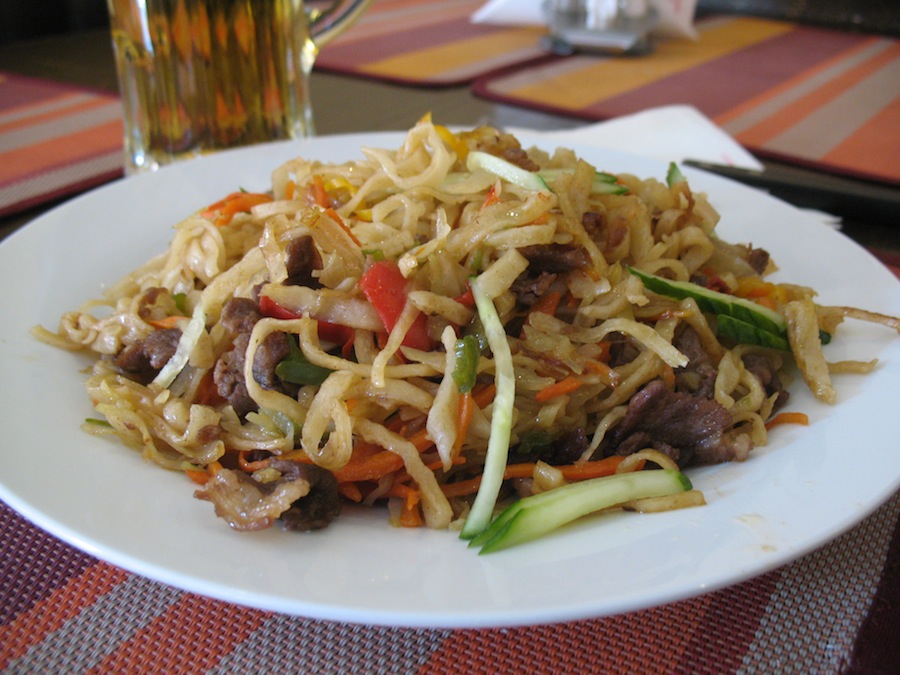
Цуйван “Tsuivan” (pronounced “tswee-wen”). Fried noodles with whatever is handy. Often the noodles are first steamed and then fried, and common complements are onion, carrot, potato, cabbage. As usual, fatty mutton is used. This one has cucumber and red pepper too:

IMG_2269

Банш “bansh”. These are smaller dumplings, similar to jiaozi or gyoza. Sometimes these are put into soup, sometimes steamed, and sometimes deep fried (like the following example–another view of the dish from the top):

IMG_2292

Шөл “Shol”. Soup. This can vary widely, but it is always a meat broth, with occassional additions of noodles, carrot, potato, cabbage.

IMG_2293

I am missing a key photo of the other very typical go-to food, хуушуур “huushuur”. These are much larger, flat meat pies, that are deep fried. See here for an image of huushuur on BuffaloEats. Christian Wild also has some nice images on his travel blog.

Note: if you ever travel to Inner Mongolia, and you are looking for these kinds of restaurants, look for “Milk tea house” 奶茶店. Otherwise you might assume the only Mongol restaurants are the big tourist ones.

Posted in - Featured Food Discoveries, - Guides, - Unique food traditions, Mongolian food | Tagged , , , , , , , , , , , , , , , , , | 3 Comments

Spicy pickled cowpeas and leftovers for breakfast

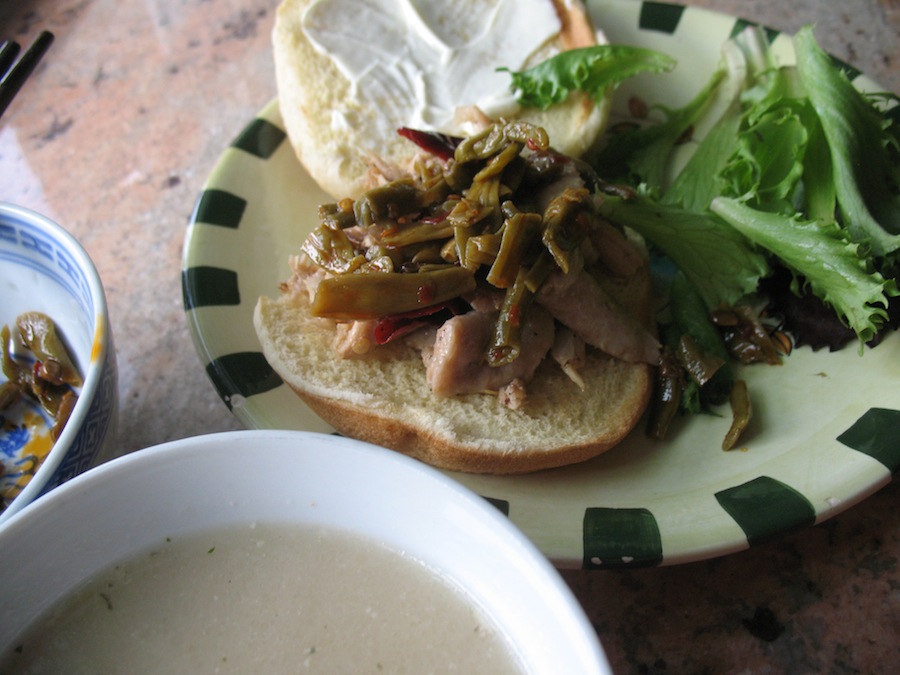
For me, breakfast is an important meal. I’m not big on cereal or doughnuts or the like however. Ever since my time living in Thailand, I adopted the habit of eating leftovers, fried rice, noodles, or random things on toast. Today I fried some chicken scraps from a Thai soup with dried chiles, and ate it with pickled spicy cowpeas on a toasted hamburger bun with mayonnaise. I also boiled an instant Polish mushroom soup that I found at Bell’s Market.

IMG_3545

Chinese pickled vegetables are lovely, and this is a particular favorite of mine: spicy pickled cowpeas 泡豇豆. Cowpeas look a lot like Asian long beans, and here in the states, the peas are also known as black-eyed peas.

Pickled cowpeas

Pickled cowpeas

These pickles are excellent at room temperature, eaten together with rice porridge. They are also incredible in breakfast sandwiches (which are popular throughout China as street food). The breads used in China are often pan fried breads that resemble English muffins. Fillings can include fried eggs, stewed pork, and many, many other things.

IMG_3554

Posted in - Featured Food Discoveries, - Recipes, Chinese food | Tagged , , , , , , , , , | 1 Comment

Southern Thai-style curried okra

IMG_3516

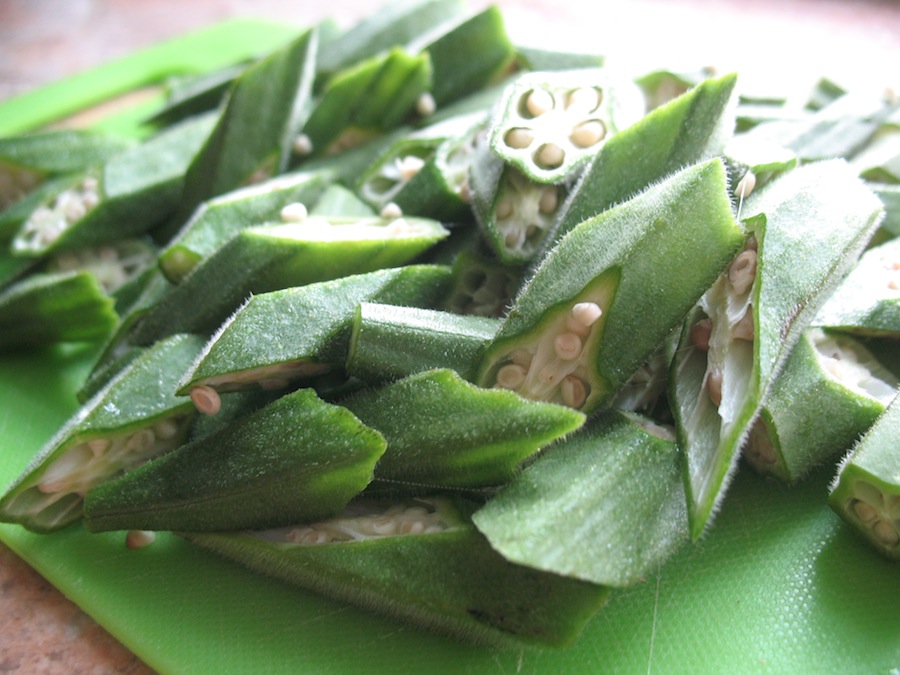
Today’s ingredient isn’t super exotic. Okra is of course widely available in the US. Okra looked particularly good at my local Cambodian market, and it became today’s breakfast. This recipe comes from a beautiful Thai language cookbook that I found in Phuket, focusing on foods of Thai Muslim peoples of the South อาหารมุสลิม [Muslim food] by นิดดา หงษ์วิวัฒน์ [Nidda Hongwiwat].

Recipe: Fried okra – ผัดกระเจิ๊ยบ

The method for making this dish is very simple. Fry sliced shallots in some ghee, then “bloom” ground spices, add some water to make a sauce, and add in coarsely chopped okra and salt. Heat until okra are just cooked through.

IMG_3505

Ingredients for the dish: sliced shallots, okra, 4 ground spices tumeric, cumin, chile pepper, and coriander

IMG_3507

Fry shallots until fragrant, and add ground spices. Fry until spices are fragrant

IMG_3508

Add some water to make a sauce

IMG_3510

Coarsely chop okra (looks nice to chop on the bias)

IMG_3513

This goes well with eggs, and it would be great with roti or rice.

Posted in - Featured Food Discoveries, - Recipes, Thai/Lao food | Tagged , , , , , | 2 Comments

The pleasures of Bustleton Ave, or, “amazing Uzbek and Georgian food finds in Northeastern Philadelphia”

IMG_3464

Pumpkin and beef samsa from Suzani Art Cafe

Today I have another travelogue for you. This time it is of several Russian markets and Uzbek restaurants of Northeastern Philadelphia.

NE Philly, particularly the neighborhoods of Bustleton and Somerton, is home to a huge population of fairly recently arrived immigrants from Russia and its neighboring countries. That influx (and that money) has ensured proliferation of some very unique food culture. This means outstanding markets (generally far better in than most US mainstream groceries), and some very notable restaurants. After a return to that area today, I provide a few examples below of what I see as highlights, especially from Uzbek and Georgian food traditions.

The Northeast is pretty far from Center City (or pretty much anywhere else in Philadelphia). Driving is best way to get up there. City buses or biking will take some time, likely more than an hour, and the markets and restaurants are spread out a bit. Just FYI, I updated my map with the markets I visited today.

I started on Bustleton Ave, just near the city’s boundary. Here are some images traveling south from there by bicycle:

IMG_3443

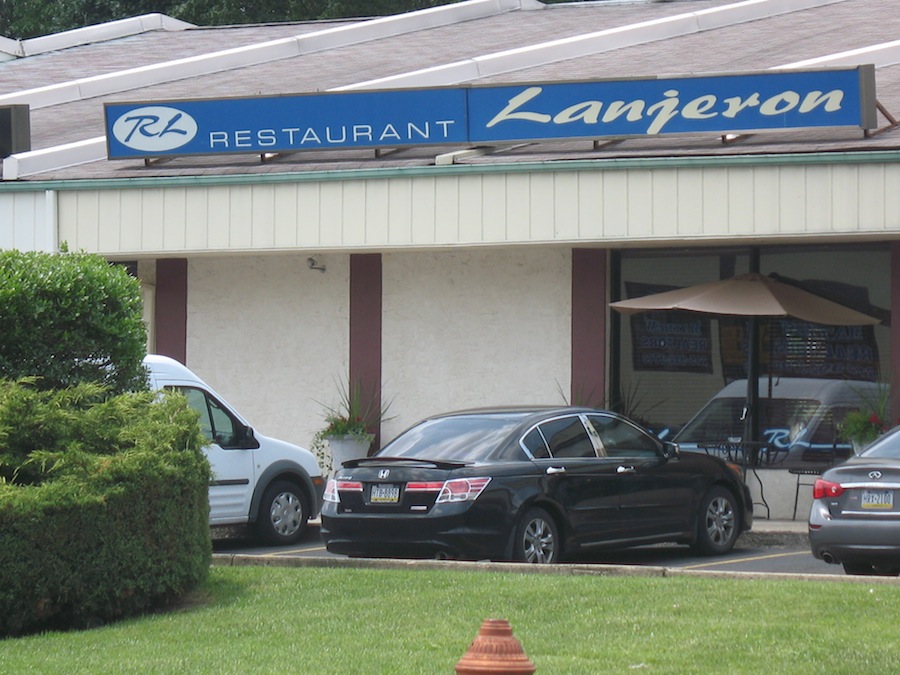
Restaurant Lanjeron (named after a beach on the Black Sea) seems to be doing alright.

IMG_3449

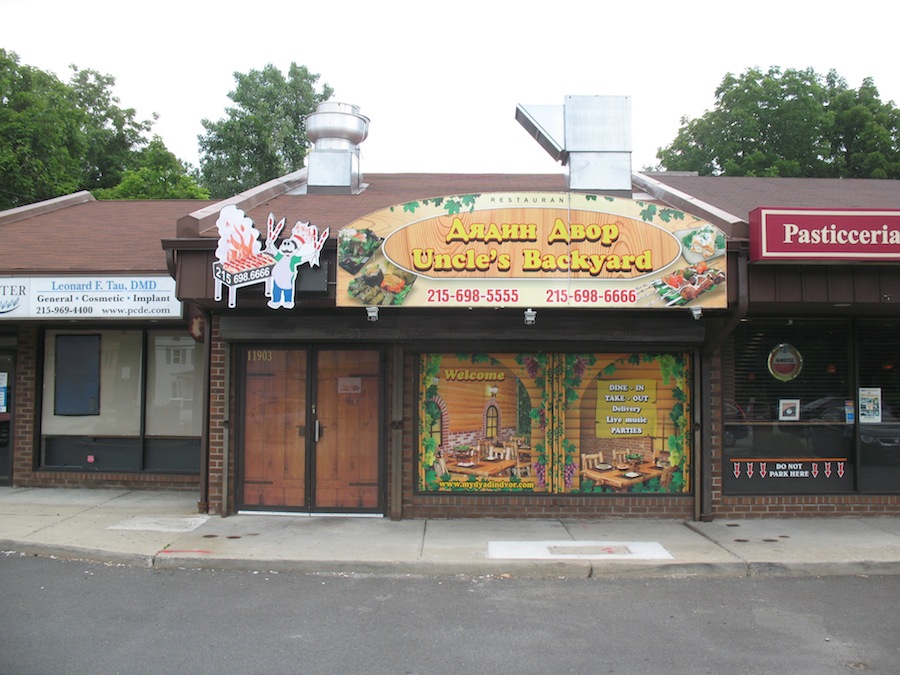
Friends, we NEED to check this place out! The smell of roasting coals is very attractive, as is the name and rustic decor.

IMG_3450

Misha, of Siberia


Having studied Turkic languages in college, and Uzbek as a specialty, I was initially shocked to find so many Uzbek restaurants in NE Philly. I now understand “Uzbek” as a sort of comfort food to many Russians (especially plov and shashlik), perhaps something like how [American] Chinese food is to most Americans. Still, even though the food is filtered through the Russian palate, the Uzbek cuisine up in the Northeast is good and definitely worth the trip.

This restaurant is a crowd-pleaser. Fairly large menu, BYOB, reasonable service, and accommodate large groups. Kind of a party house, like I envision Samarkand Restaurant to be.

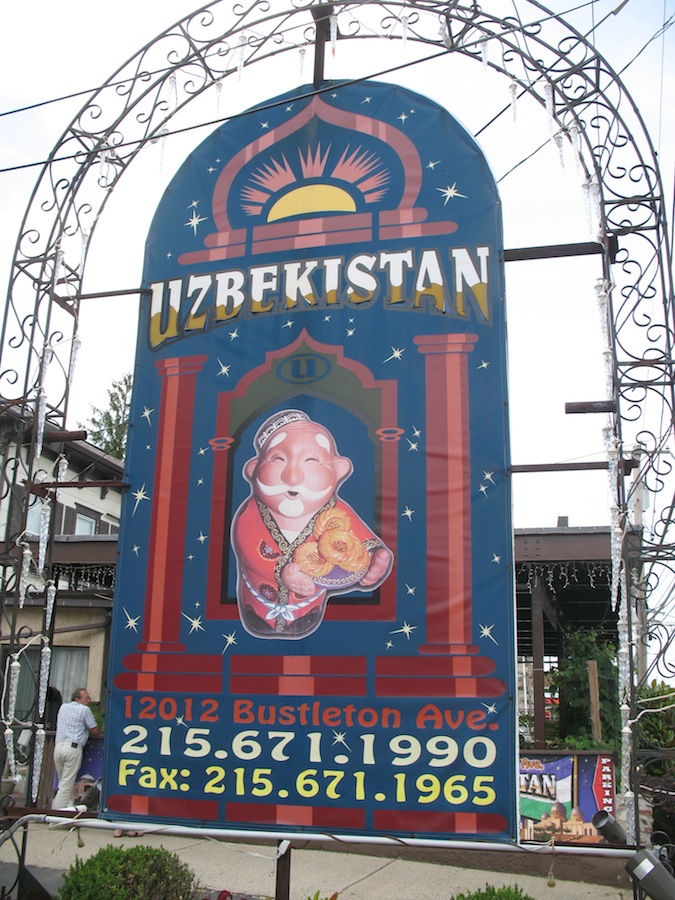
Uzbekistan, formerly Chaikhana Uzbekistan (“Uzbekistan Teahouse”). This restaurant is a crowd-pleaser. Fairly large menu, BYOB, reasonable service, and accommodates large groups. Kind of a party house, like I envision Samarkand Restaurant (see bottom of post), just north across the city line, to be.

Not far from Uzbekistan is NetCost Market (11701 Bustleton).

IMG_3451

NetCost Market is one of three large Russia/East Europe/Europe-focused markets on Bustleton Ave. It is spacious, and well-stocked, with specialty counters for bakery, charcuterie, cheese, smoked fish, pickles and salads. I was on the lookout for unique items from Russian and Russian-influenced Asia, and picked up the following:

IMG_3491

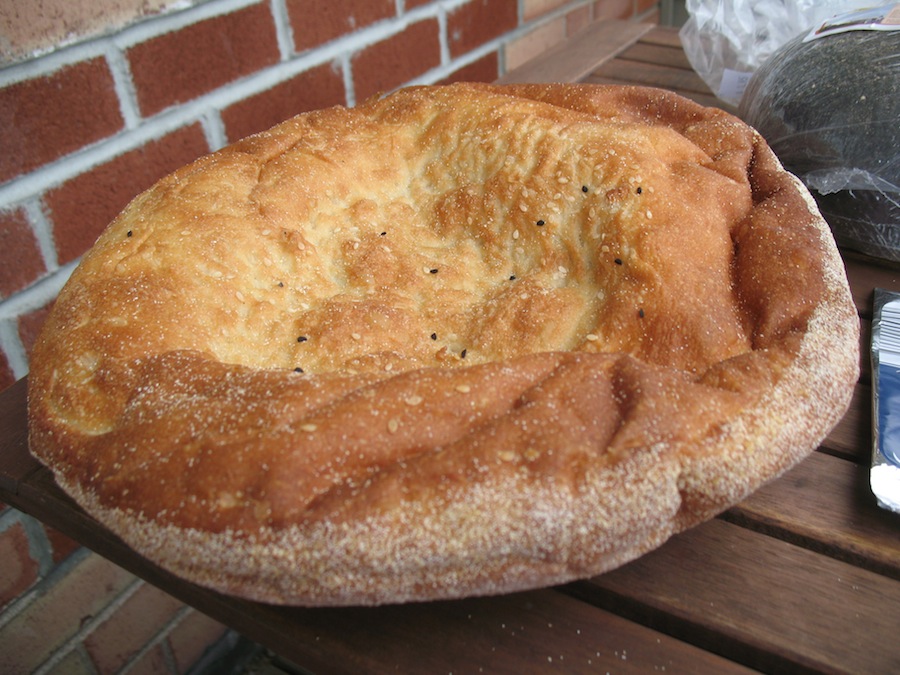
“Uzbek Pide” (I don’t think they call this anything other than “non” in Uzbekistan, but whatever. $1.99.

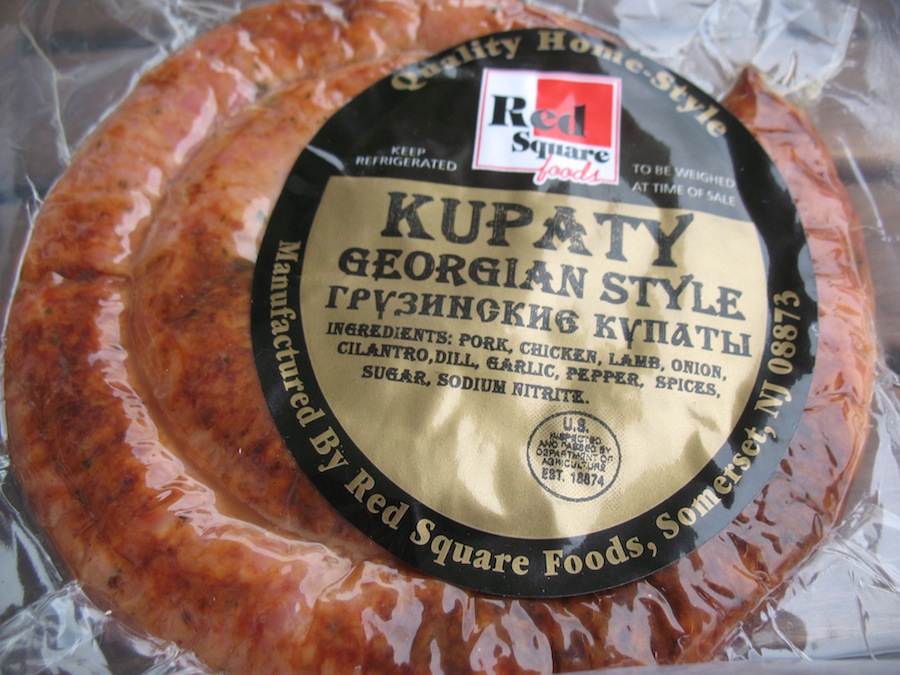
Kapaty Georgian Style sausage (pork, chicken, lamb, cilantro, dill, etc)

Kapaty Georgian Style sausage (pork, chicken, lamb, cilantro, dill, etc.–sounds like a haphazard mix but I’m excited to try it)

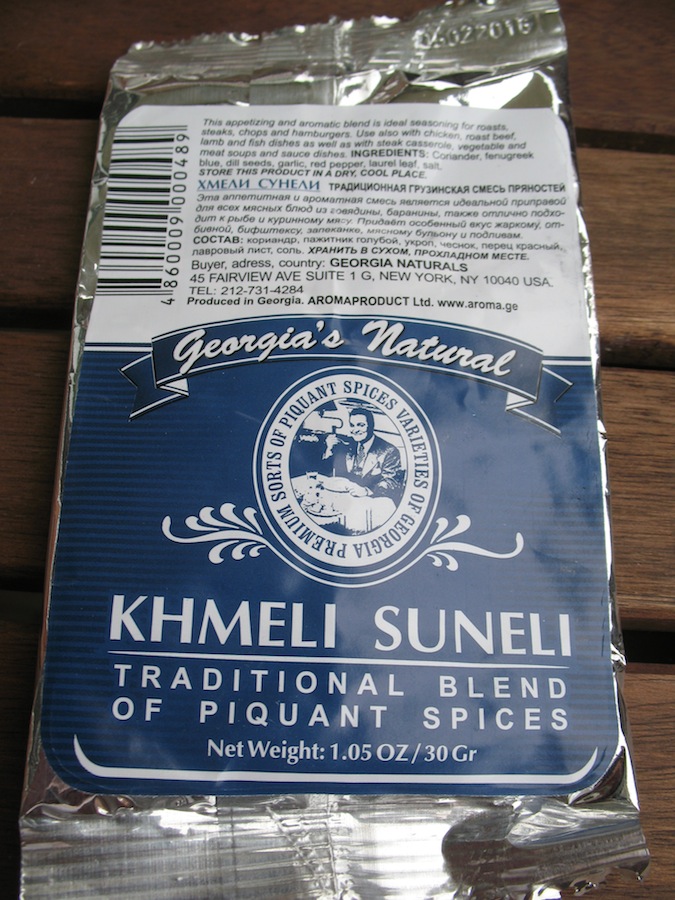
Khmeli suneli, that quintessentially Georgian spice for badjrijani and satsivi among many others

Khmeli suneli, that quintessentially Georgian spice mix for badjrijani and satsivi among many others


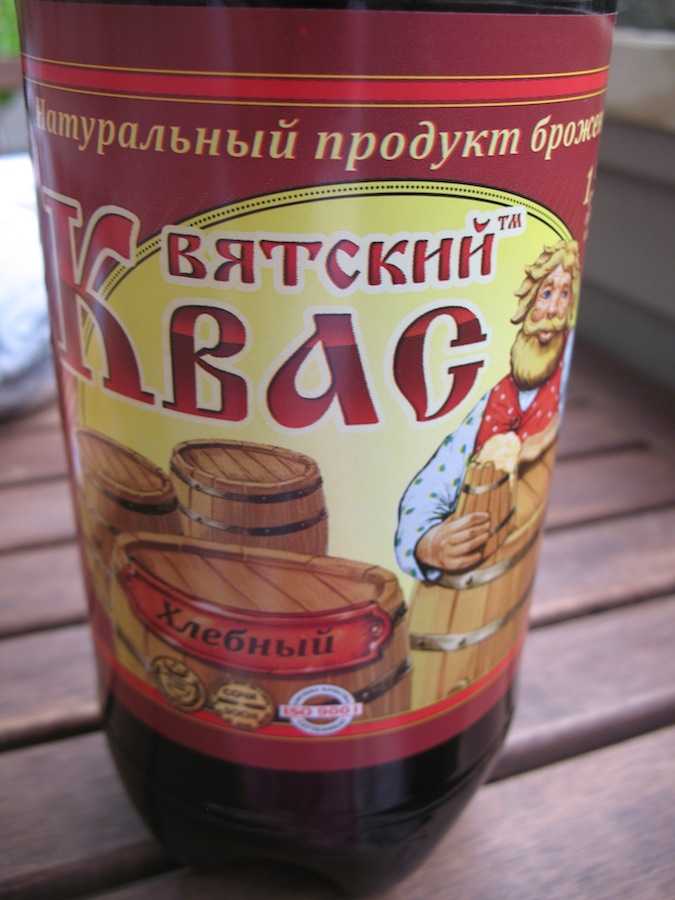
Kvass. Russian markets will have decent varieties of this beverage, which bypass the PA liquor regulations due to its miniscule alcohol content. Wait, is this

Kvass! that mildly alcoholic fizzy drink made from bread and sweetener. Russian markets will have decent varieties of this beverage, which bypass the strict PA liquor regulations due to its very small alcohol content.

Here are a few more observations from the NetCost Market:

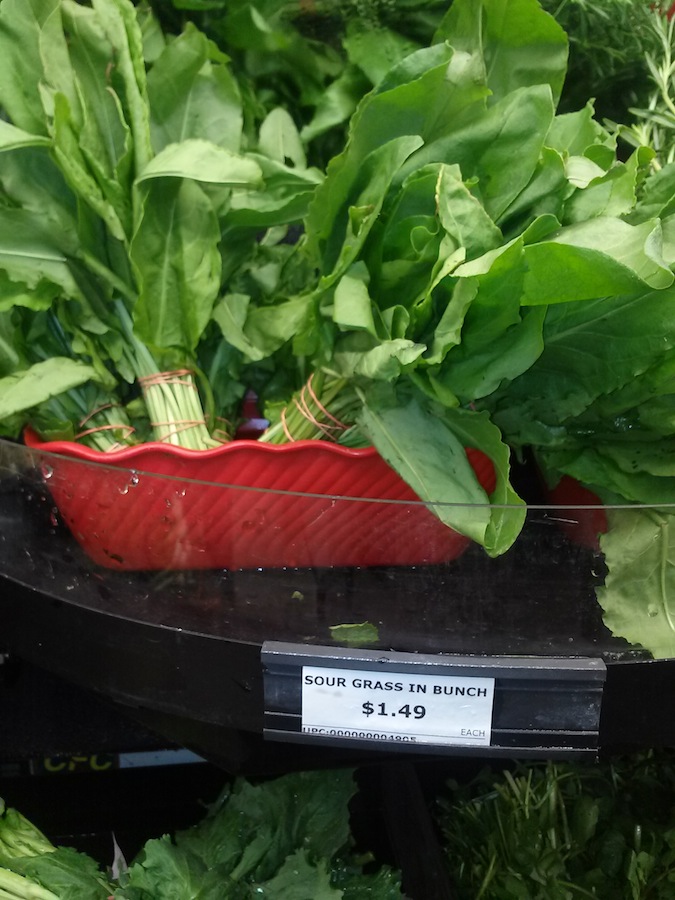
Sour grass.

Sour grass in bunch.

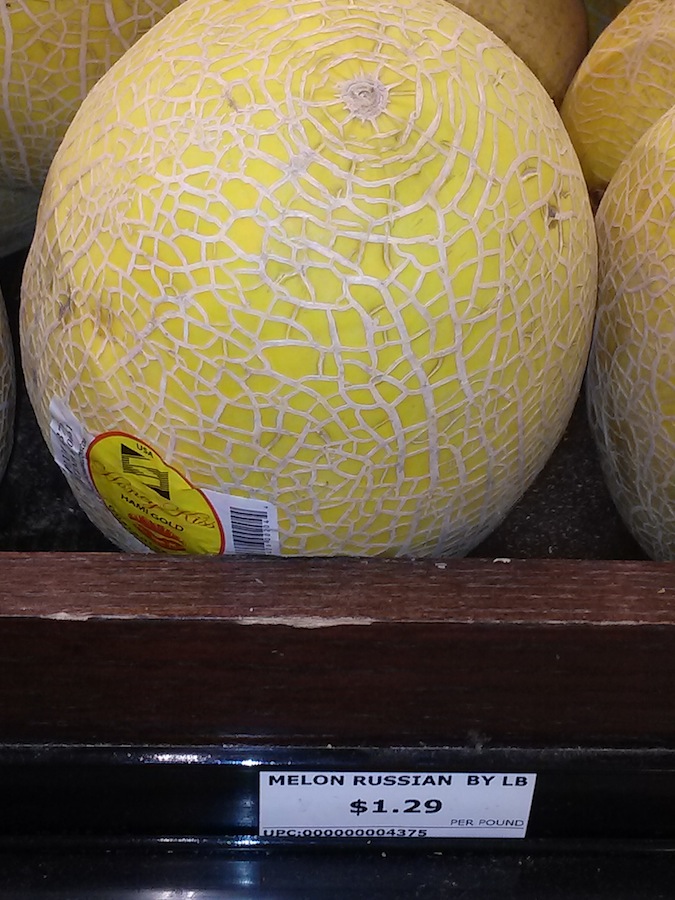
Ha! Same melons found in Chinatown, but here labeled

Ha! Same melons found in Chinatown, labeled as “from Xinjiang”, but here labeled “Russian melon”. Both are US or Chile produce.


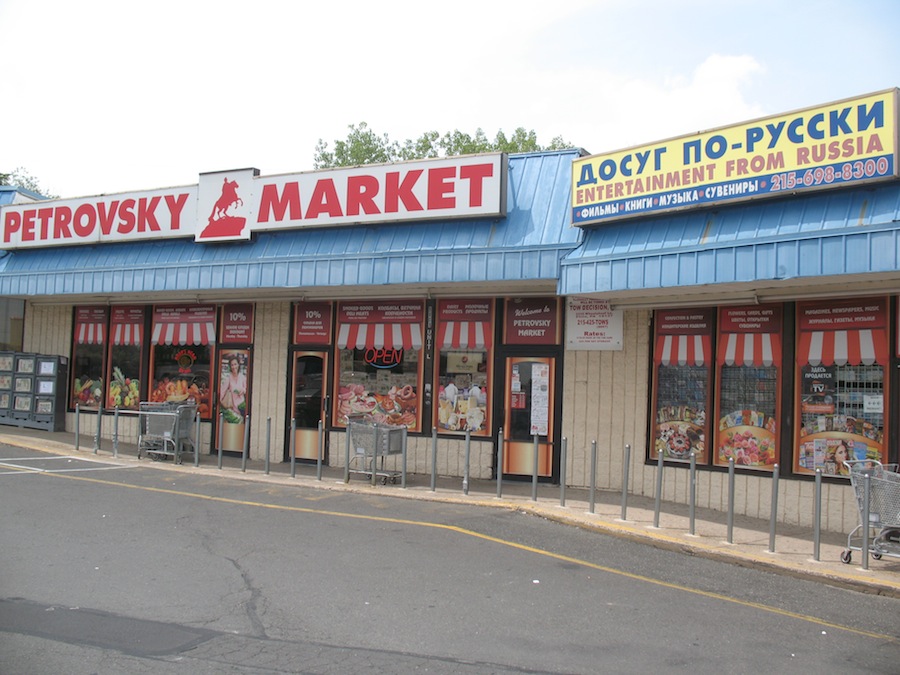
A few blocks down from NetCost is the slightly smaller (and more mom-pop feeling) Petrovsky Market (9808 Bustleton). This is actually pretty well stocked, and I rate it as one of the three big markets on Bustleton. It has a great bread room, with huge loaves of crusty breads, the likes of which I haven’t seen since Jersey (Efes Market).

IMG_3452

Petrovsky Market, from Russia with entertainment.

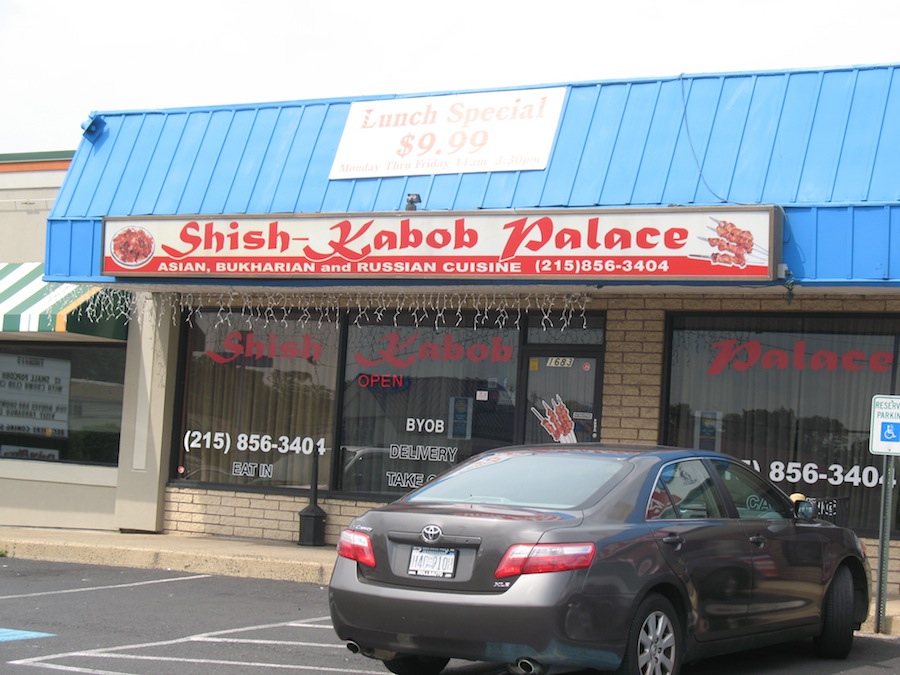
Further south we reach Grant Avenue. This is where you can find the great Shish-Kebob Palace (1683 Grant Ave). This is slightly more humble than restaurant Uzbekistan, but I would highly recommend it:

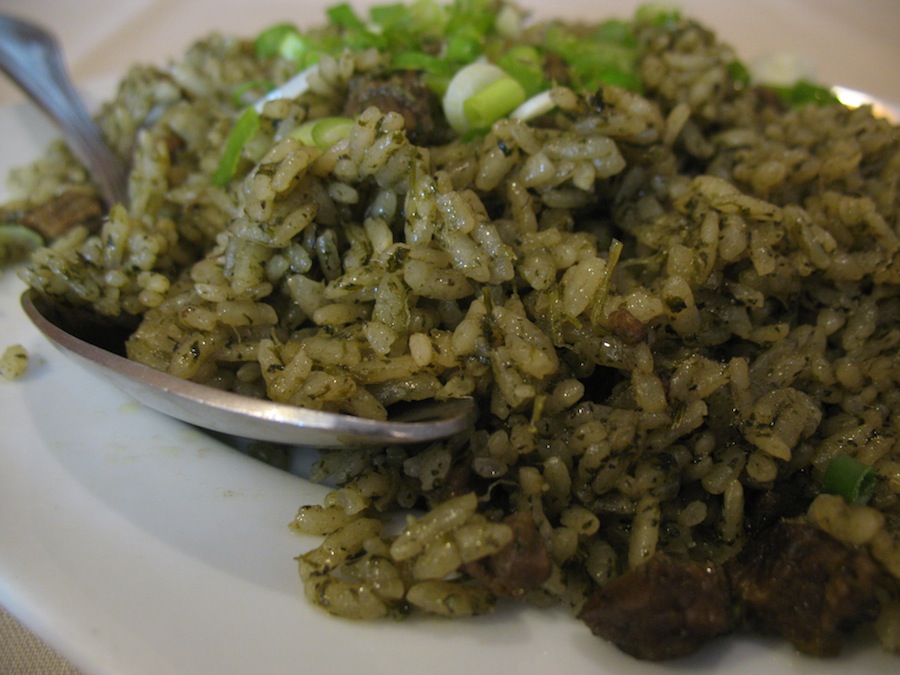
IMG_3461The restaurant seems to have Bukharan Jewish origin, and specialty Bukhara items can be found on the menu, like bahsh (бахш), a rice pilaf that is similar in oily heaviness to other Central Asian pilafs (like my Uyghur polo for example), but cooked with chopped cilantro and veal:

IMG_3460

I have to admit, I was impressed by this one. Bukhara-style pilaf, bahsh

I also had a small portion of their lagman. It was pretty good, though too soupy for my Uyghur-influenced food tastes (see here for Uyghur laghman).

Just another block down from Grant Ave is Welsh Rd, where you can find the great Suzani Art Cafe (1916 Welsh Rd):

IMG_3467

This, being a second meal, needed to be more of a snack. I will be back though, as the restaurant seemed quite good. AND, they even had a wait-person who spoke Uzbek!

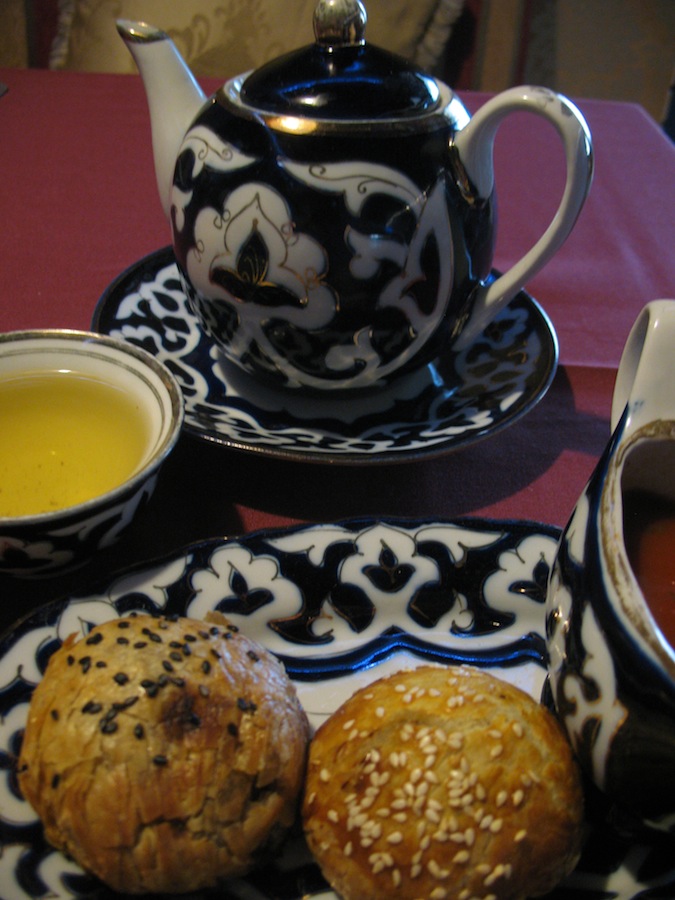
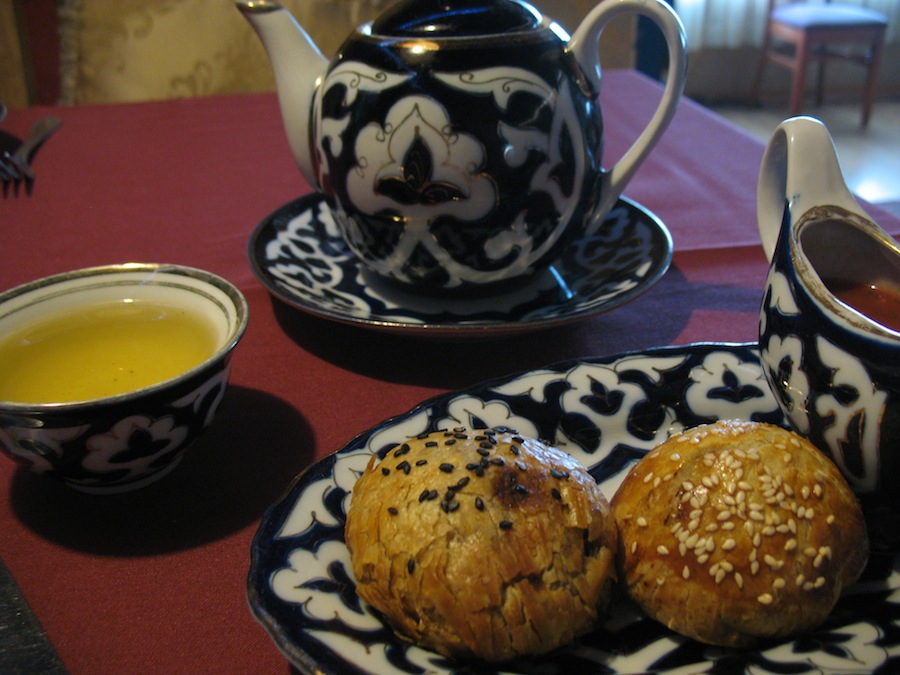
Uzbek tea with samsa: pumpkin and beef varieties

Uzbek tea with samsa: pumpkin and beef varieties

The samsa here were delicious. They were baked into a very flaky pastry (about as flaky as filo dough), and they must have used lamb fat. Even the pumpkin tasted like lamb (in a good way). Really brought me back to great culinary memories of Xinjiang.

One more market to go… the great Bell’s Market (8330 Bustleton):

IMG_3470

This is the third great Russian/East European/European market on Bustleton. This market has a huge bakery section, and it seems to have more Georgian (the country!) items overall.

Here are some tasty things I found here:

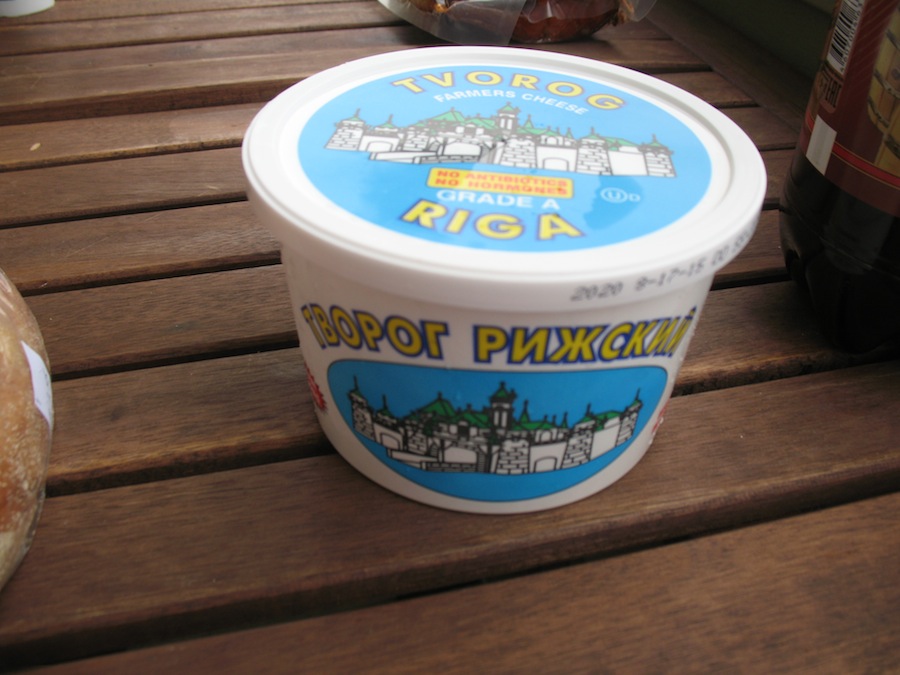
Latvian cottage cheese.

Tvorog. Latvian cottage cheese.

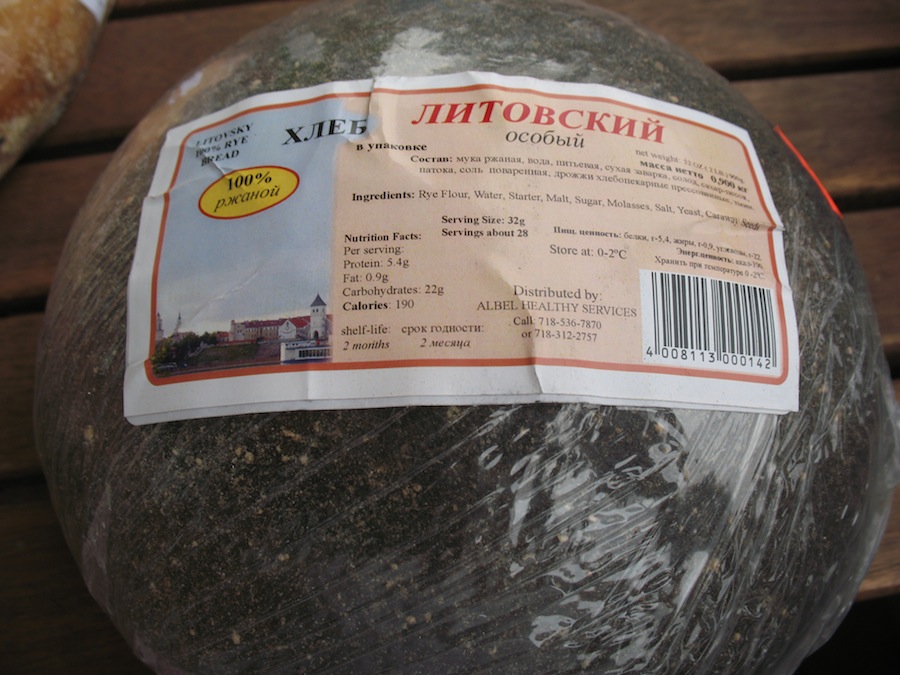
Round rye bread. I love rye bread.

Round rye bread. I love rye bread.

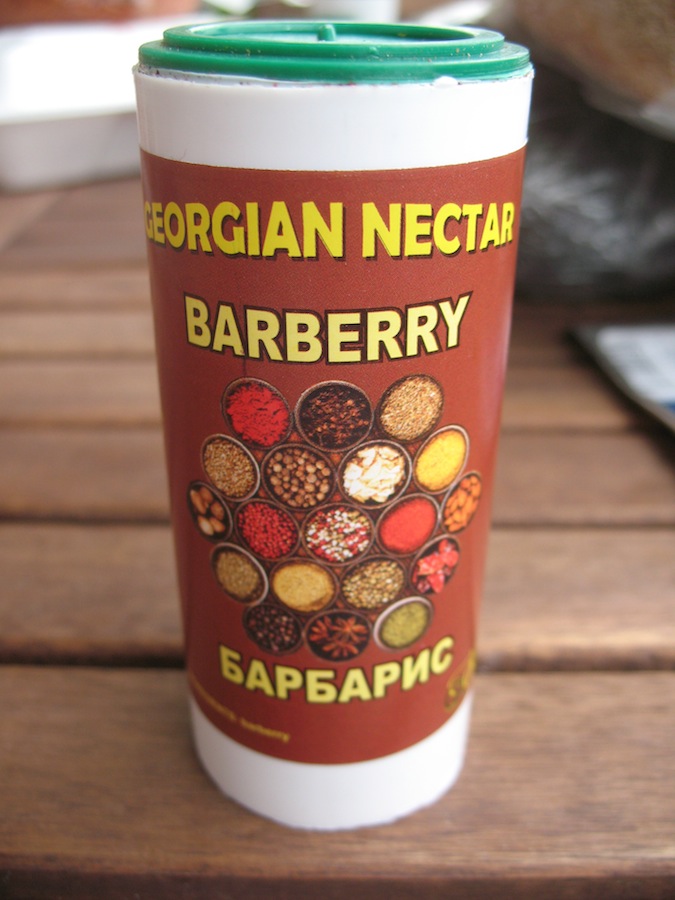
Ground barberry spice. This is a sour reddish-purple berry that is dried and ground. Used in pilafs among other things.

Ground barberry spice. This is a sour reddish-purple berry that is dried and ground. Used in pilafs among other things.


IMG_3499

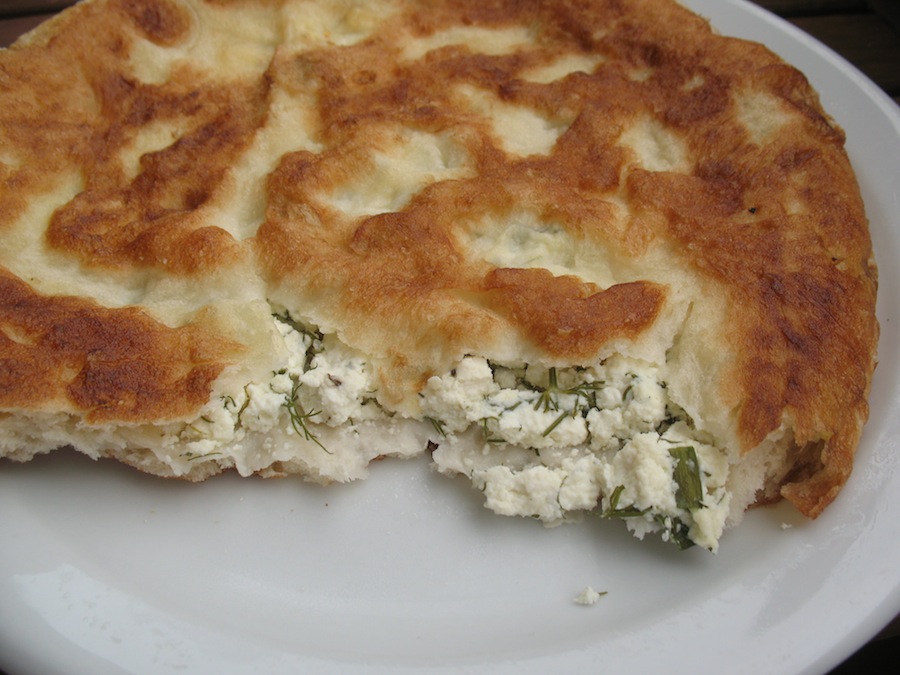
Mmm. Khachapury. A Georgian cheese bread. This one had dill and green onions inside as well, along with the Georgian farmer’s cheese.

I hope you pay a visit to some of these places. There is quite a lot to see. To recap on the Uzbek-themed eateries:

Uzbekistan (12012 Bustleton Ave, Philadelphia, PA 19116)
Tashkent (842 Red Lion Rd Ste 3, Philadelphia, PA 19115) (not confirmed whether it is still operating)
Shish-Kabob Palace (1683 Grant Ave, Philadelphia, PA 19115)
Suzani Art Cafe (1916 Welsh Rd, Philadelphia, PA)

(and, just across the county line:) Samarkand Restaurant (1135 Bustleton Pike, Feasterville, PA 19053)

Posted in - Featured Food Discoveries, - Featured Markets, - Guides, Central Asia/Uyghur food | Tagged , , , , , , , | 4 Comments

Cured kudampuli fruit and Kerala-style fish curry

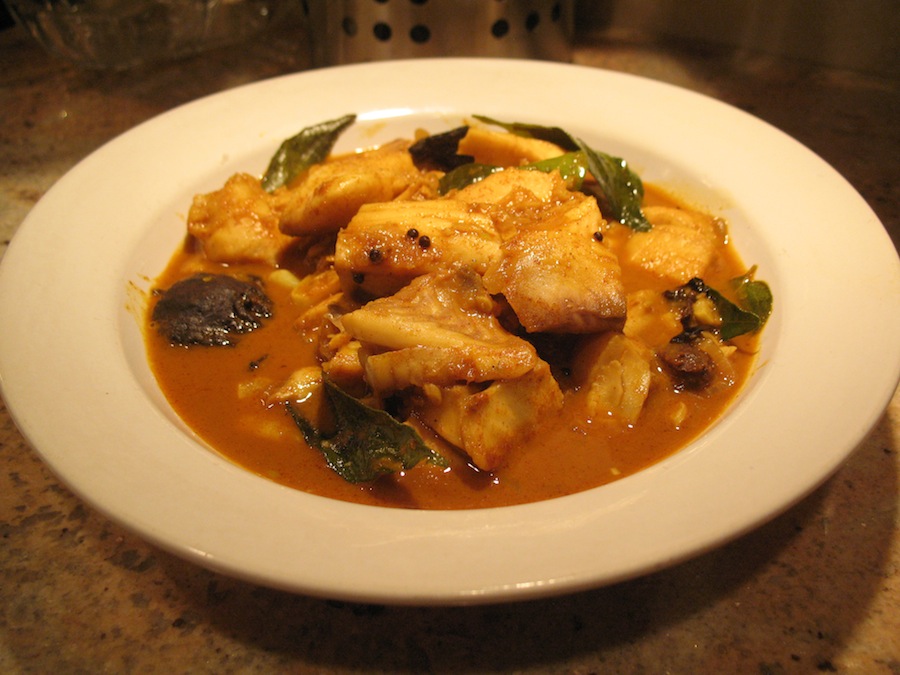
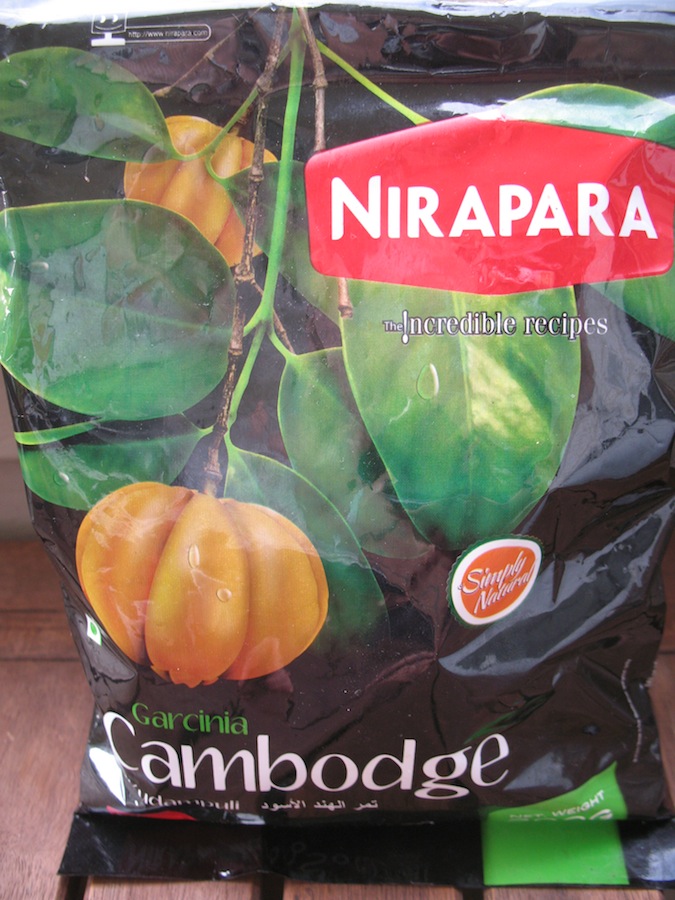
IMG_3441Several months ago I found a South Indian market (Kashmir Garden–interesting name for a market specializing in Tamil and Malayali cooking…) in Northeastern Philadelphia. Among my finds there of unique chile peppers, I also brought home a cured sour fruit that I imagined would be very similar to tamarind. Like tamarind, this fruit is used as a souring agent in cooking preparations, in the well-known Kerala meen kari (fish in red curry sauce) for example.

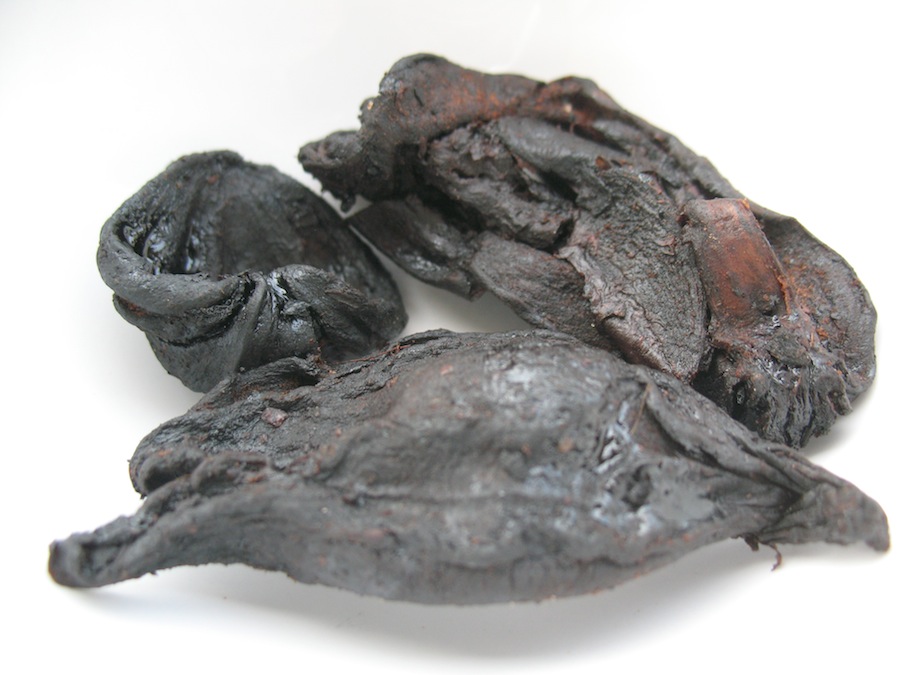
This fruit goes by many names, but in South India it seems to go by kudampuli most often. Other names are kokkum, garcinia (which is how you can find it on Wikipedia), fish tamarind, Malabar tamarind, Kerala tamarind, etc. It is a small, yellow-green gourd-shaped fruit that is typically cured with salt for preservation. The curing process turns the fruit black. Here are some images of the one I bought:

IMG_3417IMG_3422


The smell (and flavor) of the fruit surprised me. It was not as sour as tamarind, and the fruit had kind of a smoky and candied flavor.

Last night I cooked a fish curry with this, generally following directions of a cookbook from the library Flavours of Kerala by Hena Jacob and Salim Pushpanath. There were a few steps that I skipped that might be considered important, most notably I didn’t use the traditional shallow clay vessel to cook this in: the mann chatti (here is a link to a Google image search to give you an idea). I also didn’t have coconut oil on hand, which may add a different level of flavor.

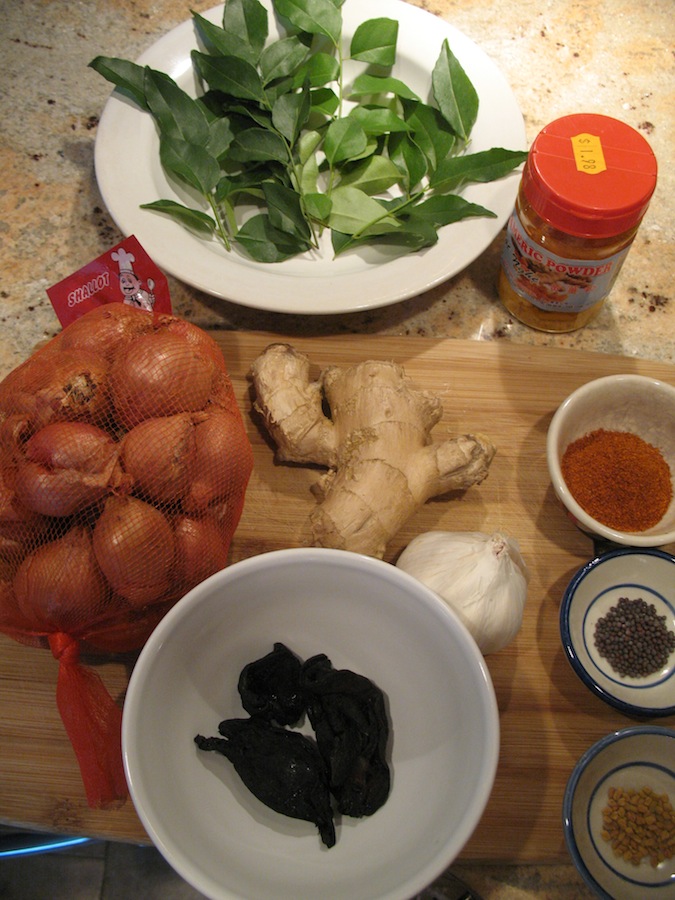
Another key ingredient that may not be completely common place in mainstream markets is curry leaf. I used a small bunch. Here are the ingredients that I used, minus tilapia filets:

IMG_3424

Clockwise from bottom: kudampuli, shallots, curry leaves, tumeric, ground chile pepper, mustard seeds, fenugreek seeds. Garlic and ginger in center.

Recipe: Kerala-style fish curry – meen kari മീൻ കറി

The above picture has the ingredients and amounts. I used about 9 shallots, 5 cloves of garlic, and an inch piece of ginger. 1/2 tsp of tumeric, and about 2/3 of the curry leaves above.

I later added some paprika for more red color, and salt and water is also added. I used about 1.5 lbs of tilapia filet.

IMG_3429

I started this off with hot oil and fenugreek and mustard seeds. The fenugreek quickly browns, when that starts to happen, toss in thinly slice shallots, chopped garlic and ginger, and curry leaves. Fry until shallots brown.

IMG_3431

Add chile powders and water (I used about a cup) to make a sauce, and the sour kudampuli fruit and gently lay 1-2″ fish chunks in. Add salt, cover, and cook until fish is cooked through. Taste for saltiness before finishing.

IMG_3436

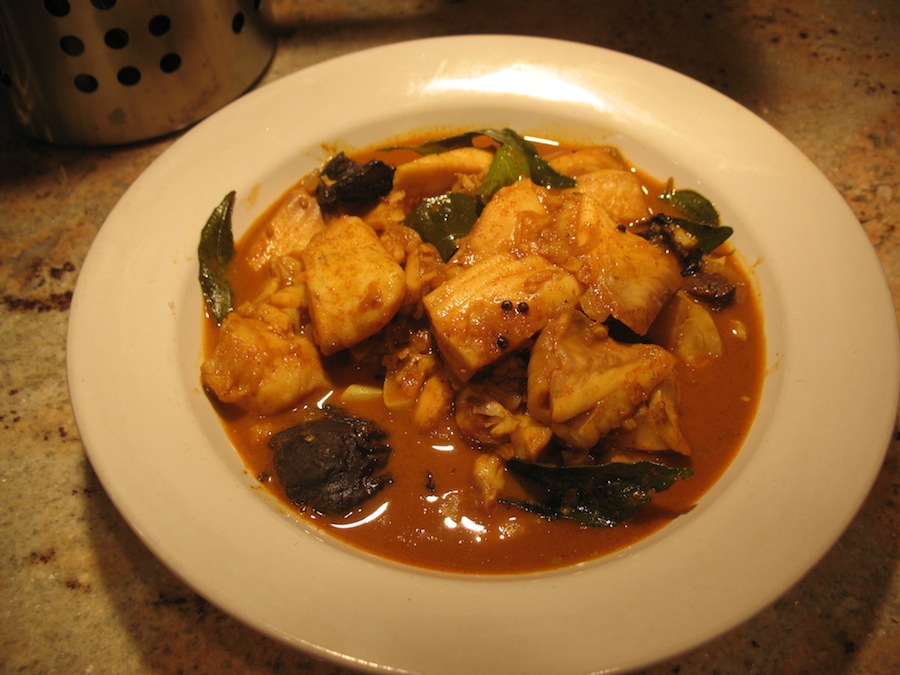
I ate this with rice. It has a beautiful smokiness about it, and was a bit different than I expected. Definitely a keeper.

Posted in - Featured Food Discoveries, - Recipes, Indian food | Tagged , , , , , , , , | 2 Comments

Thai coconut pancake cups – Khanom khrok

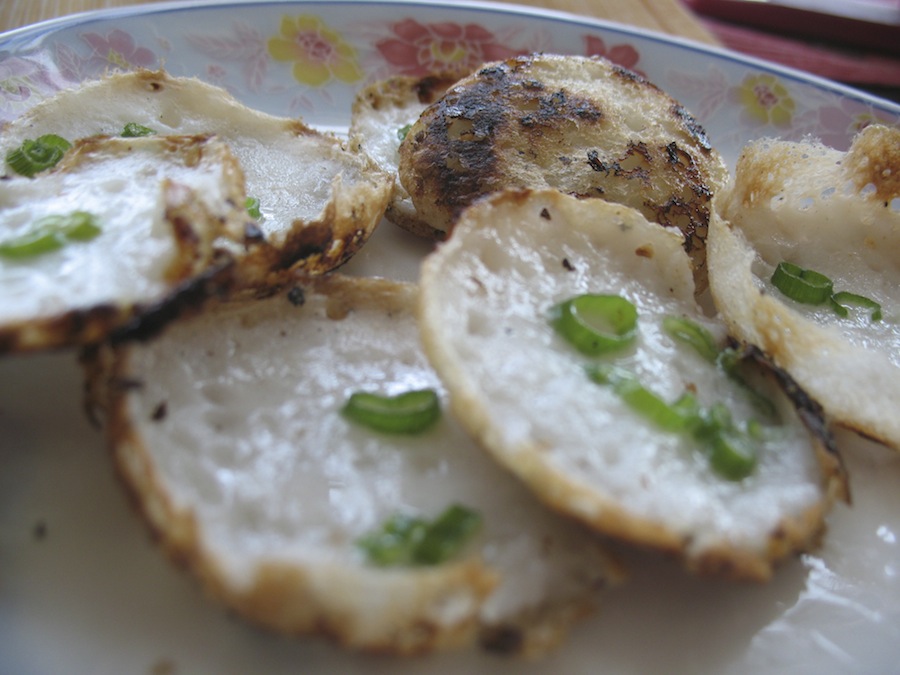
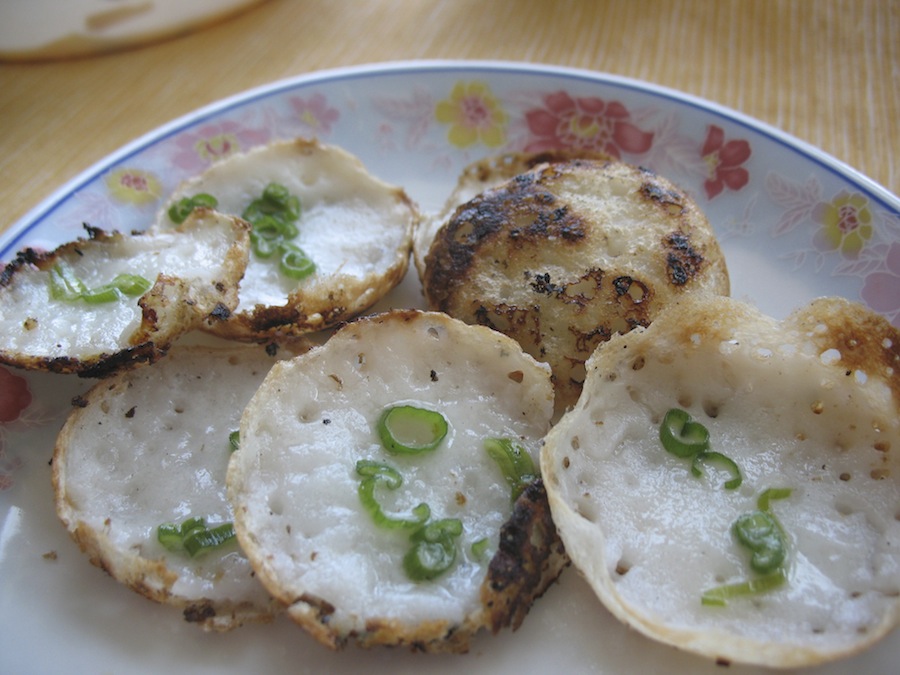
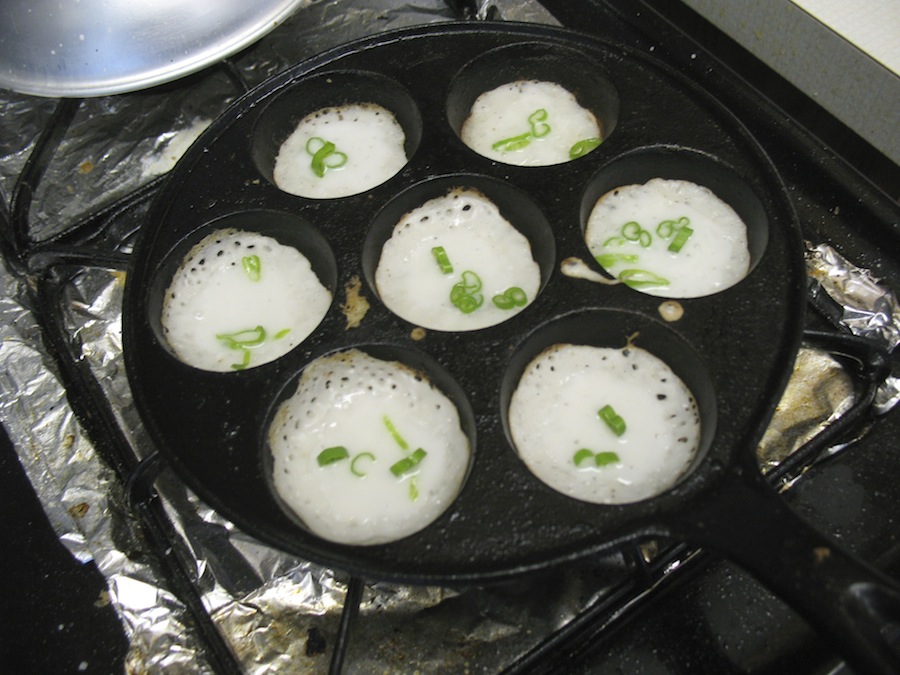
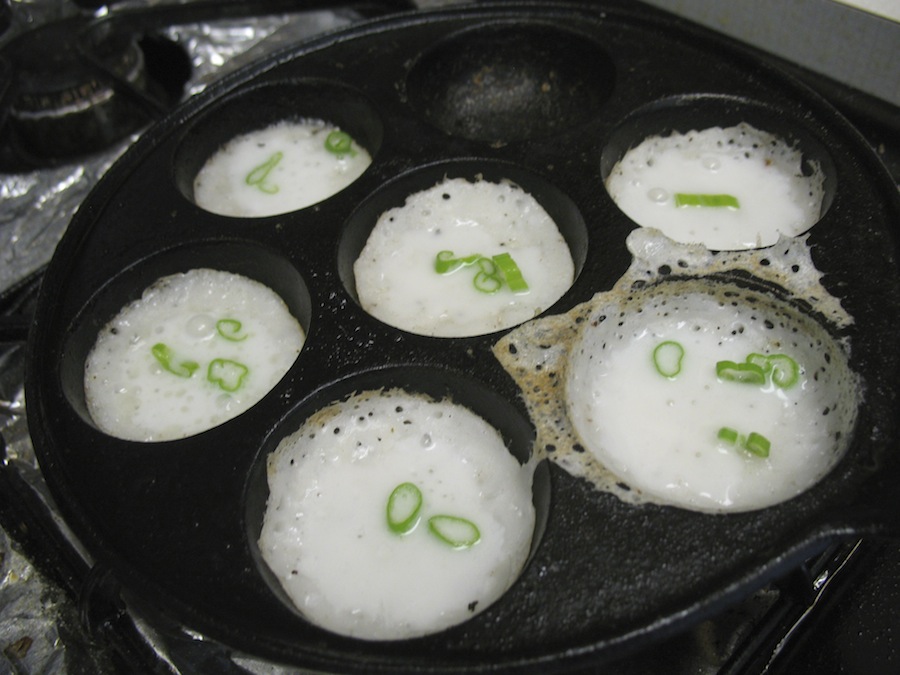
IMG_3399This weekend I attempted to replicate a popular Thai street food at home, Khanom khrok ขนมครก (literally mortar-shaped snacks). I drastically underestimated how easy this would be, especially since I was using a pre-mixed powder from Thailand. Using the cooking vessel effectively is by far the most challenging issue with cooking these savory treats. That requires getting the pan seasoned properly so that the little cakes don’t stick and get burned into the cups. Another consideration is to get the batter and topping consistencies right.

IMG_3398If you haven’t had these before, khanom khrok consist of 3 elements in each cup: a thin batter on the bottom made from thin coconut milk (2nd extraction), and a mix of rice and other flours, a filling of coconut custard made from thick coconut cream, sugar, and salt, and usually some sprinkled toppings. My favorite are the kind with finely chopped scallions, but in Thailand you can find these with cubed taro, kernels of corn, and candied things.

After a few hours of frustrating experimentation (it takes a long time to scrub burnt-on cake particles out of the pan’s little cups) I finally produced a few batches of passable kanom. My biggest consolation from this experience is that the next time I try to use the pan it should be seasoned enough so that they won’t stick.

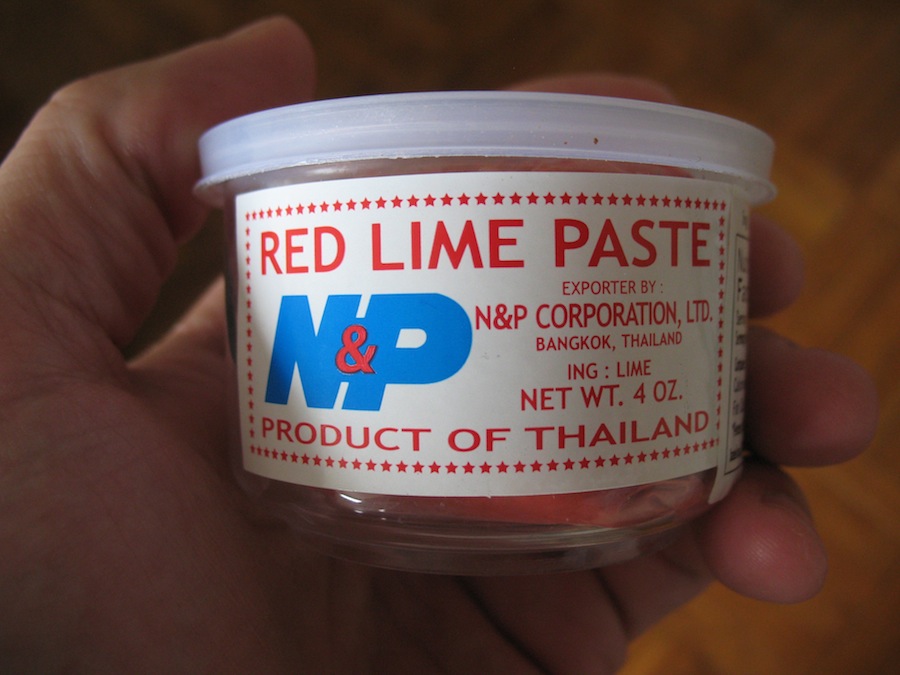
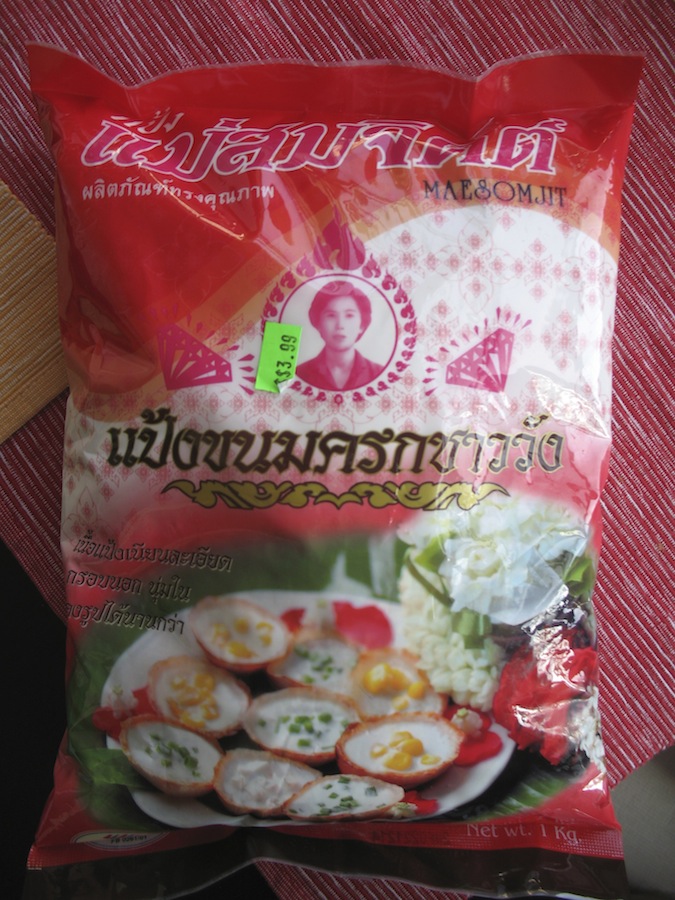
IMG_3403I began my process with going to the market with the intention of stocking up on all the ingredients to make this from scratch. After I saw they had a pre-mixed powder from Thailand, I decided that might save a lot of time (original recipes require resting the batter for some hours). I did pick up one unique ingredient though, that you out there might be looking for: Lime paste (ปูนแดง). In Thailand a pinch of this pink powder is soaked, and that water is used in the batter mix to make the cakes more crispy. This lime powder is also an ingredient in chewing betel nut, so if you visit a Southeast Asian market you might find this together with those items.

IMG_3381

This is the mix I found, “Palace-style khanom khrok mix”. Imported by Food Gusto, instructions in Thai only.

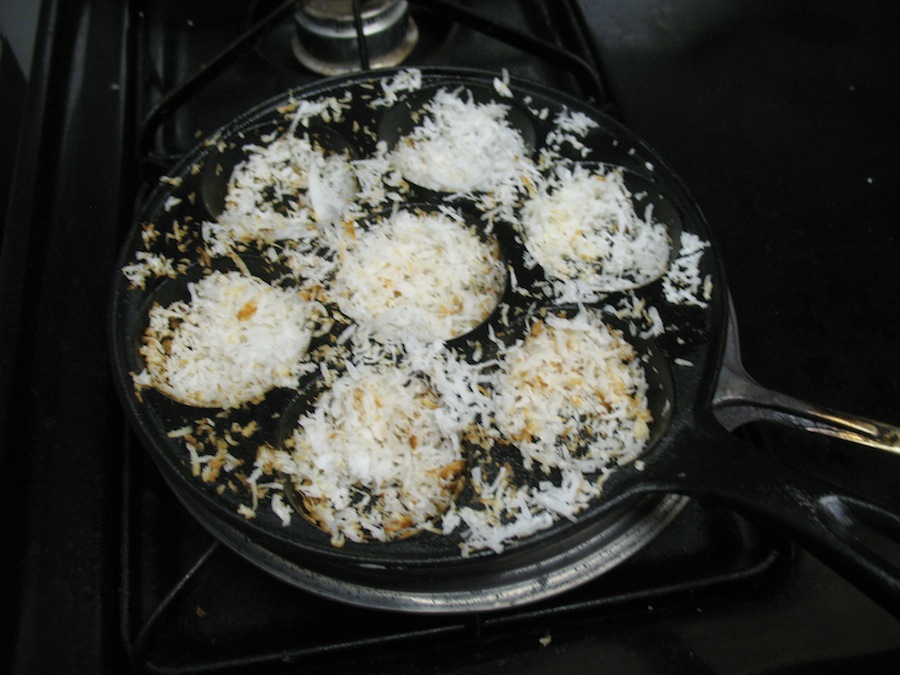
The night before I started, I chose to season my pan by the traditional method of filling the cups with freshly grated coconut and heating it low and slow until the oil is absorbed into the pan.

IMG_3376

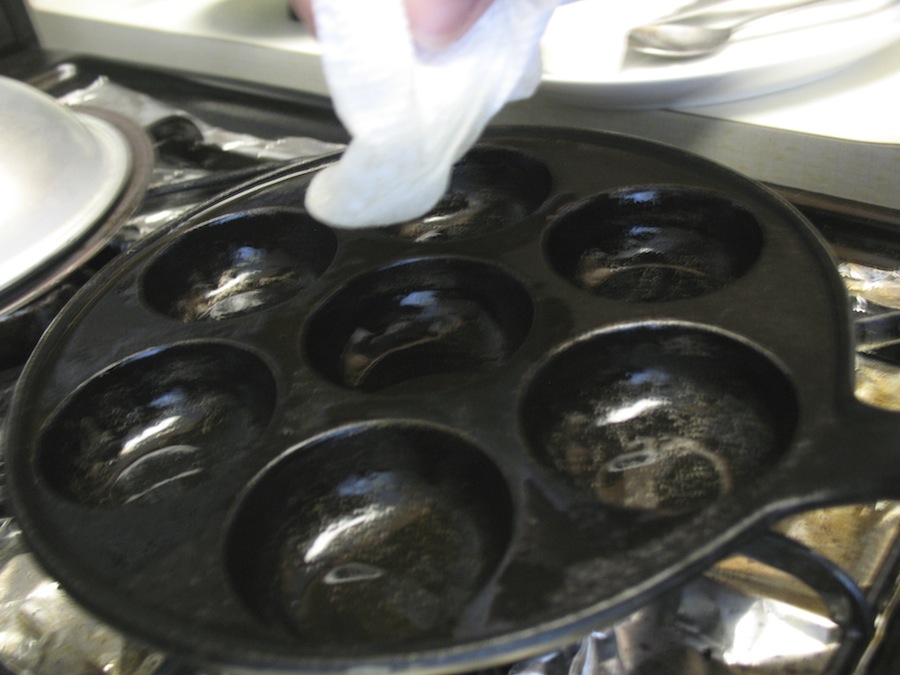
In my case, it didn’t work. As I hinted above, my first several cake batches were all completely fused into the cups. As I experimented, I just kept adding more oil with each batch, until the cakes didn’t get stuck any more.

IMG_3389

In between batches, applying a lot more oil to ensure they won’t stick…

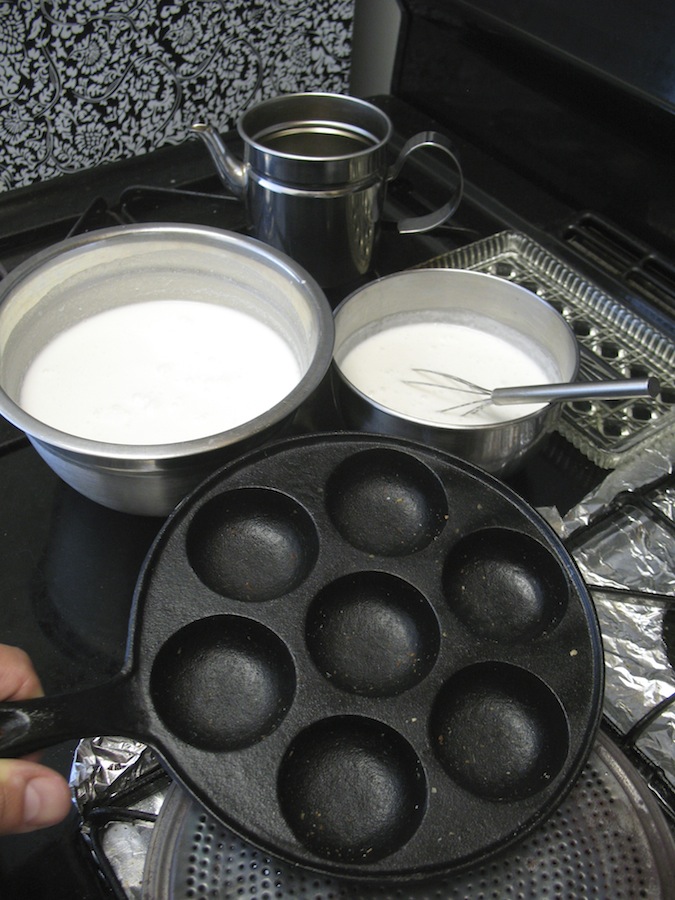
IMG_3386

This is the setup (clockwise from bottom): khanom khrok pan, light batter for the cup bottoms, teapot (actually the bottom of my Neopolitan coffee maker) for pouring the batter into the cups, and coconut cream topping.

Here are some words of advice on making these (better).

1. Make sure your pan is hot enough. I used medium/low heat, and the cakes cooked in just over 5 minutes. The pan is cast iron and takes some time to get up to temperature.

2. Make sure your batter is mixed well. It quickly settles.

3. I only poured batter in about 1/2 the cup. After you do a quick round of pouring, you can swirl the pan to make the batter climb up the sides a little bit. That will also help with the next step, of keeping the topping from touching the pan’s surface.

4. Use just enough topping to top each little cake, without letting it run into the pan. The topping, with its sugar, will stick.

5. After you sprinkle your ingredients and notice a healthy browning of the cake bottoms, cover the pan and let it steam for a few minutes. This should also help to loosen the cakes a bit.

6. Tease the cakes out by using a spoon or a small knife to go around each cake. If the pan is seasoned properly, the cake will come loose.

7. Enjoy them while they’re hot!

IMG_3394 IMG_3392There are several recipes out there for making these from scratch. Visit these links to get an idea: Temple of Thai, Rachel Cooks Thai.

Posted in - Featured Food Discoveries, Thai/Lao food | Tagged , , , , , , , , | Leave a comment