Turpan raisins in Chinatown

Chinese text: Turpan, Xinjiang Dried Grapes

Chinese text: Turpan, Xinjiang Dried Grapes

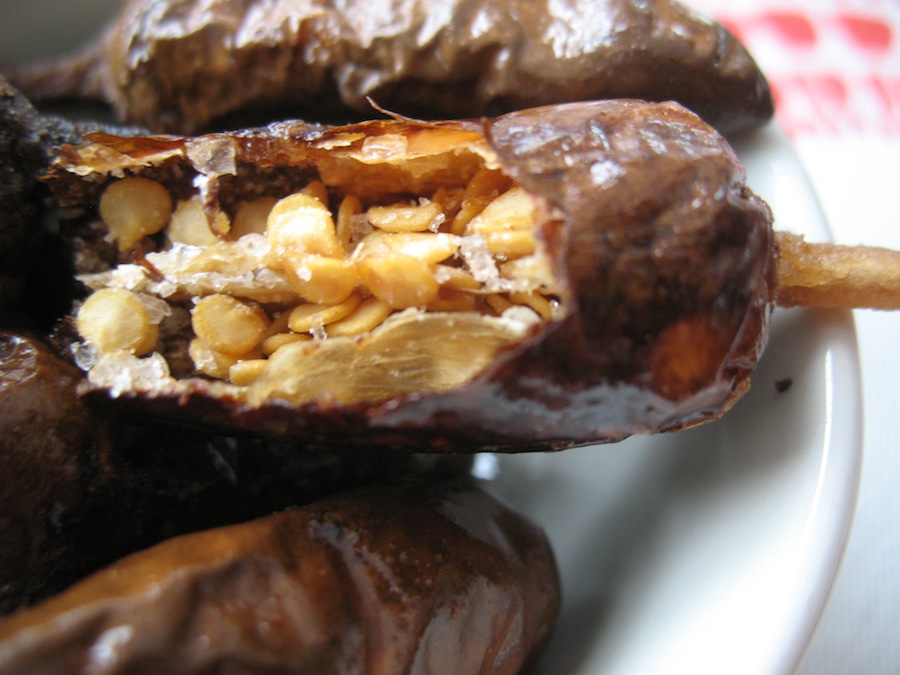
We have yet another import from the Uyghur homeland of Xinjiang available here in Philadelphia. These are raisins from Turpan, a city particularly well known for its sweet fruit (including grapes and melons). I found these at the newly reborn Heng Fa Market in Chinatown, but I have already seen them elsewhere as well. They are sweet and delicious. So, in addition to figs and melons, we have a slowly growing selection of Xinjiang (or Xinjiang-similar) offerings!

Posted in - Featured Food Discoveries, - Featured Markets, Central Asia/Uyghur food, Chinese food | Tagged , , , , , | Leave a comment

Oyster mushrooms and Lao style roasted mushroom dip

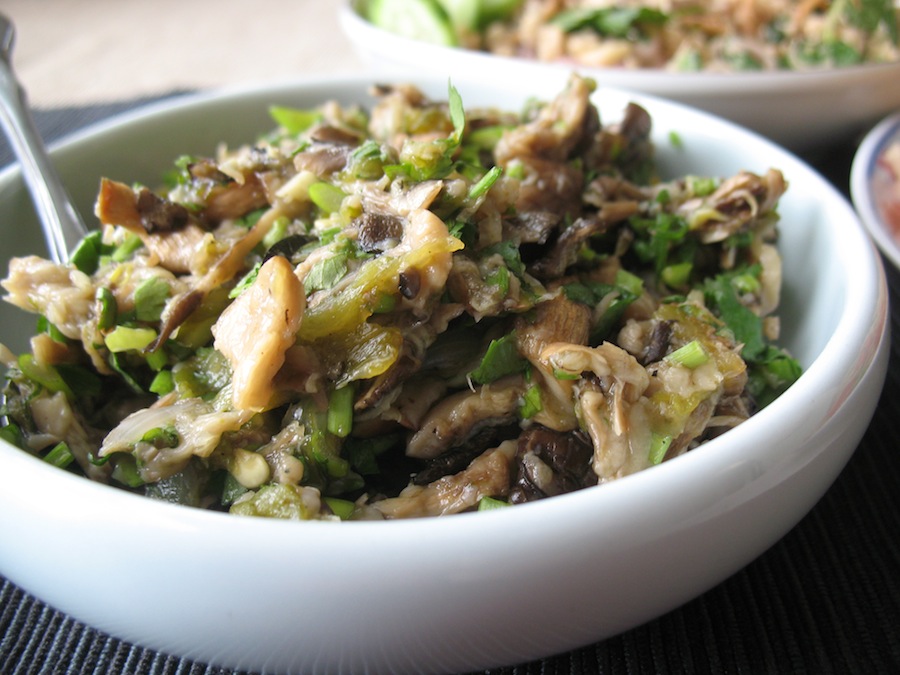
IMG_3238I’ve once again drawn on influences from my newly acquired Northern Lao cookbook with this dish, part of the genre of Lao/Thai dips called jaew ແຈ່ວ/แจ่ว. I’ve previously blogged on one such favorite, jaewbong. Today’s iteration is made from roasted ingredients, much like a roasted salsa. The results were super.

The key ingredient of this dish is the meaty oyster mushroom. These can be found at East and Southeast Asian-focused markets across the city, from H-Mart to local Cambodian markets. Unlike mainstream supermarket mushrooms, these have a meaty flavor, and tend to grow to one side producing a fan shape. Here is an image from Flickr’s creative commons to give you a sense of what to look for. These mushrooms are widely used in Lao/Thai cooking, in soups, salads, and stir fry dishes.

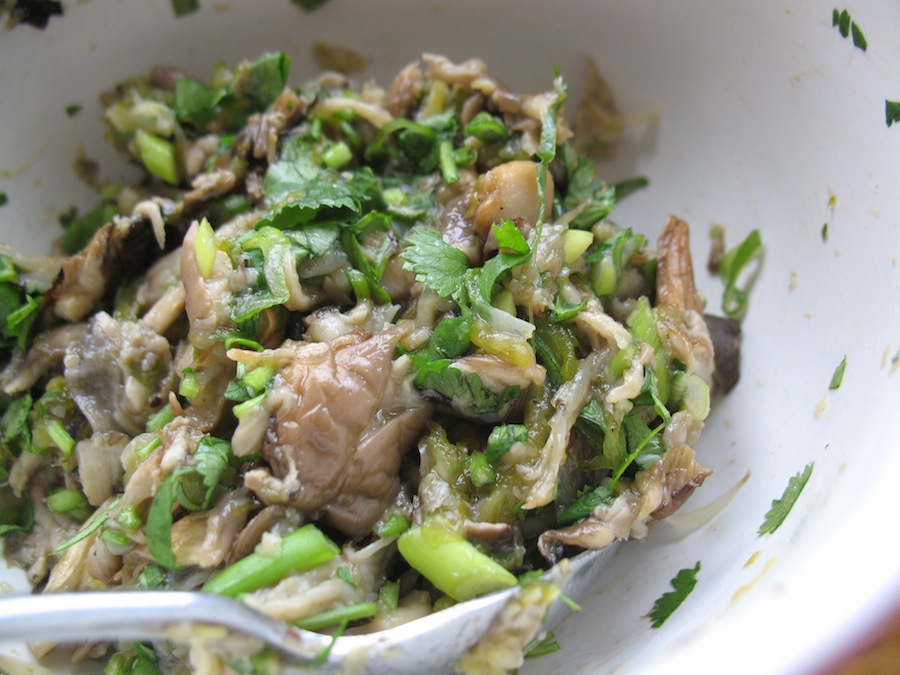
The process of this dish is exceedingly simple. Simply roast oyster mushrooms, together with some (Asian) shallots and garlic cloves still in their skins, and some bird’s eye chiles. I used my oven’s broiler. Know your broiler, and keep an eye out for burning. Turn and flip items as they toast. When mushrooms are golden and peppers, shallots, and garlic a little charred, take off heat. Tear the mushrooms coarsely, skin the chiles, garlic and shallots, and pound together in a mortar and pestle with a little coarse salt. Season with fish sauce, cilantro, green onion, and a little lime juice.

IMG_3232

A final mix with herbs and lime after the pounding

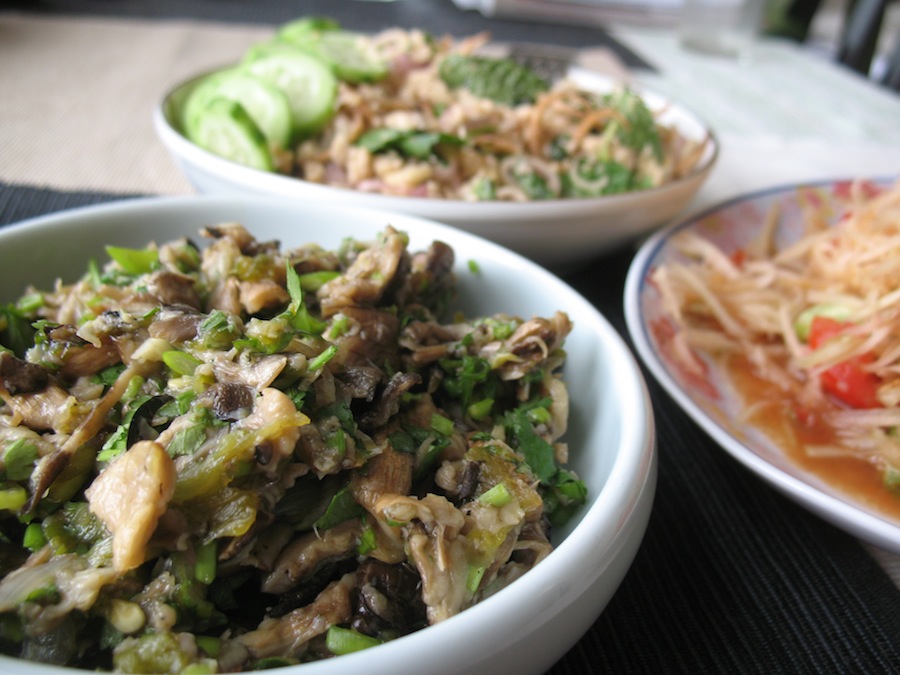
Eat this together with sticky rice, papaya salad, and or whatever other Lao-style dishes. Tonight we had it with chicken laab and papaya salad:

IMG_3239

Posted in - Featured Food Discoveries, - Recipes, Thai/Lao food | Tagged , , , , , , , | 3 Comments

Yanang leaves and Lao bamboo soup

IMG_3251

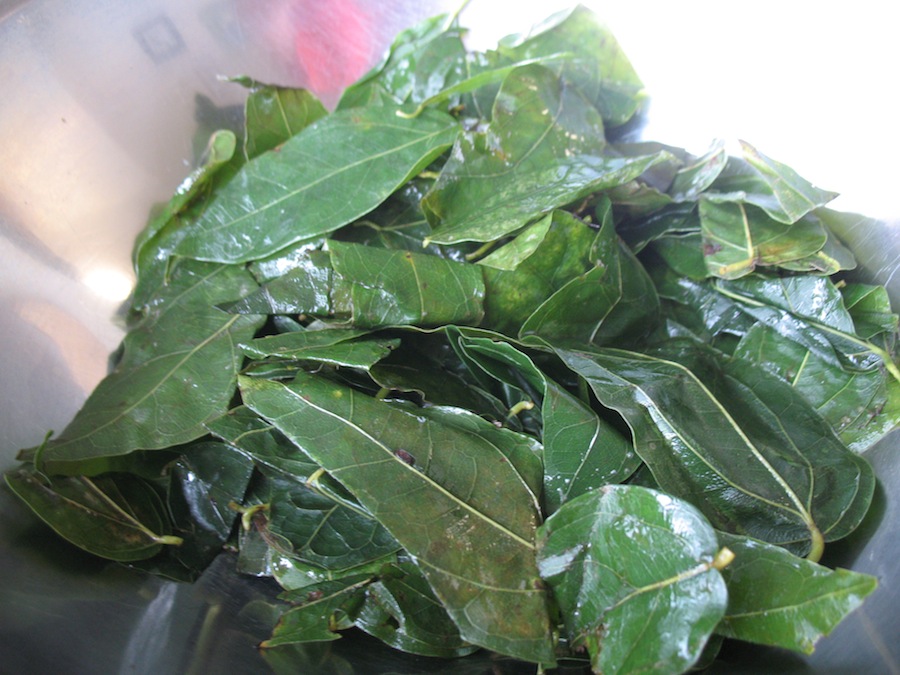
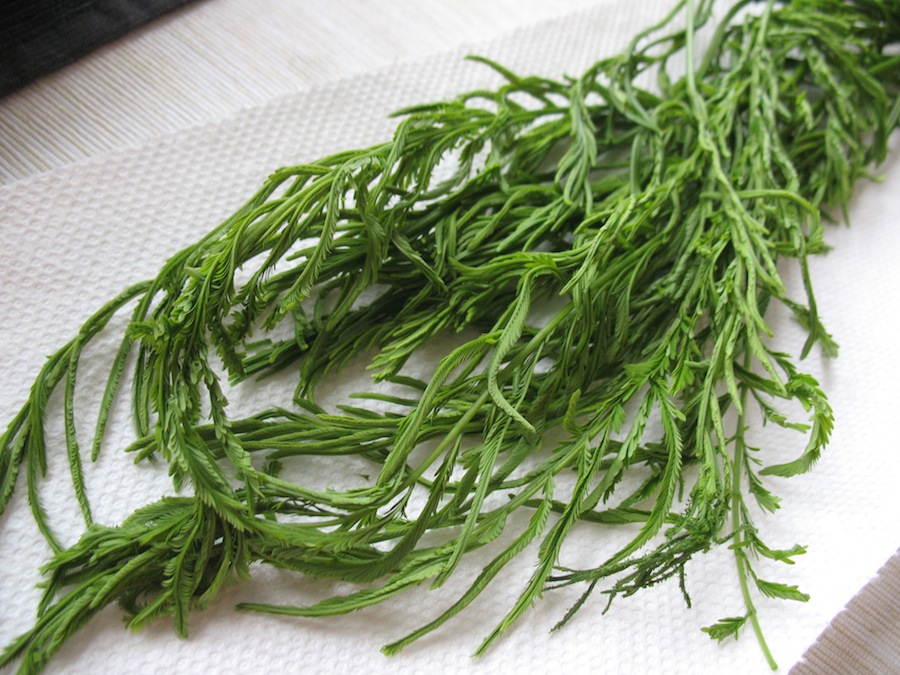
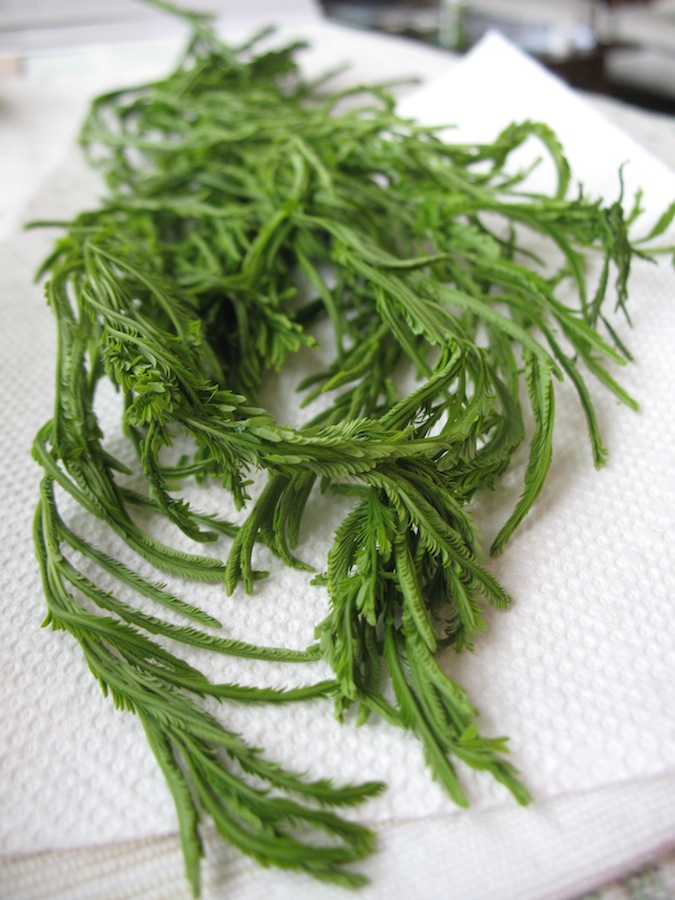
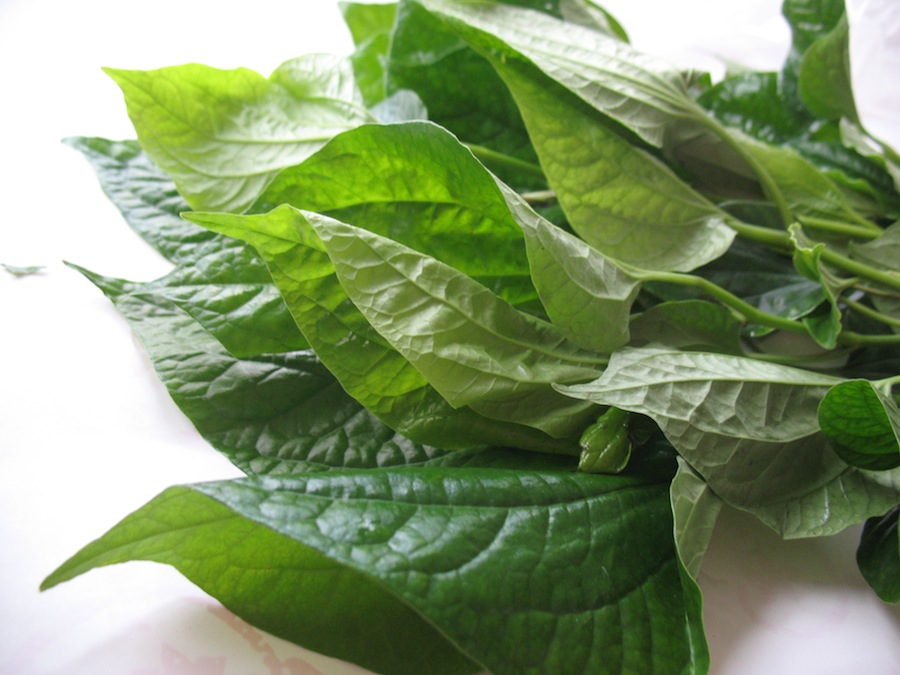
Thawed yanang leaves from my local Cambodian market’s freezer section

Last year I mentioned an impressive blog and cookbook that I came across, Food from Northern Laos: The Boat Landing Cookbook, by Dorothy Culloty. The book itself is by far the most detailed introduction to Lao food that I am aware of (in any language), and I rate it as the most important work towards understanding Lao food since the published writings and recipes of chef of the royal Lao court, Phia Sing (see here for links to some of that collection’s recipes, along with an image of Sing’s original manuscript). To put it bluntly, if you are devoted to learning to cook Lao or Isaan food, Food from Northern Laos would be an important investment for you. Here is a link to a preview of the book, that should give you some idea why.

One of the cookbook’s many recipes (and one which is published online here by the authors) is Bamboo shoot stew with pork (ແກງໜໍ່ໄມ້ໃສ່ຊີ້ນໝູ). Bamboo soups (แกงหน่อไม้) are very popular in Thailand and Laos, and there is a key flavoring ingredient that is paired with bamboo in Thai/Lao cooking: Yanang leaves ใบย่านาง/ໃບຢານາງ.

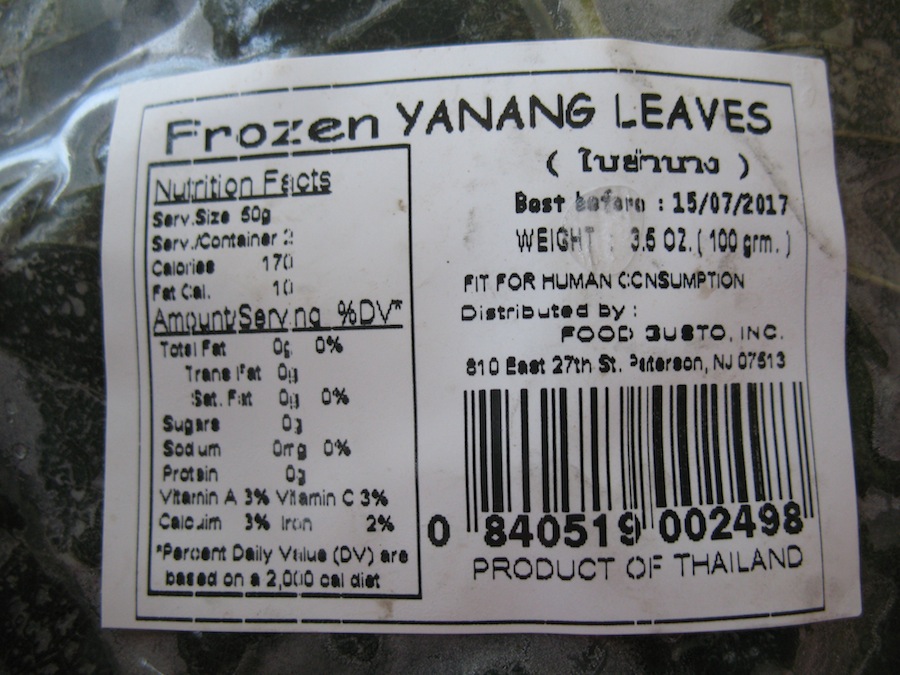
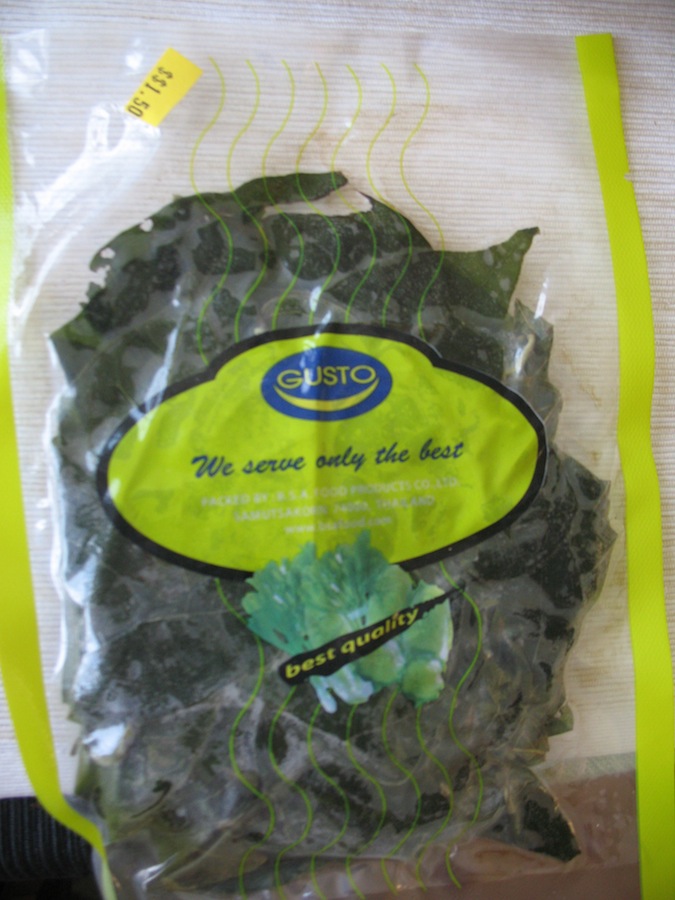
I used to think we only had this available in extract form, either canned or frozen, but I found this recently in [frozen] leaf form. I used the thawed leaves to make a bamboo soup, and the result was delicious. Again, the distributor responsible for this import is the Gusto company, which I previously mentioned (rotten bean sheets, snakeskin gouramy) as making available a range of specialty Thai/Lao/Burmese food items.

IMG_3219

“Fit for human consumption”

IMG_3215


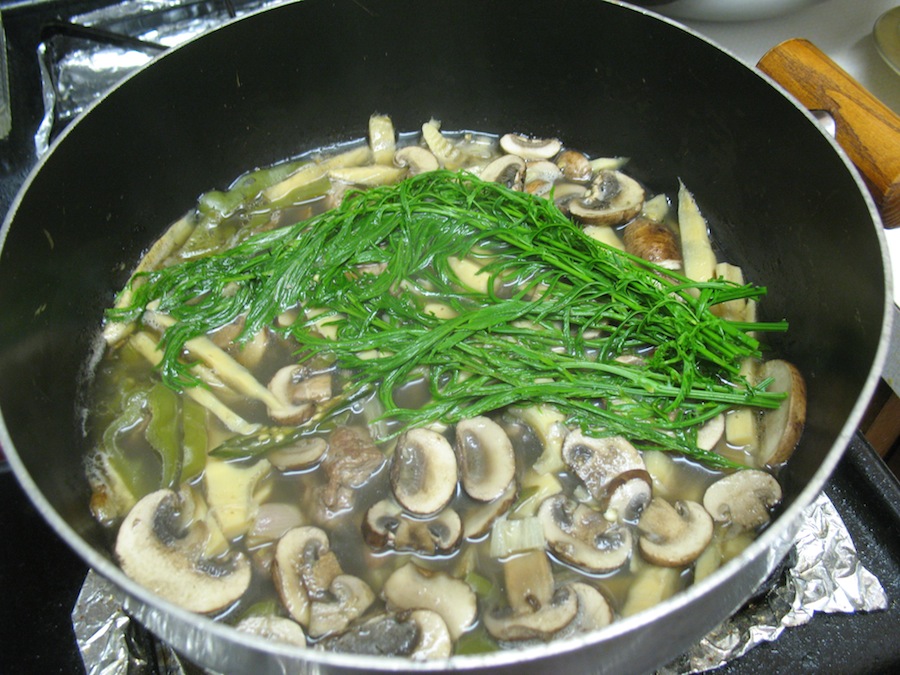
Another very unique ingredient in this soup is acacia fronds (usually known as “cha-om” ชะอม in Thai). I can also find this at my local Cambodian market, where it is labeled as “saom”. These fronds are kind of smelly, and even plastic wrapped, you can smell them when you open your refrigerator. Xinfully has a great introduction to this item with a post called “Cha-om: leaves with an offending smell, but the power to please”. Also there, you can find one of the most well-known recipes with this ingredient, the cha-om omelette.

IMG_3255 IMG_3257

Below I’ll share some images from my attempt at the bamboo soup. Again, the full recipe can be found at the Food from Northern Laos blog.

To start, wash yanang leaves and soak in a big bowl. Rubbing the leaves together and squeezing them will give up a dark green juice:

IMG_3259 IMG_3262


IMG_3263This dark juice, along with some fermented fish sauce (badaek) will be the backbone of the soup stock.

Fry meat (if using), onions, halved bird’s eye chiles, and garlic. I used meaty short-cut pork ribs. Prepare mushrooms (more commonly oyster mushrooms, I used more common mushrooms):

IMG_3265

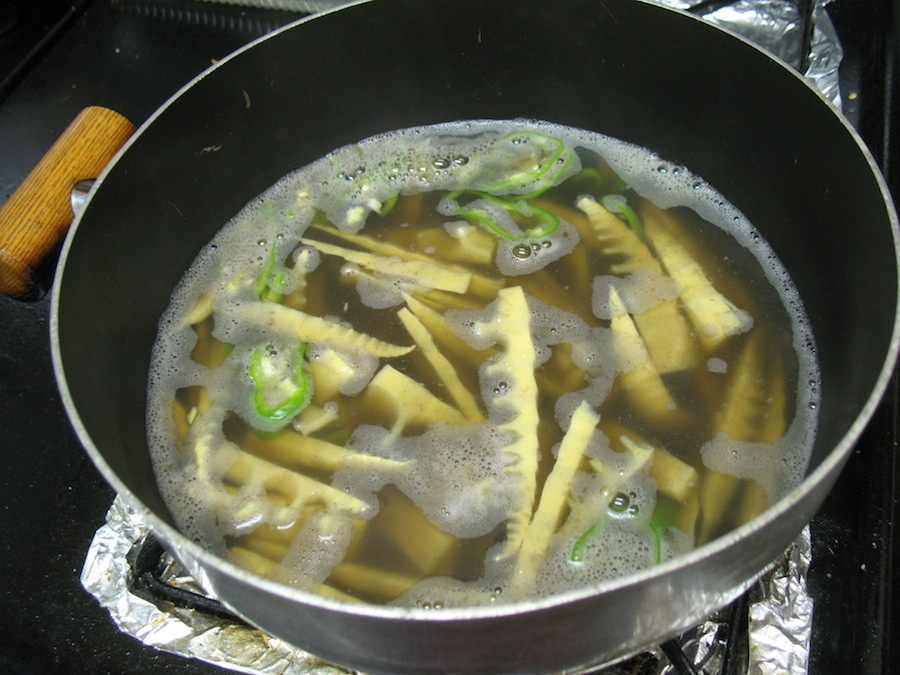
Cut bamboo into strips, and bring to boil with yanang juice and fermented fish (I added a coarsely chopped large chile)

IMG_3266

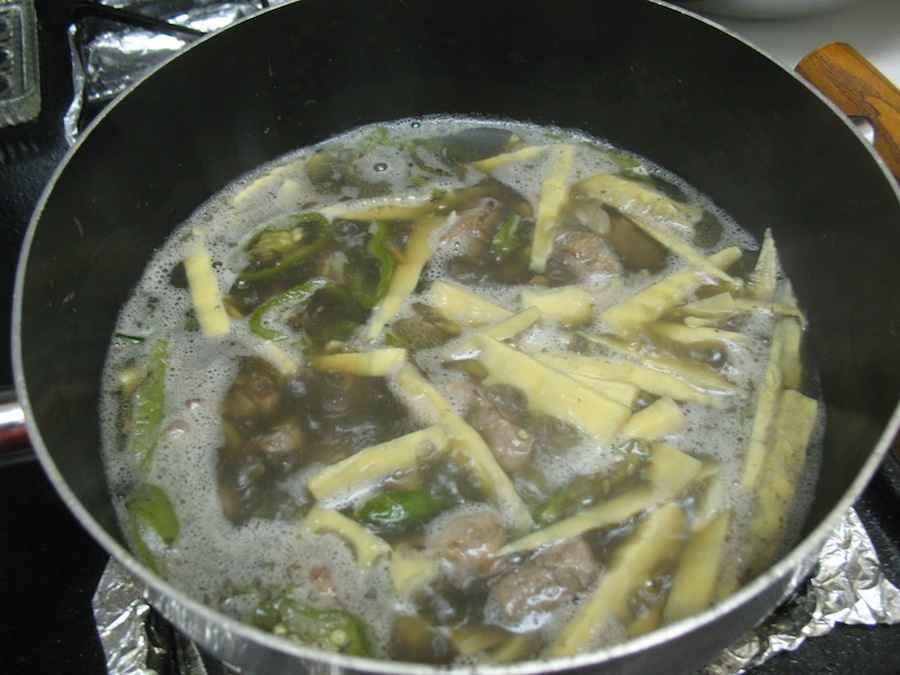
Add pork, onions, garlic, mushrooms

IMG_3271

When bamboo and mushrooms are cooked, adjust for saltiness with salt or fish sauce, and finish with cha-om fronds (be careful of the thorns)

Posted in - Featured Food Discoveries, - Featured Markets, - Recipes, Thai/Lao food | Tagged , , , , , , , , , , , | 4 Comments

Cha plu leaves and a simple Thai chicken and mushroom curry

IMG_3185Cha plu leaves are another ingredient we are lucky to have available to us at Southeast Asian markets of North and South Philadelphia. It is a mild flavored leaf that is well-suited for making wraps, as it is generally enjoyed in Thailand and in Laos where it is known as cha plu leaf (ใบชะพลู) or pak ii leaud (ຜັກອີ່ເລີດ).

IMG_3184Many mistake this for another leaf used by many in South and Southeast Asia to wrap the areca nut, and it is often erroneously called “betel leaf“. They are not the same. Here is a nice blog post discussing this topic from a Thai chef and blogger Kasma Loha-unchit. There you can also find a nice recipe for making the snack for which this ingredient is best known: miang kham เมี่ยงคำ.

You can see below how this would nicely wrap small chopped edibles. It can also be used to wrap ground meats to be later cooked, with a result that resembles Turkish dolma. See here for a web search of images of what that looks like.

Cha plu (piper sarmentosum) is in the peppercorn family, and its flower/fruit, which resembles the long pepper–likely a close relative–is also edible.

IMG_3192

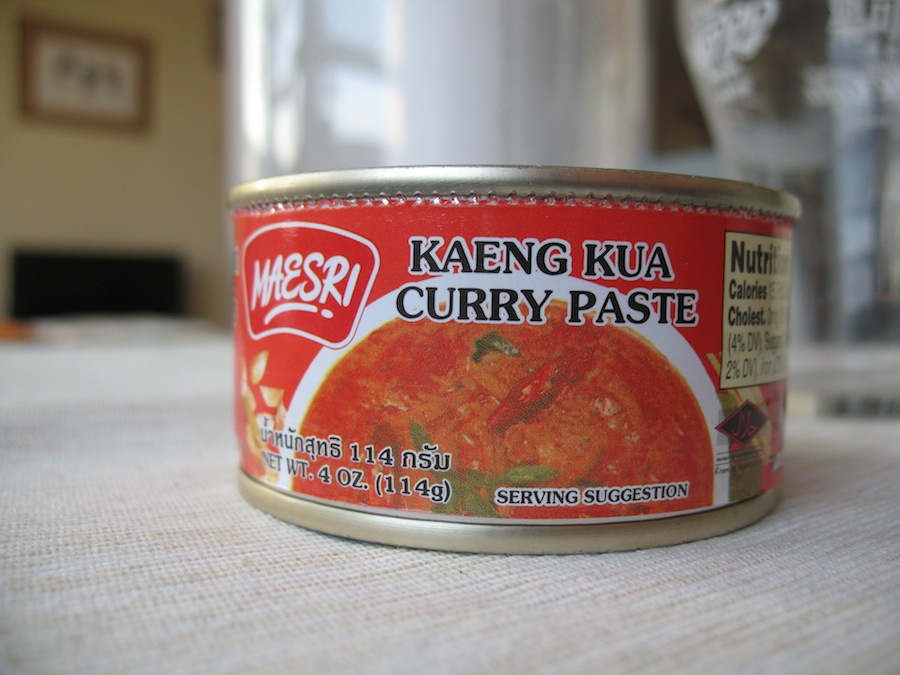
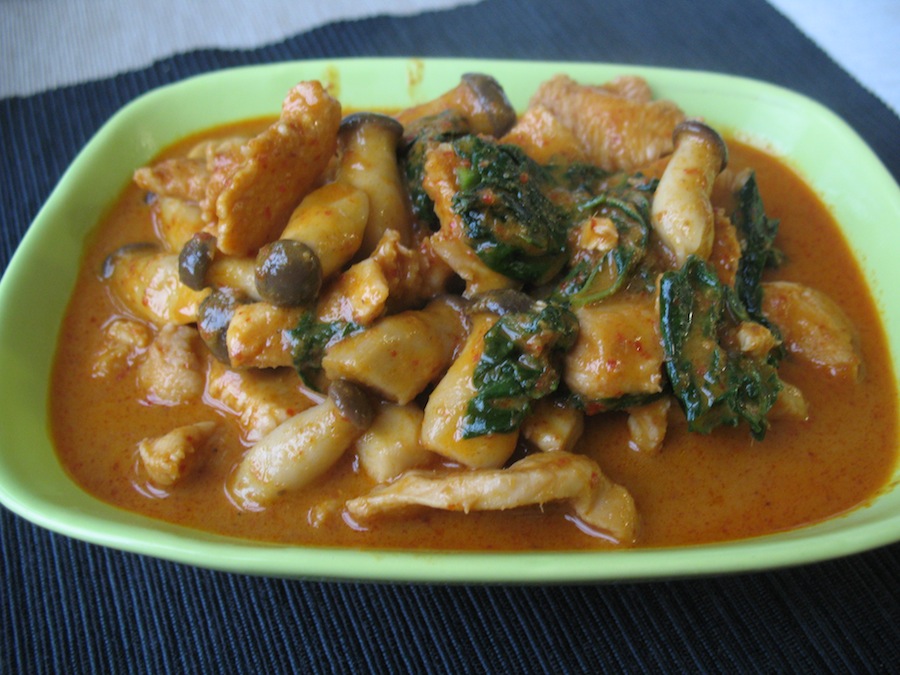
IMG_3214Today, we’re going to use it in a simple Thai curry. As you may know, there is a long list of Thai curries that are differentiated often simply by slightly varied amounts of spices in the paste. Today’s paste will be for Kaeng Khua แกงคั่ว curry. This is very similar to red curry paste, but you can also find this variant if you visit a larger Asian market (particularly SE Asian markets) in canned form. To the right you can see an image of the can that I used, Maesri brand. As I mentioned in a previous post, we generally don’t make our own pastes. It is certainly doable, but the spices from Thailand are a little more fragrant, and the can is only a dollar.

Recipe: Thai chicken and mushroom curry with cha plu leaves – แกงคั่วไก่ใส่เห็ดกับใบชะพลู

Many Thai curries are built the same simple way, with the most laborious process being the pounding of the spice paste. If you are simply using a can, the cooking process is very brief indeed.

1. start frying the curry paste in some oil in a pot, until it is fragrant. Add some chopped chicken to the pot and stir until the paste gets well acquainted with the meat.

IMG_3198

2. Add as much coconut cream or milk (i.e. the kind for cooking with) as you will need (use a can or box and use enough to cover all of your ingredients).

3. Add in the mushrooms (we used some Korean king oyster mushrooms from H-Mart)

Update: I almost forgot seasoning! Add fish sauce and palm sugar to adjust to taste salty or sweet, respectively. Roughly chop your cha plu leaves:

IMG_3195

4. After everything is cooked and tasting right, toss in the roughly chopped cha plu leaves. I used the whole bunch pictured above. Remove the leaves from the stem first.

IMG_3200

This curry is similar to a red curry, but it strikes me as slightly more herbal.

IMG_3213IMG_3208

Posted in - Featured Food Discoveries, - Recipes, Thai/Lao food | Tagged , , , , , , , , , , , , , , , , , , , , , | 6 Comments

Map of Philly Wine and Beer

IMG_3174

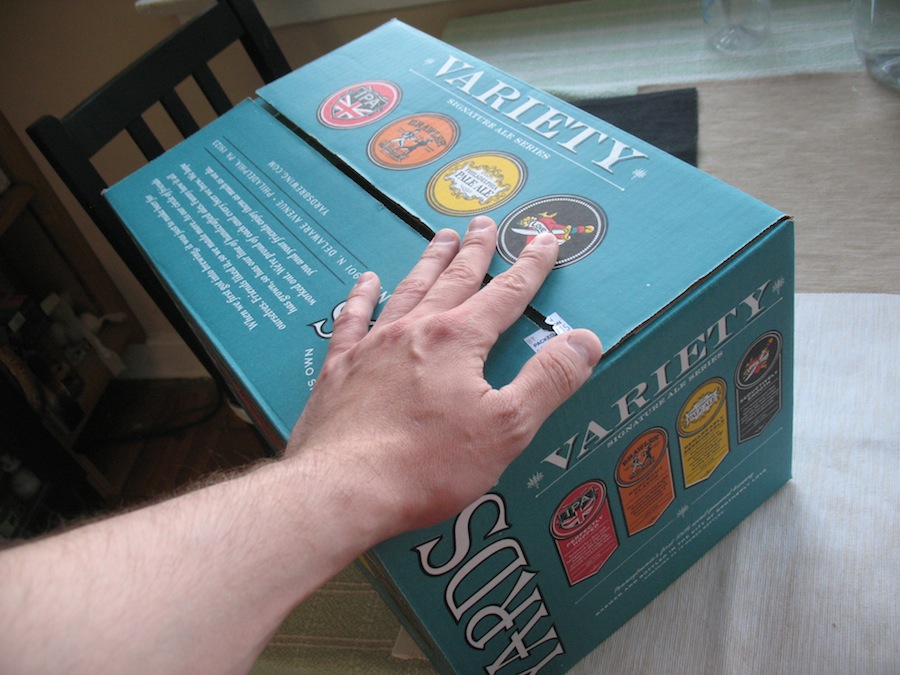
A variety pack case of Yards. One of the cases on standard rotation.

Moving to Philadelphia from Madison, WI came with a few adjustments to our usual patterns of living, and casual shopping for groceries and beer came with a steep learning curve. If you live in the area, you are likely familiar with the concepts of “state stores”, “beer distributors”, and “bottle shops”. To those unfamiliar, alcohol is strictly sold by the State of Pennsylvania, with special retail locations for wine and liquor (“state stores”–basic selections with locations few and far between) and beer, which can be purchased at reasonable prices only at “beer distributors” where you need to buy a case minimum. Bottle shops offer a more frequent and available alternative for buying beer–but be prepared to pay top dollar for even very cheap beer.

So, here in Philadelphia you really have to plan ahead if you will need a bottle to take to a friend’s for dinner or if you are in the mood for a beer after work. If you are lucky, your 2-mile radius will have a wine store, OR a beer distributor. If you are like most of us, you’ll have to instead pay a premium for a few bottles of beer or drive some distance to find a distributor or state store.

Strangely, I haven’t found a useful map online for these locations. Good luck trying to find a neighborhood wine store open on Sunday! There are some open, but you have to be in the know as to which one is where.

To help with this, I’ve put together a map with data from the PA Wine & Spirits stores website. Notice the color coding for stores open on Sunday. At the bottom of the page I’ve also included a map of Philadelphia beer distributors (generally open everyday). Hope you find this helpful.

Philadelphia Wine and Spirits stores (including those open on Sunday):

Dark green = open everyday
Red = closed Sundays (and some Sat, Mon–see notes),
Light green = premium collection, open Sunday

Philadelphia Beer Distributors:

Posted in - Guides | Tagged , , , , | 1 Comment

Cantonese clay pot rice

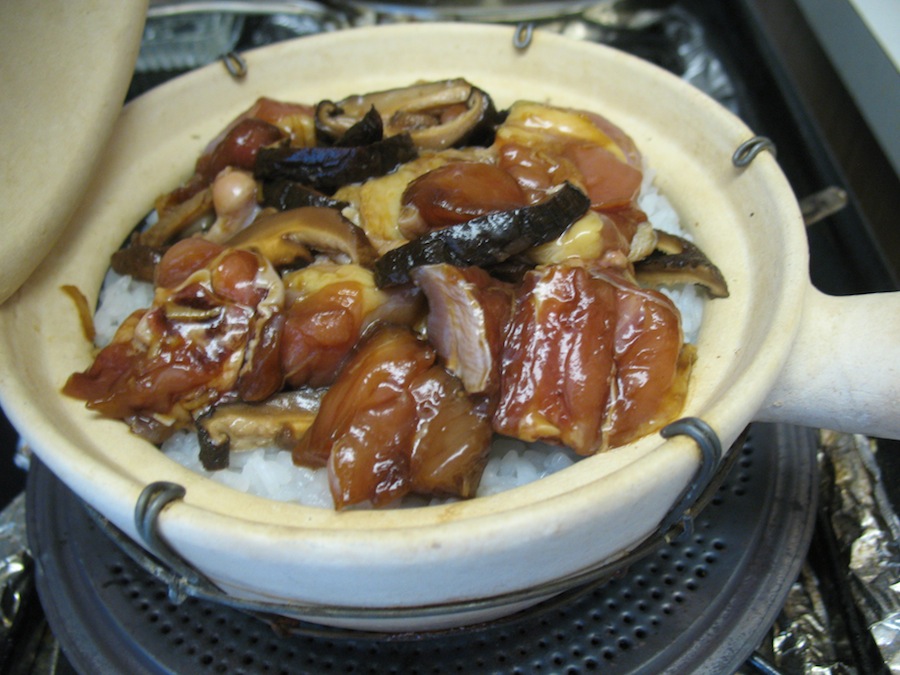
IMG_3111Rice cooked in earthenware pots is a specialty in various places throughout China, but the dish is particularly well known in Hong Kong and broader Guangdong, by the name baozai fan 煲仔飯 (also written 堡仔飯, and pronounced bozei faan in Cantonese). When I was a student in Guangzhou, this was one of those go-to meals that was crucial at least once a week, like Guilin mifen. Also like the Guilin mifen shops/restaurants, baozai fan places did mostly just that one dish, with a variety of choices for toppings.

This dish is prepared in a single-serving earthenware pot, or shaguo 砂鍋, along with chosen toppings. Here are a couple of great pictoral examples of this dish from Hong Kong, from Terina and Tim, and from HKepicurious.

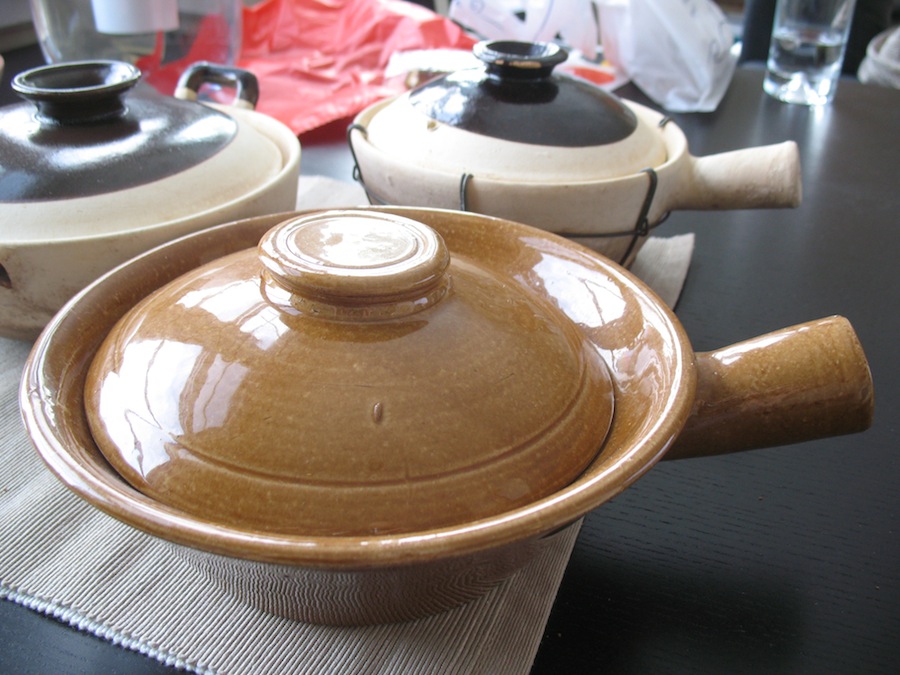
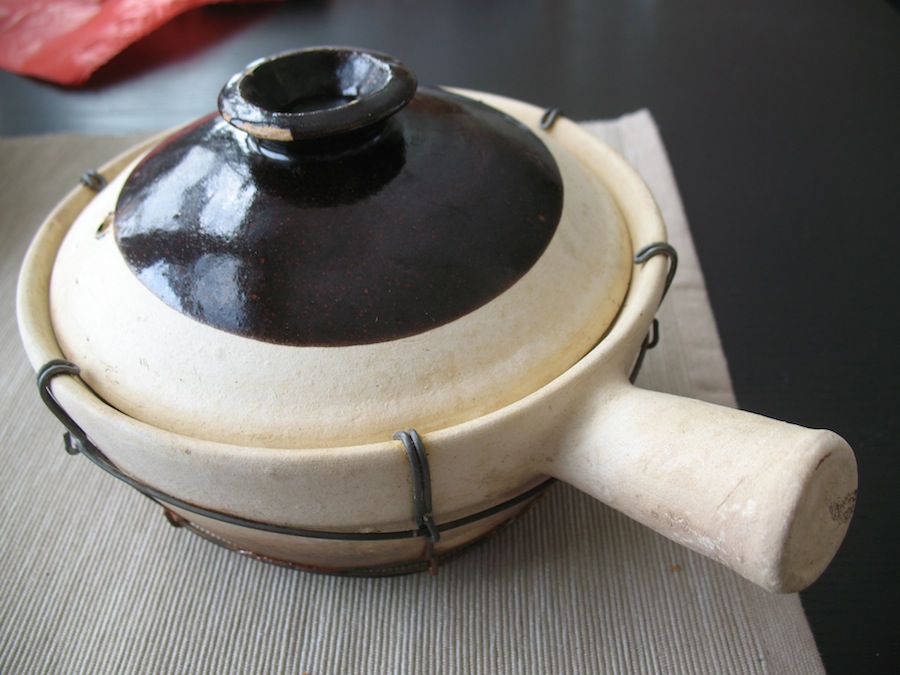
You can find earthenware pots like these at the larger China-focused markets. The Underground market in Chinatown and the large kitchen stores there will have options. The big markets on Washington avenue, Hung Vuong and Big 8 Market will have them too. Here are some examples that I’ve collected over the years. Some pots are glazed only on the inside:

IMG_3099 IMG_3095 IMG_3093
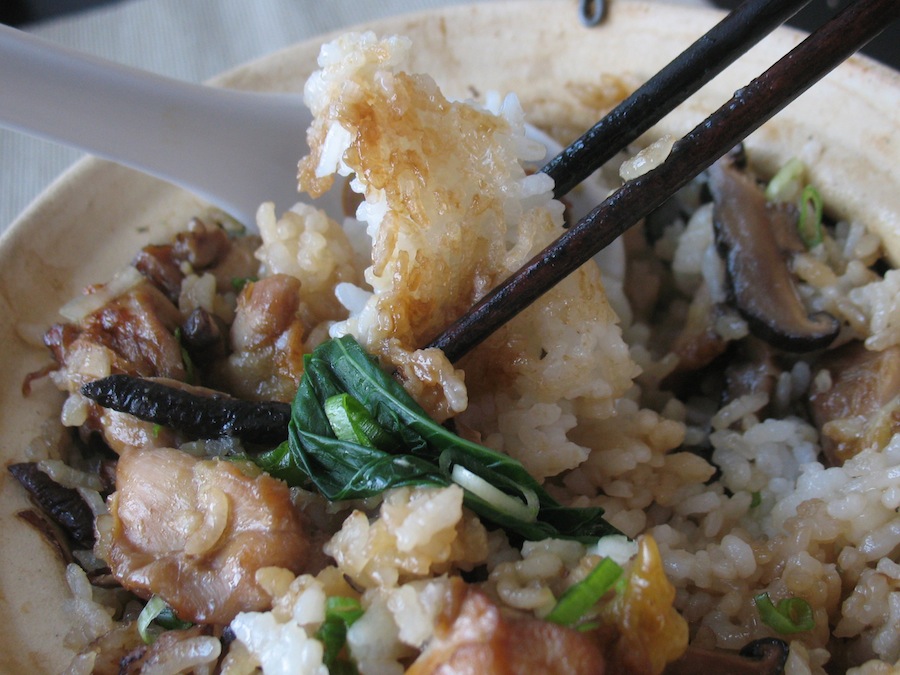
This dish is pretty simple to put together, with the greatest challenge being the same as cooking a great rice pilaf (like the Persian polo recently posted at Fae’s Twist and Tango, or like my Uyghur polo, for example): provide that the rice is cooked fully and evenly, and that the bottom of the rice is crispy and chewy (without the rice overcooking).

This appreciation for crispy rice on the bottom spans across Eurasia, from Iran all the way to Korea (see here for a wiki on the Korean crispy rice that can be made into soup, nurungji 누룽지).

Tips toward a perfect rice: one way to help ensure the rice cooks through evenly is to pre-soak the rice for at least 1/2 hour. I usually use short grain East Asian rice (i.e. Japanese rice used for sushi). Many cooks and recipes say you shouldn’t stir the rice while it is cooking. I usually do a bit at the beginning of the cooking process, but once it starts to boil and set, don’t stir. It will help that crisp layer on the bottom to form. Another trick is to use a heat diffuser between your pot and the flame or heating element. If you do, you can drop the heat way down at the end if the rice is already crisping and not cooking through. With this method you can sprinkle a little water on top and let it sit on very low heat for another 10 minutes or so to cook through.

Most shops have a variety of marinated toppings (usually meat or fish) that will go into the clay pot once the rice has set, about 10 minutes or less into cooking. The marinade liquids will also help to give nice flavor to the crust on the bottom of the pot. Classic versions of the clay pot dish include chopped chicken (with bone-in) with mushrooms, sausage and smoked meats, marinated meat and egg.

Finally, once the toppings are cooked and the rice is cooked through, shops often top the dish off with a blanched long leaf vegetable, chopped green onions, and a generous splash of soy sauce.

This is a real comfort food, and it is great for dinner on a cool evening.

Here is a recent attempt at a bony chicken with mushroom baozai fan:

IMG_3101

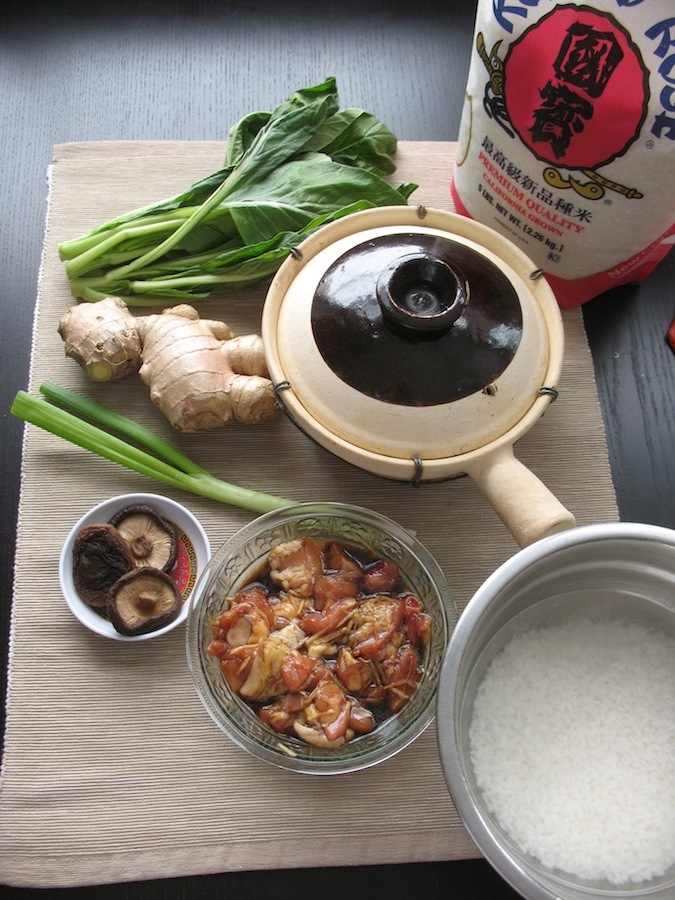
ingredients for my baozai fan, some fully prepped. Chicken with bone in chopped into chunks, marinated in soy sauce, rice wine, sesame oil, ginger, sugar. Dried shitake mushrooms were soaked in boiled water for 1/2 hr. Rice has been rinsed and soaking for 1/2 hour. Mushroom will be sliced and added to the marinade before cooking and green veg will be cut in half and boiled for 5 minutes in a separate pot

IMG_3106

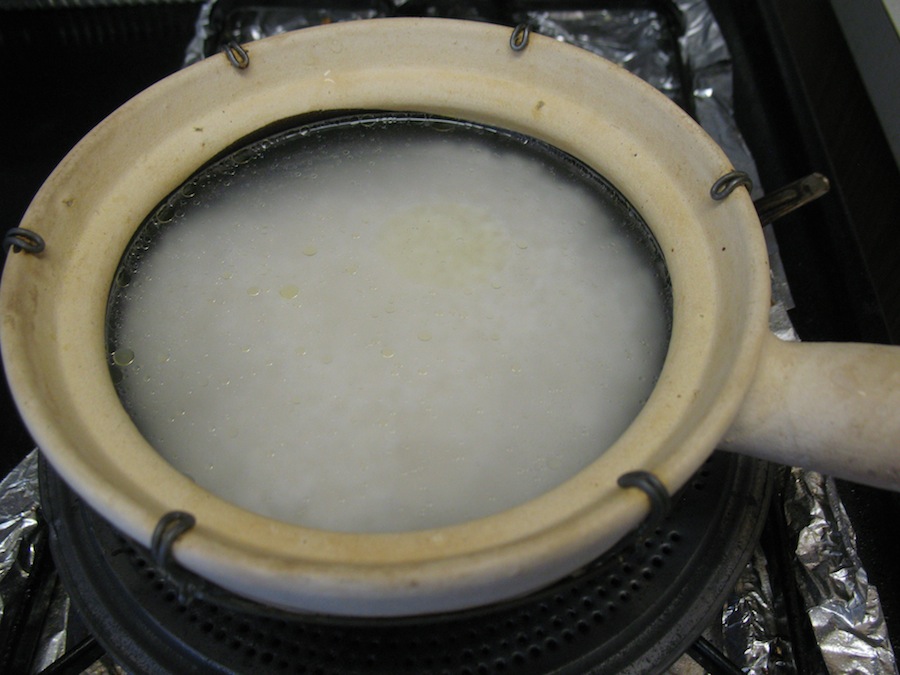
I used rendered chicken fat from the skin to add oil into the pot before adding the soaked rice and water. I used a lot of rice, at one standard cup to 1 1/2 cups of water. Start on high or medium high heat to bring to boil uncovered. Once it starts to boil, turn it down to low or medium low and cover.

IMG_3109

Add toppings onto the rice once it has set, this is just over 10 minutes after rice has boiled. As you might be able to see, the rice looks almost cooked already. In hindsight I should have added the topping a little earlier (see below for more info). Normally, if you still have good heat and steam coming off the rice, the topping will cook through in an additional 10-15 minutes. If you hear the rice starting to crackle on the bottom, you might have to turn your heat down even more.

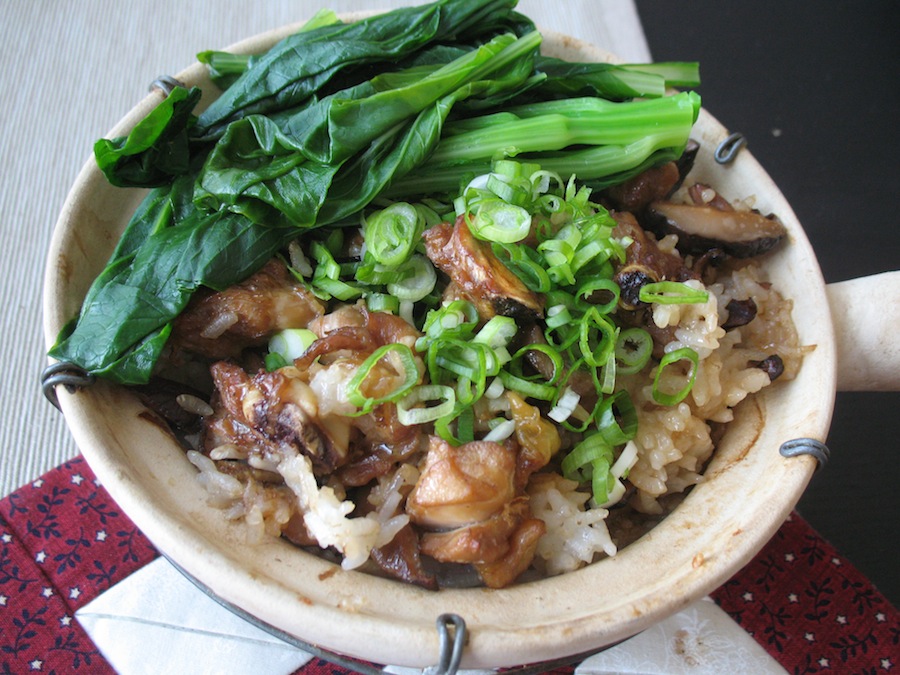
IMG_3111

Finished baozai fan, topped with some boiled yuchoy

IMG_3123

Crispy bit, or 锅巴, from the bottom.

While my baozai fan turned out really delicious with nicely paired flavors, the rice was a touch overcooked. The reason for that is I put my topping on the rice too late, and my topping was pretty thick. I turned the heat way down, and the chicken was not cooking through. It was almost a tragic situation, and I decided than rather risk burning the rice and/or making a porridge block of rice, I should take the whole thing under the broiler. The chicken then cooked through successfully (and it even browned a bit).

Posted in - Featured Markets, - Recipes, Chinese food | Tagged , , , , , , , , , , , | 3 Comments

Uyghur meat pies cooked under the broiler

My beautiful picture

Samsa seller in Kashgar in the mid-90s

This weekend I made an exciting discovery. I found that I can use my gas oven’s broiler to replicate tonur-style Uyghur meat pies (a.k.a. samsa سامسا).

Uyghur samsa are delicious. The filling is simply fatty mutton, finely-chopped onions, salt, cumin, sometimes pepper. The shell is a just unleavened wheat flour dough. This food item exists in several iterations across Eurasia. Samsa can also be made with ingredients other than mutton. Pumpkin samsa are popular, and chopped potatoes and other ingredients (like the South Asian cousin samosa) are also delicious.

My beautiful picture

Delicious samsa from a Uyghur roadside seller, Kashgar, mid 90s

In Xinjiang, samsa are generally cooked in tonur ovens (a traditional Uyghur super-hot wood fire oven). This is part of the reason why I rarely attempted cooking these at home, since it is difficult to replicate that burst of heat that can blister the shell of the meat pie as well as cook through to the raw ingredients inside.

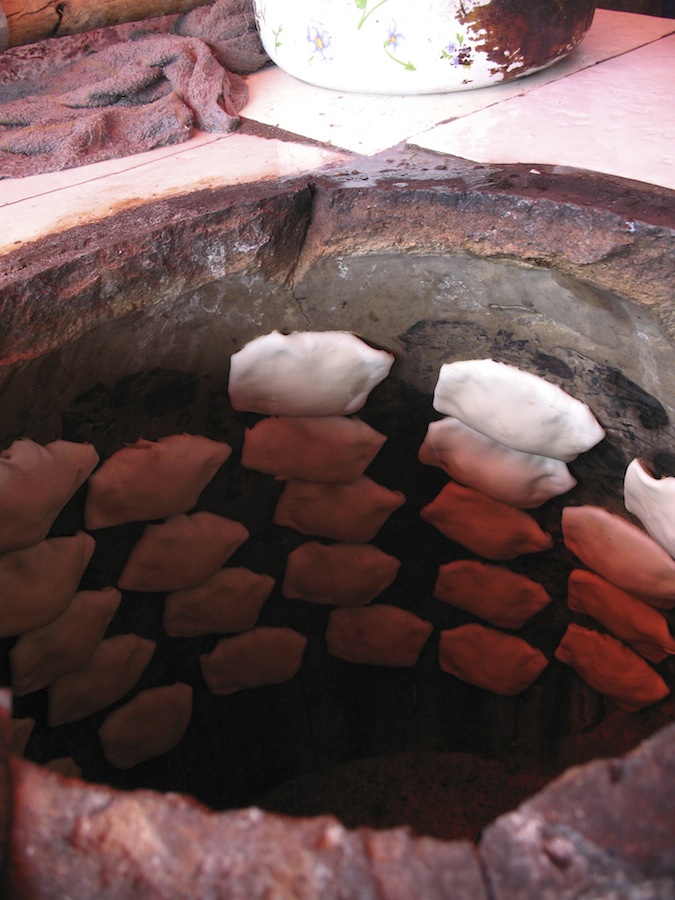
Following are some images of baking samsa in a tonur oven, from a trip to Ghulja:

making samsa Ghulja

Readying each meat pie by wiping the bottoms with a little water before sticking them to the bell-shaped walls of the hot tonur oven

placing samsa

placing samsa 2

As you can see from the images above, that kind of baking is hard to replicate with standard home implements.

But then I thought… why not try the broiler? I figured the meat pies are kind of thin, maybe I could drop the broiler pan down low, keep an eye on them, and flip them when they are cooked on one side.

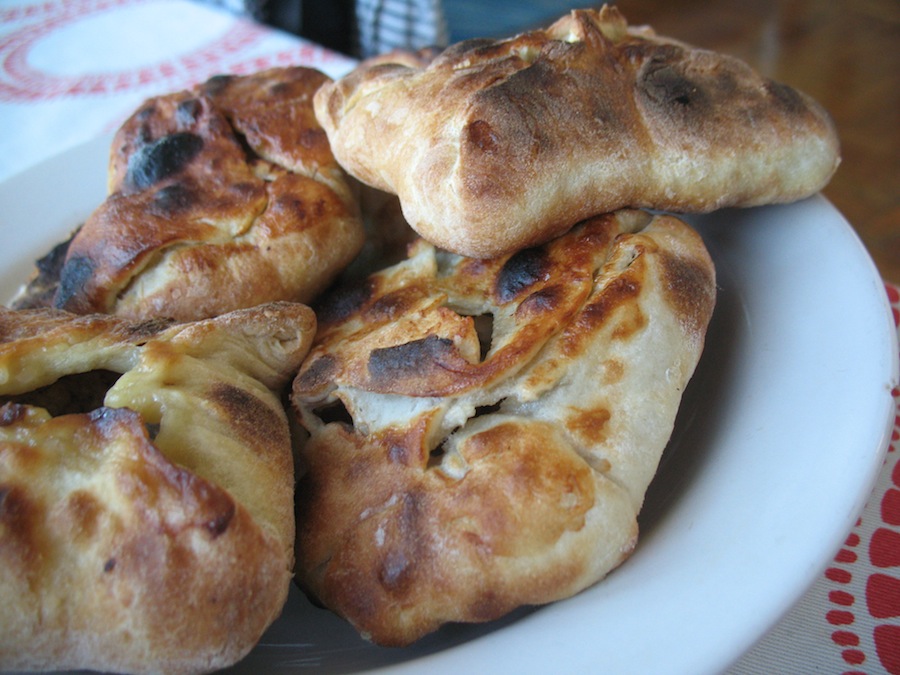
The result worked. The shell was nicely browned, and the filling did cook through completely. I am very excited with how it turned out, but you really have to keep an eye on them. You are basically grilling with an unpredictable flame. If the oven gets too hot, the flame will turn off. Because of that, you might need to open the oven door to force the oven temp to drop and restart the flame. All ovens are different, so you will have to experiment. Electric heating elements might also work with this.

Recipe: Broiler samsa ئۆي سامسىسى

IMG_3000

mix some finely chopped mutton, mutton fat, onion, cumin, salt, and pepper. For best results fry a small spoon in a pan to taste for seasonings. Should be a touch more salty than you think it should be, because the wrapper will be kind of bland.

IMG_3002

Mix some bread flour (or all-purpose flour) with some water. You can add a little salt, but salt in the dough is not necessary. I tried two recipes, one with egg, and one without. I actually liked the one without better. Flatten a small egg-sized dough ball into a circle and fill with meat mixture. I folded my pies like I recall seeing them in Xinjiang, pentagonal. My seams weren’t very good, and some of them opened while baking. That didn’t bother me in the least.

IMG_3016

I dropped the broiler pan as low as it could go, to give about 5-6 inches clearance between the flame and the samsa

IMG_3005

Keep a close eye, they cook quickly. Flip them when they cook on one side.

IMG_3021

IMG_3033

Tastes right to me.

IMG_3037

Posted in - Featured Food Discoveries, - Recipes, Central Asia/Uyghur food | Tagged , , , , , , , , , | 4 Comments

Four unique Asian dried chile peppers

Chile peppers have only been in Asia for several hundred years now, but they have gone a long, long way to become standard and staple ingredients in many of Asia’s great food cultures. Southeast Asia is of course full of chile pepper connoisseurs, with particular numbers in the countries of Indonesia, Thailand, Laos and Cambodia. China’s west-central region is also deeply involved with the chile pepper, where they use fresh, dried, and pickled peppers with traditional dishes (Sichuan and Hunan have many famous examples). And South Asia’s regional cuisines are also known for their fiery spice. From Kashmir to South Indian buttermilk-cured chiles (see below) to the world’s hottest pepper, the “ghost pepper”, South Asia’s culinary traditions showcase great diversity with the chile pepper.

Over the past few months I brought home some notable chile pepper finds from markets around Philadelphia. Here are some highlights:

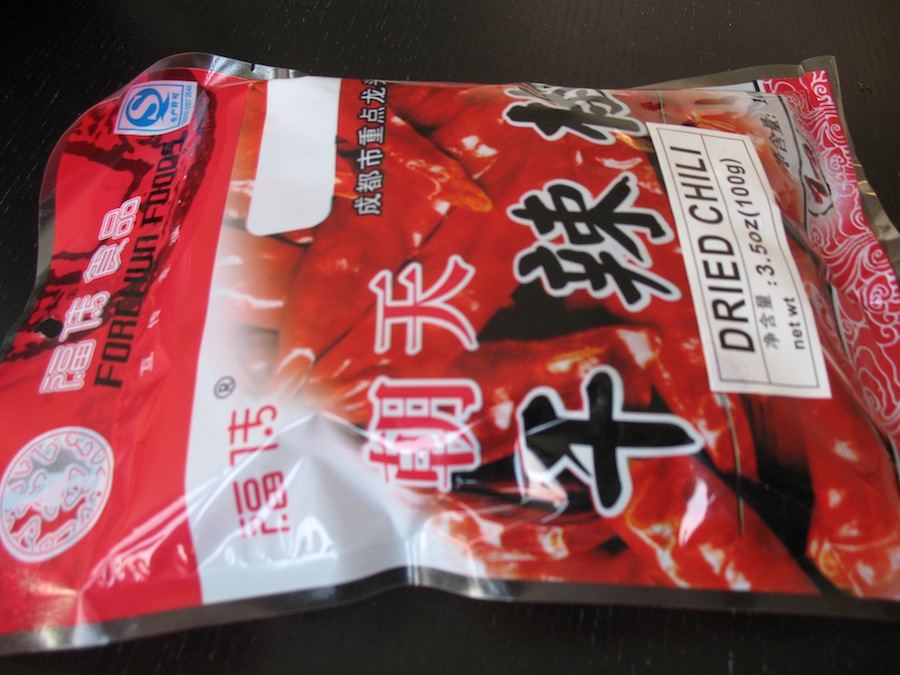
1. “Sichuan Chile” or “Facing heaven chiles” or Chaotian gan lajiao 朝天干辣椒
IMG_2898

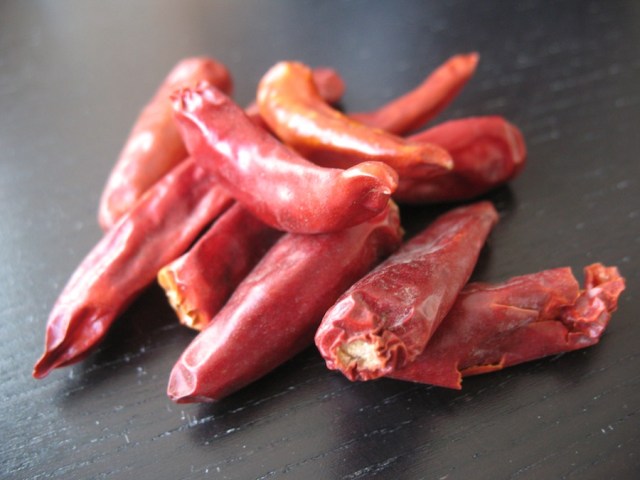
For those of you who are really into Sichuan cooking, this is a must have. These are dried peppers from Sichuan province, and they are similar to standard dried red chiles (usually chile arbol) available in most US markets, but they are a little fatter and milder. Because of the mild nature, it is a great pepper to use for almost anything. I toss them in with stir fries often, whole or cracked.

One key Sichuan pantry item that is made from these chiles is red chile oil 红油. This is a must for Sichuan-style cold salad dishes, like cold jelly noodles, cold cucumber salad (which is basically that cold jelly noodle sauce over cucumber slices), and cold meat dishes.
IMG_2893

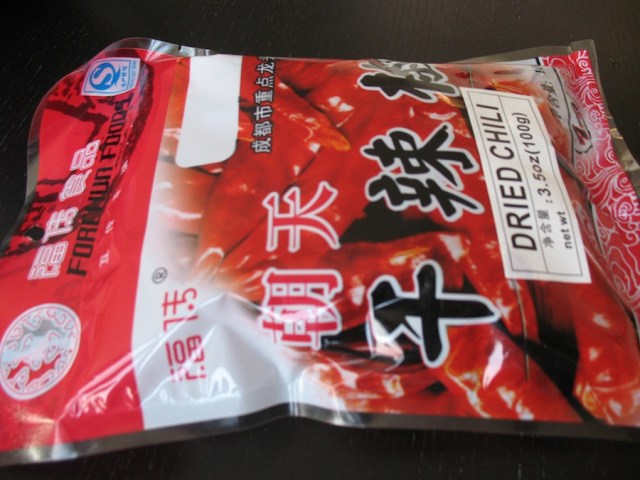
“Facing heaven” chiles – notice the characters for “facing heaven”: 朝天

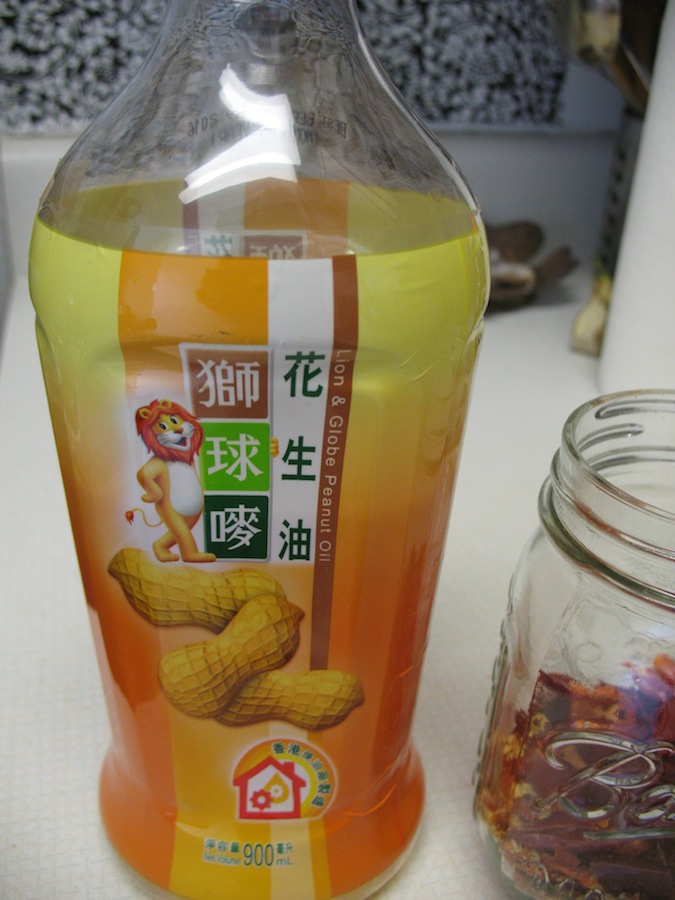
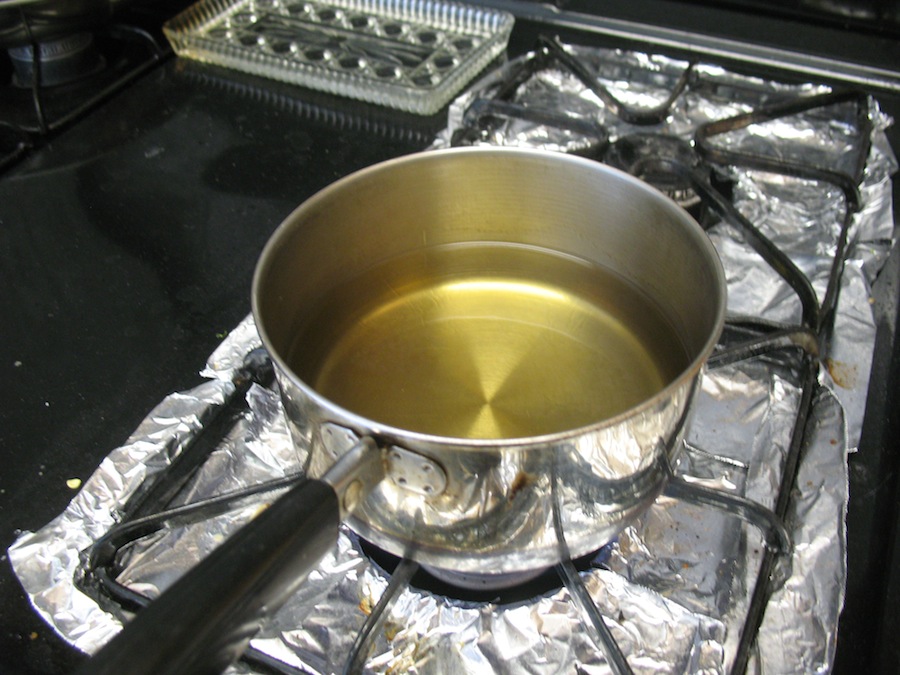
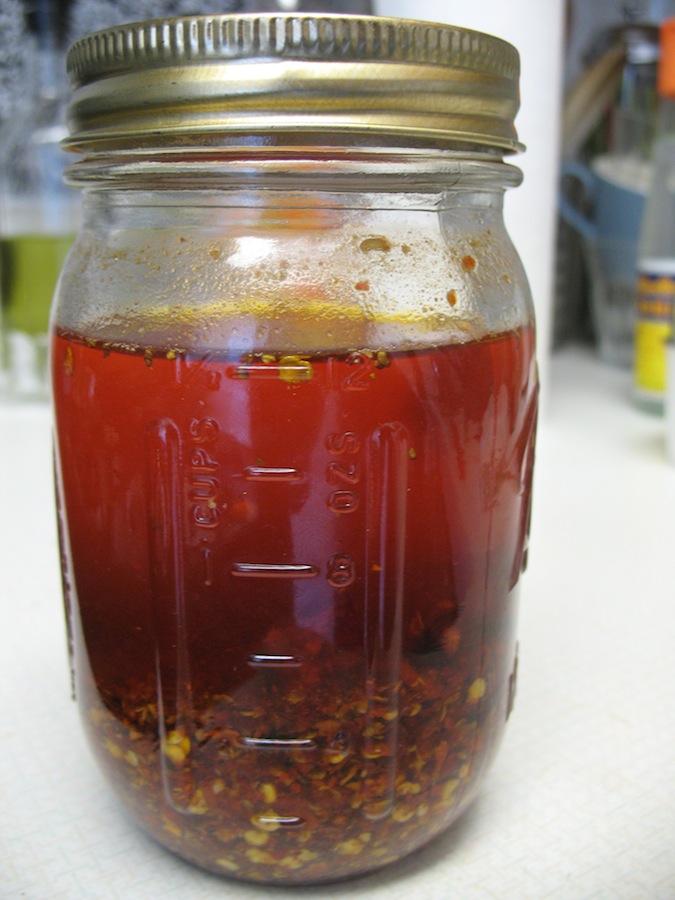
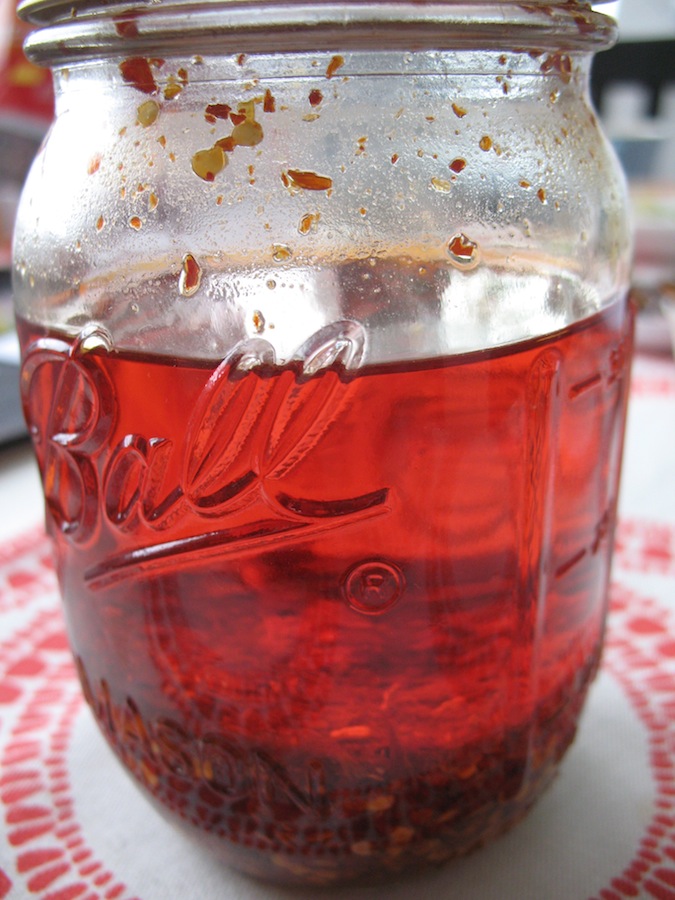
Chile oil is simple to make. Get some peanut oil smoking hot, take off heat for 10-12 minutes, and pour into a jar that is a third full of chile flakes. Let it sit for a few days and it’s good to use. Some people flavor the oil more with garlic, ginger, huajiao, and other aromatics too.
IMG_2901

peanut oil and a jar with chile flakes ready for making chile oil

get oil smoking hot and remove from heat for 10-12 minutes
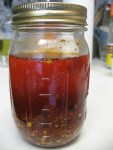
get oil smoking hot and remove from heat for 10-12 minutes

Pour oil over chiles and stir them up good. They'll sizzle and darken slightly

Pour oil over chiles and stir them up good. They’ll sizzle and darken slightly
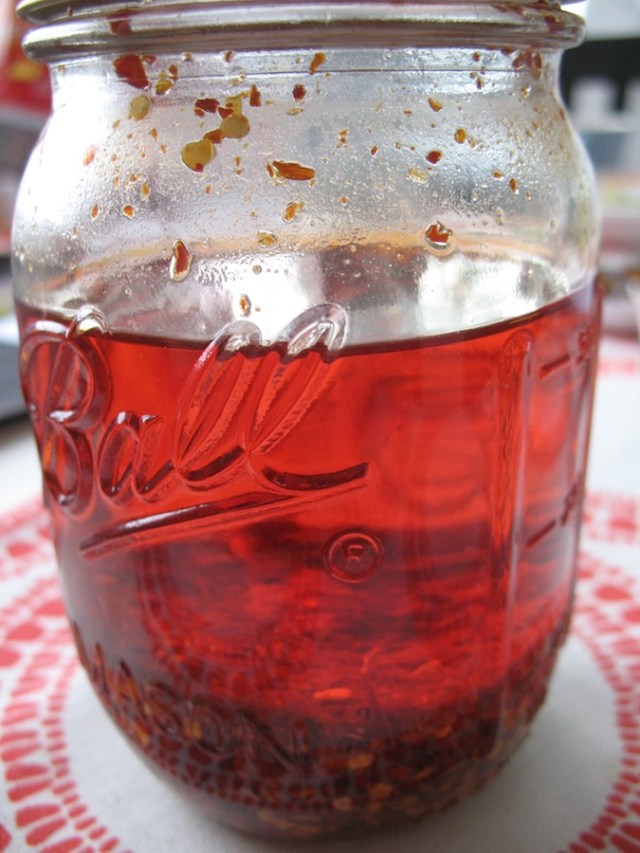
After a few days the oil will clear and be a beautiful ruby red

After a few days the oil will clear and be a beautiful ruby red


If you are new to Sichuan food, and want to learn more, including more detail on staple items like chile oil, I highly recommend Fuchsia Dunlop’s Land of Plenty.

Surprisingly, I haven’t seen “Facing heaven” peppers available at most Chinese markets. Most markets just carry peppers from South America. The one market that I see regularly carrying them is the Hong Kong Market in North Philadelphia. Unfortunately, there isn’t usually anything in English on the packaging besides “dried pepper”. Look for the characters for “facing heaven” 朝天.

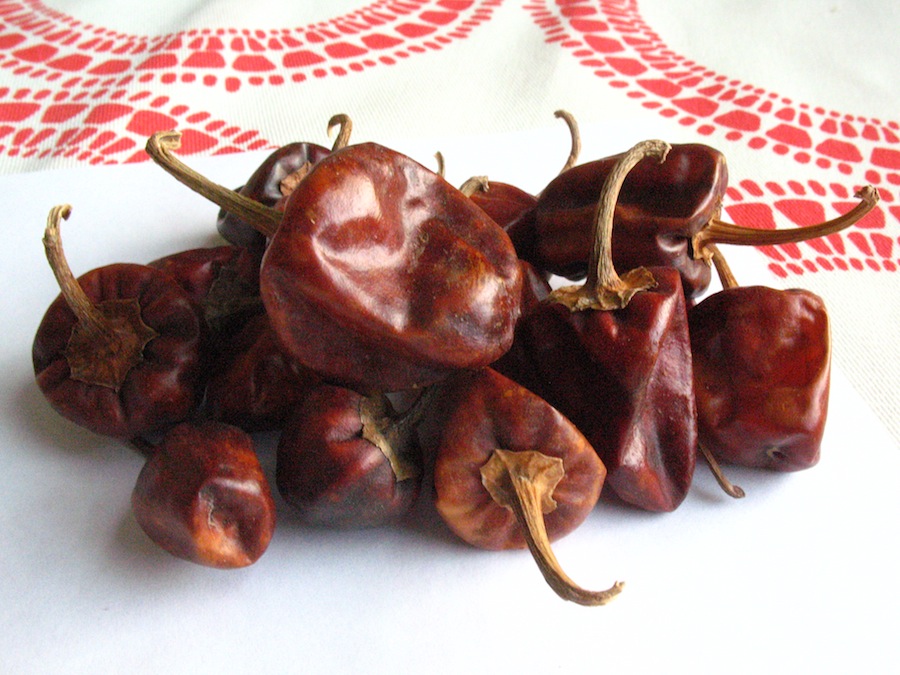
2. Round dried chiles – Boriya mirch बोरीया मिर्च
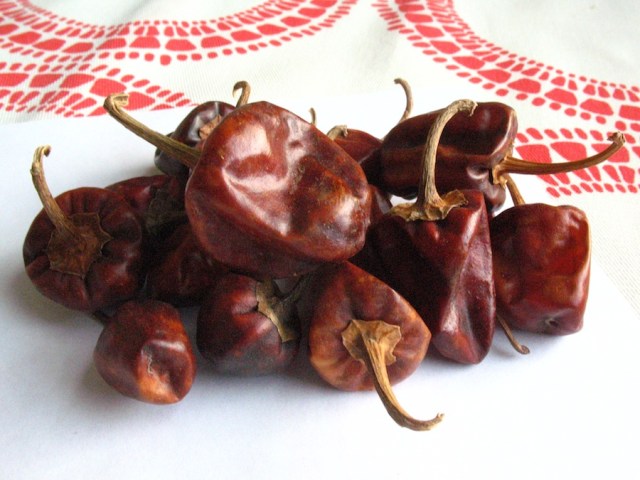
IMG_1436

These cute peppers are spicier than the “facing heaven” peppers. These are great to fry with the spiced tempering that goes into a dal at the end of the cooking process. They are also nice-looking whole and fried together with leafy green vegetables.

I found these peppers at Dana Mundi, near University City in West Philadelphia. They are a product of India, but I don’t know if they are characteristic of a particular region’s cuisine.

3. Dried buttermilk-cured chiles from South India – Door milagi/Majjiga mirapakayalu/Dahi mirchi

Last weekend I took a drive up to Northeastern Philadelphia to look at a few markets. One such market, Kashmir Garden, surprised me with many interesting items–not from Kashmir or North India–but from Kerala and Tamil Nadu regions of Southern India.

This very unique chile is a popular preparation in South Indian cooking. In Tamil it is known as Moor milagi மோர் மிளகாய், in Telugu as majjiga mirapakayalu మజ్జిగ మిరపకాయలు, and in Malayalam as tair mulak തൈര് മുളക്. I think this item in Hindi is Dahi Mirchi (“yogurt pepper”).
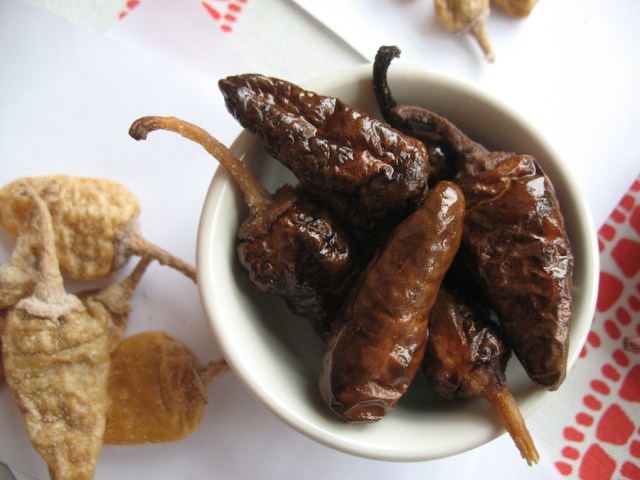
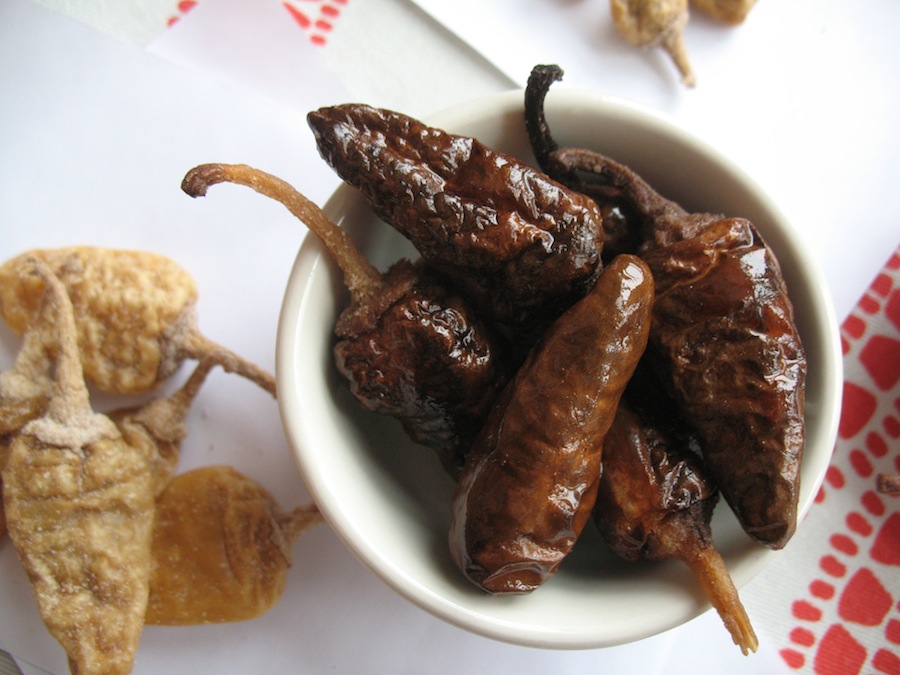
IMG_3048

cured and dried, and refried versions of buttermilk-cured peppers
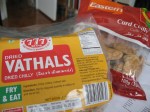
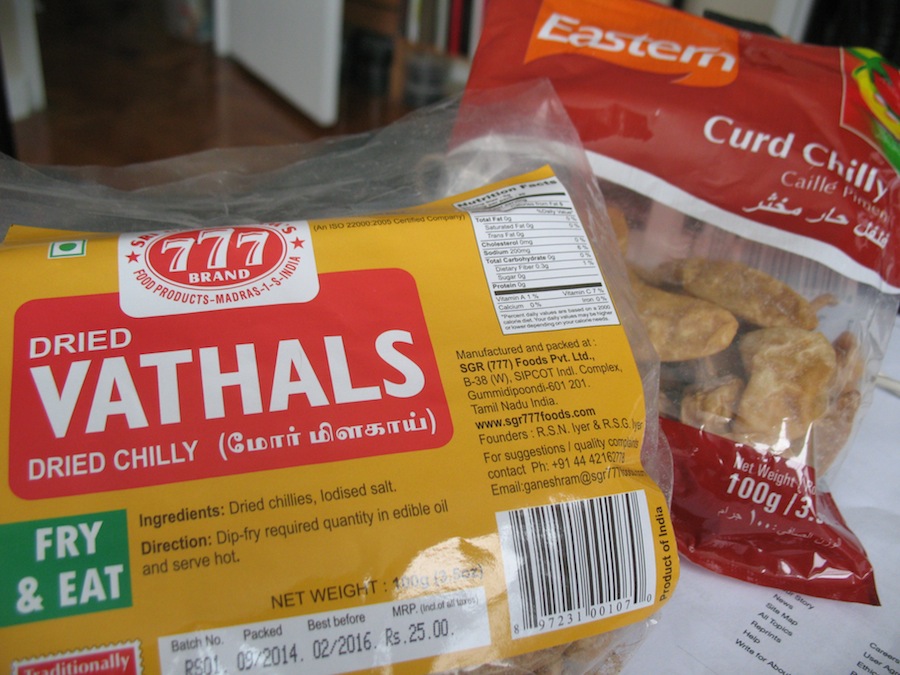
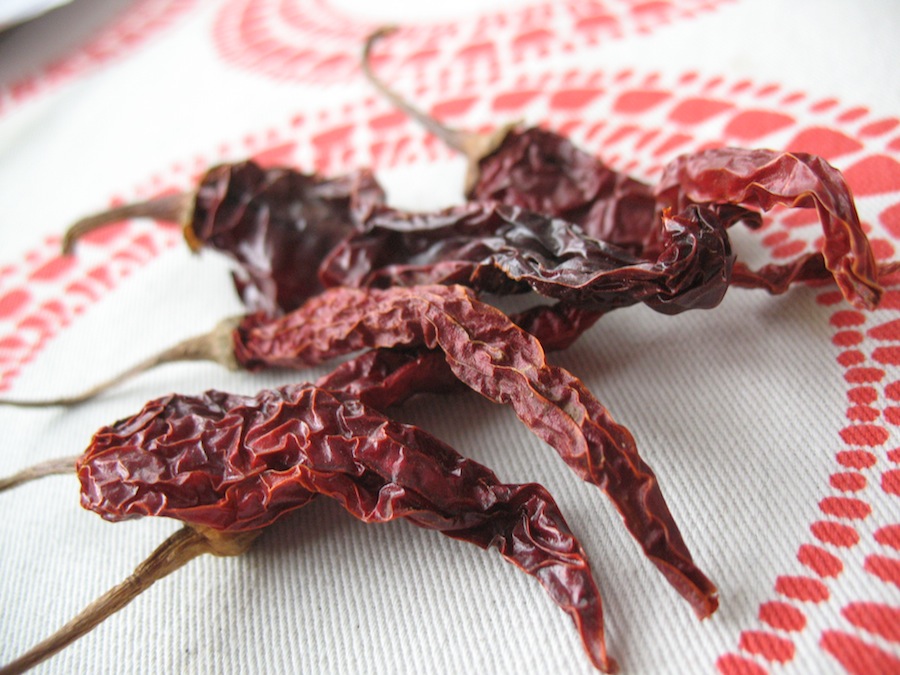
IMG_3066The bag calls these “dried vathals” or “curd chilly” in English. These are hot chile peppers that have been soaked and fermented in buttermilk or salty yogurt for several days before being sun-dried. The soaking in sour milk or yogurt actually bleaches the chile white. They turn reddish/golden after you fry them again in oil.
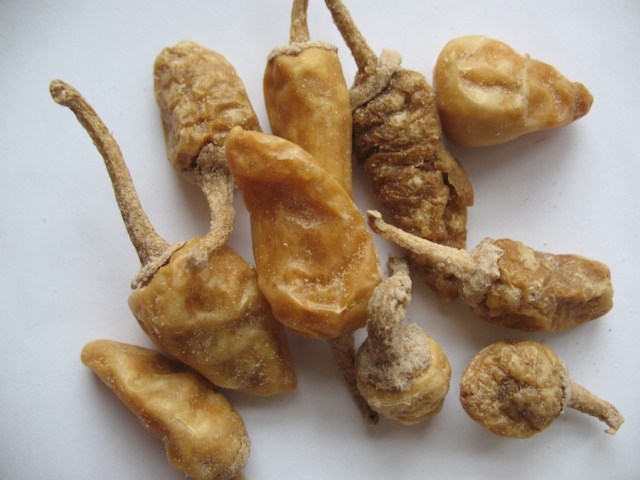
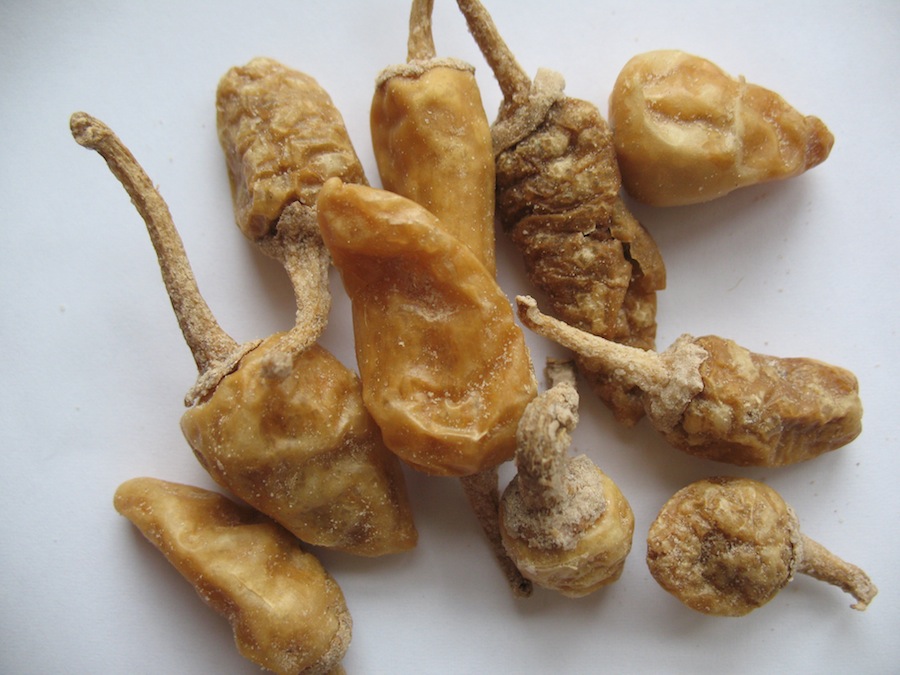
IMG_3049I was surprised by the flavor of these, and perhaps more surprised how salty they were. The insides are packed with salt (see close up image below). I wonder if these are maybe best consumed with some comparatively blander dal or rice dish.

There are many recipes that I found for making these at home from fresh green chiles. If you are curious about the process, check out “sun salutations” at Mahanandi’s blog. Another good source is Chef and Her Kitchen.

IMG_3060

close up of the salt-packed buttermilk cured dried chile from Southern India

4. Kashmiri red peppers कश्मीरी मिर्च
IMG_3054

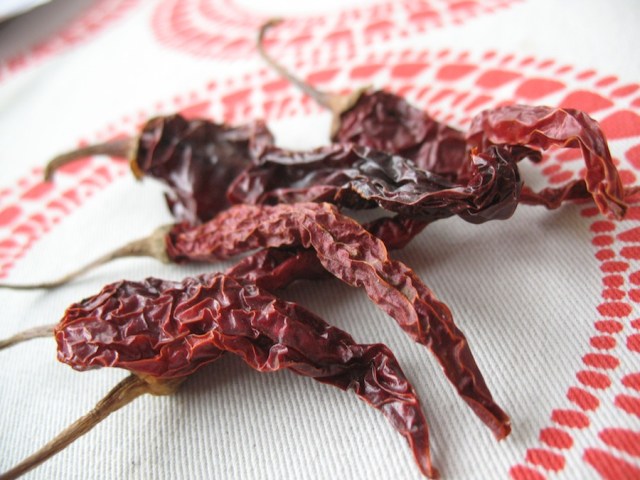
Finally, I found Kashmiri peppers (one of the few things I found from Kashmir Garden that was actually from Kashmir–via South India). I haven’t cooked with these yet, but they are supposedly good for the deep red color that they impart to dishes. These peppers are easily recognizable due to their deep red color and shriveled skins.

Posted in - Featured Food Discoveries, - Featured Markets, - Recipes, Chinese food, Indian food | Tagged , , , , , , , , , , , , , , , , , , , , | 4 Comments

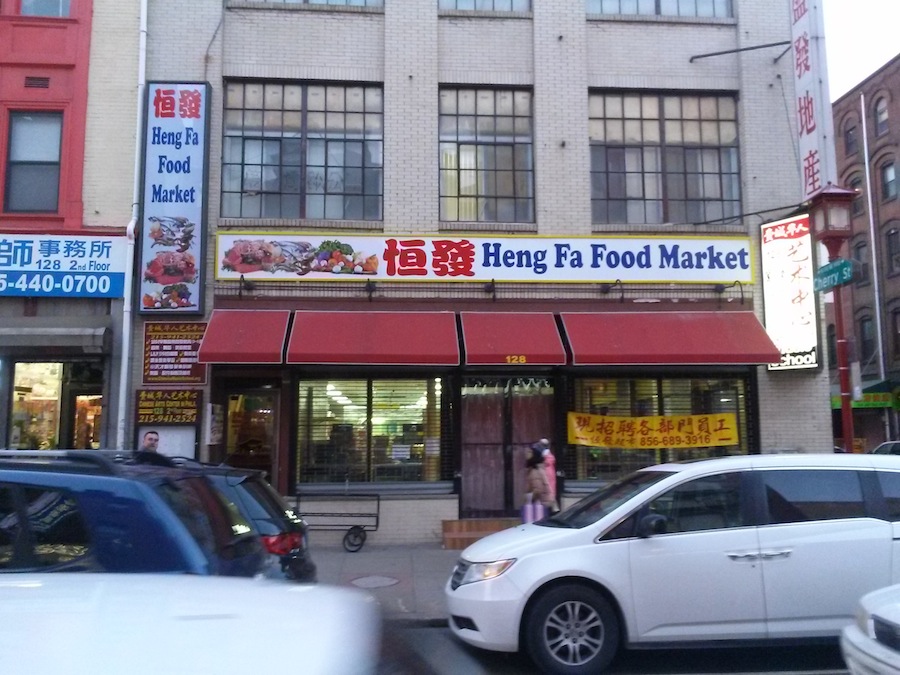
Heng Fa Food Market in Chinatown

CAM00174

If you haven’t been to Chinatown in a few weeks, Heng Fa market has opened at a new location. This is the market that had purple signs “King Market” that was previously split across 10th St. just north of this location, beside the fire station with the produce section, and across the street from there for fish and seafood.

Now the market is the basement and first floors of the corner of Cherry and 10th. The basement is drinks, dried, and non-perishable foods, and the first floor is produce, meats, and seafood. This is definitely one of the better markets of Chinatown, with an good selection of all basics. The market is also pretty clean and brightly lit.

The only downside is there is little space for a lot of people. If you go there after work, it will likely be packed. If you ever went to their old produce store near the fire station, that place too needed to be carefully navigated to get through the queue waiting to pay in order to see the fresh produce.

These days it is cold enough that they are showcasing frozen fish and dumplings outside the store. Nice produce, and nice fish and seafood. Check it out!

Posted in - Featured Food Discoveries, Chinese food | 12 Comments

Nepal-style black lentil soup

IMG_2735

my finished version of Nepali black dal, or kali maas ko da, with fried jimbu and a touch of timur spice

In my previous home town of Madison, Wisconsin, we had a surprising number of Nepali restaurants per capita. That isn’t to say I understand “authentic” Nepali food better than anyone else, but at least there was some exposure to uniquely flavored dals, momos, and chutneys. Now we live in the much larger metropolitan region of Philadelphia, and I am unaware of any Nepali restaurants here (at least calling themselves “Nepali” and serving Nepali-style food). We do however, have a store that sells lots of Nepali food items, that I’ve previously reported on.

Those very uniquely Nepali flavors come from a handful of key ingredients that are quite unlike those of other culinary traditions of South Asia. Cured mustard greens and the Sichuan peppercorn-like timur are items that have perhaps closer affinities to Chinese food traditions.

Another unique ingredient, jimbu जिम्बु, pairs very nicely with black lentils, and is a traditional ingredient in Nepali black lentil dal. It is kind of hard to explain the flavor that this grassy onion imparts to the dish, but it seems to unlock the umami somehow. You can learn more about this spice and much more about Nepali ingredients and food culture at the excellent blog by Jyoti Pathak at Taste of Nepal. There you can also find a recipe for black dal, which, along with a recipe in the Association of Nepalis in the America’s The Nepal Cookbook were sources that I based my version below on.
Most recipes that I found online used split black dal or urad dal (again, see Taste of Nepal for a great introduction to this ingredient as well), but I used the whole polished black dal instead–the same kind I used for the prior Dal Makhani recipe.

jimbu

Recipe: Black lentil soup with jimbu – Kali maas ko dal मास को दाल

For the boil:

1.5 cups black dal, split or whole
4-5 cups water
1 Tbsp ginger, minced
1/2 tsp tumeric
pinch of timur
salt to taste
1 Tbsp ghee

For the fried seasonings:

dried chiles
2-3 cloves garlic
1 tsp chopped ginger
generous pinch jimbu
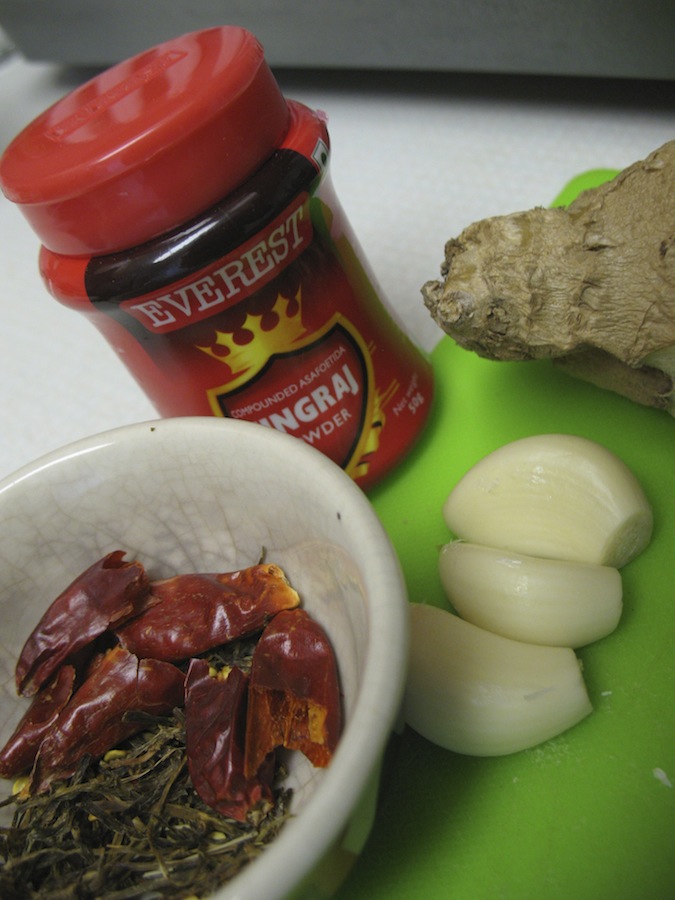
generous pinch asofetida
2 Tblsp ghee

The general method is similar to other lentil soup preparations, where boiled beans or lentils meet a spiced fried oil mixture for final seasoning. In this case, the black lentils are boiled until fully cooked (up to an hour) with the ingredients listed above. Taste and adjust for saltiness, and finally top the soup off with the fried goodies in the second step. Mix well and serve.

I like my dals a little thicker, so I like to mash some of the lentils to make for a thicker sauce.

IMG_2728

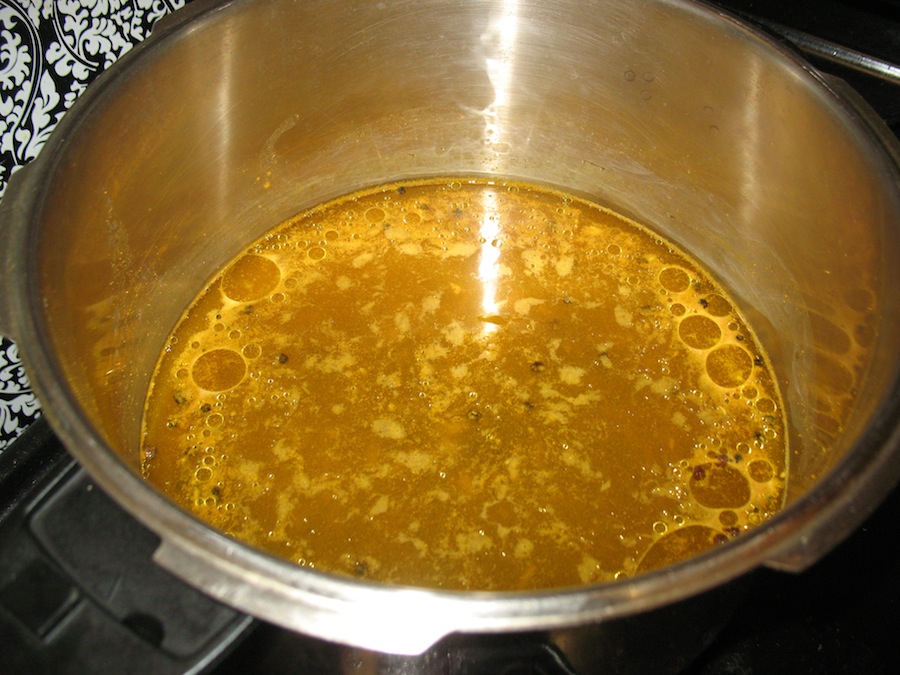
Lentils boiling with some ghee, timur spice, tumeric, ginger, asofetida, and salt. NOTE: salt will help break down the beans, so it should be included in this earlier step

IMG_2733

items to include in the fried oil for the final step: jimbu, broken dried chiles, asofetida powder (aka hing), garlic, ginger

IMG_2734

Frying that stuff before dumping it into the soup

IMG_2737

Eat the dal with rice. This is a protein-rich low calorie food, great for all meals (I find).

Posted in - Featured Food Discoveries, - Featured Markets, - Recipes, Nepali food | Tagged , , , , , | 6 Comments